

Smart Forex Trading Tips for Kenyans
Explore effective forex trading strategies in Kenya 🇰🇪 including analysis, risk management, and psychology to boost your trading confidence and success 📈💡
Edited By
Emily Parker
Navigating the forex market can sometimes feel like trying to find your way through a dense fog with just a flashlight. Success in forex trading doesn't happen by chance; it requires a solid strategy tailored to your unique style and goals. This article aims to clear the haze by discussing practical forex trading strategies you can apply to achieve steady, consistent results.
Many traders get caught up chasing quick wins, only to lose more in the long run. The secret lies in understanding how to analyze the market effectively, manage risk smartly, and utilize the right tools to support your decisions. Whether you’re a newbie trying to make sense of currency pairs or an experienced trader refining your approach, this guide has something useful for you.
Here’s what you can expect:
A breakdown of key concepts behind forex trading strategies
Different analysis methods, including technical and fundamental outlooks
Practical steps to manage risk without feeling like you’re walking a tightrope
Tools and resources that help maintain consistent performance
Remember, there’s no one-size-fits-all strategy in forex trading. The best approach is one that fits your risk appetite, trading style, and financial goals.
By the end of this read, you’ll be better equipped to craft your own trading plan—or improve the one you have—with actionable ideas that go beyond textbook theory. Let’s jump right in and get straight to what works.
Grasping the ins and outs of forex trading strategies sets a trader apart from those just tossing coins in a fountain hoping for luck. It’s not just about guessing which way the currency pair will swing but having a solid blueprint on how to engage with the market consistently. Understanding these strategies is essential because it shapes every decision, from entry points to exits.
Consider a trader who blindly follows news headlines without a strategy—they might make profits one day but get wiped out the next. Strategies give traders confidence and a framework to avoid emotional traps that can tarnish results.
A forex trading strategy is basically a set of rules or guidelines that dictate how you enter and exit trades. Here are the main components that make it tick:
Entry and Exit Rules: Specific conditions that say when to jump into or leave the market. For example, buying EUR/USD when the 50-day moving average crosses above the 200-day moving average.
Risk Management Measures: Defines how much capital to risk per trade, stop-loss placement, and position size to keep losses manageable.
Trade Management Guidelines: How to adjust trades in motion, such as moving stops to break even or scaling out profits.
Each element contributes to the strategy’s overall consistency and practical application. Without clear entry and exit points, traders might act based on hunches instead of data.
Many get tangled by these terms, but here's the straightforward scoop:
Strategy is the broad plan — the "big picture" approach defining what you want to achieve and how.
Tactics are the specific actions or methods — the "in the moment" moves you make to implement the strategy.
Think of strategy like a roadmap for a road trip, while tactics are the turns and stops you decide on along the way based on traffic or weather.
For instance, your strategy might be trend following, but your tactic could be waiting for a retracement using Fibonacci levels before entering a trade.
At the heart of any trading strategy is the goal to grow your account, but profit isn’t just about chasing big wins. It’s about squeezing value where you can. Strategies aim to capture favorable price movements with a favorable risk-to-reward ratio.
A practical example: if your strategy targets trades with a potential to make twice as much as you risk (2:1 reward-to-risk), you don’t need to be right all the time. You just need to stick to your plan and let winners run while cutting losses early.
No matter how promising a trade looks, risk management is the safety net that protects your capital. This element ensures you never put too much on the line in a single trade, preserving your ability to trade again tomorrow.
Traders often use tools like stop-loss orders, limiting their downside to a predetermined amount. For example, risking only 1-2% of your account per trade helps keep a rough day from becoming a disaster.
Effective risk management is what separates professionals from gamblers.
One-off gains don’t pay bills — consistency does. A good trading strategy works to deliver results that might not always be huge but join up to a dependable income over time.
Consistency comes from disciplined application, clearly defined rules, and adaptability to market changes. A trader using the Moving Average Convergence Divergence (MACD) properly over months can expect more predictable results than someone jumping into whatever shiny setup looks promising that day.
Remember, the goal of understanding trading strategies isn’t to guarantee you’ll never lose — it’s to equip you with a method that makes winning more predictable and losses manageable.
By understanding these basics, traders lay the groundwork for building or choosing a strategy that aligns with their goals and risk appetite. Next sections will unpack specific strategy types and how to analyze the market to pick one that fits you like a glove.
Understanding various forex trading strategies is key if you want to find your footing in the forex market. Different styles suit different traders depending on their risk tolerance, time availability, and overall goals. Knowing the types helps traders pick a method that feels natural and practical, rather than forcing a one-size-fits-all approach.
Identifying and following market trends is like sailing with the wind instead of against it. In forex, this means spotting when a currency pair is moving predominantly in one direction over a period and making trades aligned with that momentum. This approach banks on the idea that trends, whether up or down, tend to persist for a while. For example, if the USD/KES pair shows consistent daily gains over several weeks, jumping on that positive momentum can lock in gains rather than betting against it.
Tools and indicators used in trend following include moving averages (like the 50-day and 200-day), which smooth out price data to reveal the trend direction. The Moving Average Convergence Divergence (MACD) helps spot potential changes in momentum, while trendlines drawn on charts visually guide where price tends to travel. Combining these tools grants traders a clearer picture before entering a position. Practical tip: Checking multiple timeframes, such as daily and four-hour charts, can confirm if the trend is solid or sputtering.
Trading within support and resistance levels means recognizing the price zones where currency pairs tend to bounce back or pull back repeatedly. Imagine a rubber band stretched between two points—price hits a support level (the bottom) and springs up, then hits resistance (the top) and recoils down. Traders aim to buy near support and sell near resistance. For instance, the EUR/USD might pivot between 1.1000 (support) and 1.1100 (resistance), providing a neat range to operate within.
Best conditions for range trading often appear when the market lacks a clear directional bias—neither bullish nor bearish. During these sideways movements, volatility is usually lower, and breakouts are less frequent. This kind of trading suits those who prefer a calm, steady pace instead of chasing big moves. A practical rule is to avoid range trading during major news events when price can suddenly surge out of the range unexpectedly.
Recognizing breakout points is about spotting when price decisively crosses above resistance or below support, suggesting a new trend might be starting. This could be at key levels where price has struggled before or after consolidation phases. For example, if GBP/USD breaks above a resistance at 1.2500 with increased volume, this could signal buyers gaining control.
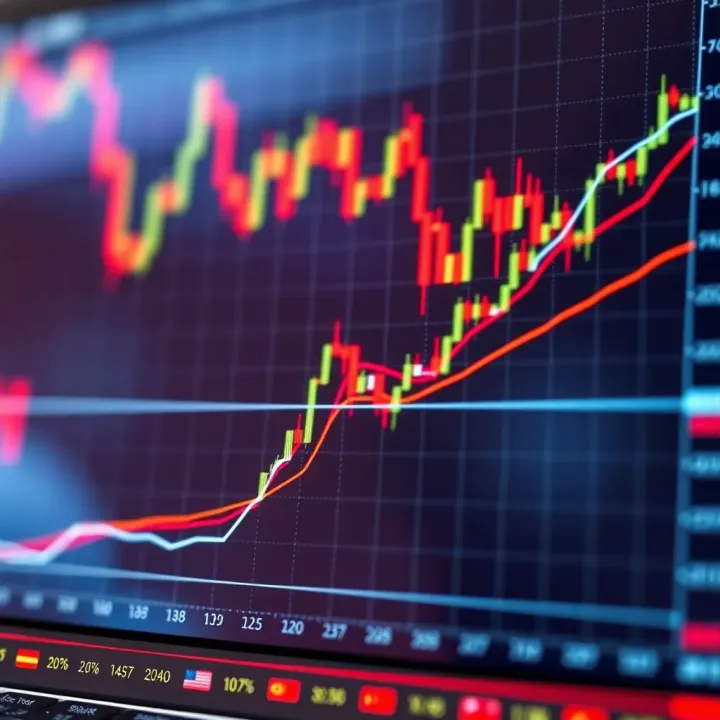
Confirming breakouts to avoid false signals is crucial because not every breakout sticks. Traders can look for a retest of the breakout level, volume spikes, or confirmation from indicators like the Average True Range (ATR) to judge if the move is genuine. Blindly jumping on every breakout often leads to whipsaw losses, so patience pays off here.
Fast-paced trading methods involve opening and closing trades within minutes, sometimes even seconds. Scalpers try to profit from tiny price movements, often using one-minute or five-minute charts. It demands quick decision-making and tight spreads to ensure gains cover transaction costs. Platforms like MetaTrader 4 offer tools favorable for scalping such as rapid order execution and customizable hotkeys.
Suitability and challenges of scalping mean it’s not for everyone. It’s best reserved for ruthless focus and nerves of steel, as it requires monitoring markets intently and reacting fast. The constant action can exhaust newcomers, and brokers with slower execution or high commissions may make scalping unprofitable. Moreover, scalpers need reliable internet and must watch out for sudden spikes caused by unexpected news.
Mastering different forex trading strategies allows traders to choose what fits their style rather than chasing random tips. Picking the right approach and understanding its nuances can turn trading into a consistent pursuit rather than gambling.
Understanding how to analyze the forex market is vital when selecting a trading strategy that fits your goals. Without it, you might as well be tossing coins. Proper analysis reveals market behavior, helps spot opportunities, and sets the groundwork for consistent profits.
The forex market moves because of countless factors—price trends, economic releases, geopolitical events—so breaking down these elements keeps traders ahead of the curve. Think about it like driving a car: without a clear view of the road and traffic signs, your chances of an accident—losses—shoot up.
For example, a trader noticing a currency pair consistently bouncing between set levels might lean toward range trading. Meanwhile, spotting a clear upward move reinforced by rising volume could signal a trend-following approach. Market analysis strips away guesswork, turning fuzzy ideas into concrete action plans.
By thoroughly analyzing price charts, economic data, and global events, traders can handpick strategies that mesh with current conditions rather than blindly jumping in. This tailored choice increases the odds of winning trades and cuts down on costly errors.
Moving averages are like smoothing glasses over price charts; they flatten out the noise and highlight trends. Traders commonly use simple moving averages (SMA) or exponential moving averages (EMA), the latter giving more weight to recent data.
For example, a 50-day SMA can show where prices generally lean over the past couple of months, while a 20-day EMA reacts quicker, helpful for spotting recent momentum.
In trading, moving average crossovers often signal a shift. When a short-term average crosses above a long-term one, it’s generally a cue to buy; crossing below hints at selling. This strategy is straightforward and widely used because it helps filter out market chatter.
RSI is a momentum oscillator that measures the speed and change of price movements on a scale from 0 to 100. Levels above 70 often suggest an asset is overbought, which could mean a pullback is near. Conversely, values below 30 may flag oversold conditions—a potential buying opportunity.
Traders appreciate RSI because it quantifies strength behind moves, not just direction. For example, if EUR/USD climbs rapidly but RSI hits above 70, it might be wise to hold back and watch for signs of exhaustion.
Incorporating RSI along with other tools improves the accuracy of entry and exit points.
Candlestick charts tell stories at a glance. Each candle shows opening, closing, high, and low prices for a period, creating recognizable shapes that hint at market sentiment.
Patterns like the "hammer" or "shooting star" reveal potential reversals, while "engulfing" patterns demonstrate strong buying or selling pressure. For instance, a bullish engulfing pattern after a downtrend often signals a buy opportunity.
Mastering candle patterns lets traders anticipate shifts more confidently, nesting these insights within broader strategy decisions.
Economic indicators such as GDP growth, employment figures, and inflation reports provide snapshots of a country’s financial health, directly influencing currency values.
Take the U.S. Non-Farm Payrolls report—it can move USD pairs significantly within minutes. A stronger-than-expected jobs number suggests a robust economy, often pushing the dollar higher.
Keeping tabs on these indicators helps traders time their strategies. For example, if inflation spikes, traders might expect central banks to raise rates, driving currency strength.
Unexpected news and geopolitical developments can shake markets suddenly. Elections, trade disputes, or conflicts change investor sentiment overnight.
Remember the Brexit vote? GBP pairs tumbled violently afterward due to uncertainty. Traders who anticipated or quickly reacted to such events had a major edge.
Being tuned into news flows allows traders to avoid nasty surprises or capitalize on volatile moves.
Central banks steer currency movements with their interest rate decisions and monetary policy statements. Rates hikes generally boost a currency, while cuts tend to weaken it.
For example, the Reserve Bank of Australia’s comments on rates often sway AUD pairs strongly. Traders factored this into strategy selection by trading with the direction of policy changes.
Understanding central bank moves isn’t just about knowing the outcomes but interpreting the tone and signals given during announcements to anticipate market shifts.
Successful forex trading isn't about guesswork but reading the clues the market provides. Combining technical tools and fundamental insights helps pick the right strategy for the changing tides.
By blending both technical and fundamental analysis, you ground your trading decisions in facts and trends rather than hunches. This solid approach is what separates consistent traders from the rest.
Risk management is the backbone of successful forex trading. Without a solid approach to controlling losses and protecting gains, even the best strategies can crumble under unexpected market swings. Think of it like wearing a seatbelt while driving—you hope not to need it, but it’s crucial when things don’t go as planned. Proper risk management not only shields your capital but also helps you stay in the game longer and trade with confidence.
Effective risk management involves setting practical limits on the amount you are willing to lose on any trade and controlling how much exposure you take relative to your account size. It prevents you from betting the farm on a single trade and keeps emotions like fear or greed from clouding your judgment. For example, if a trader ignores risk limits and jumps on a risky position with high leverage, they might see their account wiped out overnight when the market moves against them.
Setting stop-loss and take-profit orders is one of the simplest but most powerful tools in managing your forex risk. A stop-loss order tells your broker to automatically exit a trade at a certain price point to limit your losses. On the flip side, a take-profit order locks in your gains by closing a position once a preset profit level is reached.
How do you determine appropriate stop-loss and take-profit levels? Start by analyzing recent market volatility and the typical price range of the currency pair you’re trading. For example, if the EUR/USD often swings about 50 pips in a day, placing a stop-loss 5 pips away might be too tight—leading to premature exits. Many traders use the Average True Range (ATR) indicator to gauge these price swings.
Another method is to anchor your stop-loss below a strong support level (or above resistance if you’re shorting). This technical approach increases the odds that your stop isn’t triggered by random market noise. Take-profit points should be placed to maintain a favorable risk-to-reward ratio, commonly 1:2 or better. This means if you risk 50 pips, you aim to capture at least 100 pips.
Remember, the goals of stop-loss and take-profit settings are to protect your capital and seize profits without needing to monitor every tick in the market constantly.
How much you trade per position is just as important as where you place your stop-loss. Position sizing helps you tailor each trade's risk based on your account balance. For instance, risking 2% of your capital on each trade is a common rule of thumb. If you have a $10,000 account, this translates to risking $200 per trade.
Suppose your chosen stop-loss is 50 pips; you then calculate your position size so that a 50-pip loss equals $200. This method keeps losses manageable and prevents one bad trade from spiraling out of control. Ignoring this approach and using the same lot size regardless of account size is a fast lane to disaster.
Leverage lets traders control a larger position with a smaller amount of capital. While it can magnify profits, it equally amplifies losses. If mishandled, leverage can turn a tiny bad move into a full account wipeout.
For example, using 1:100 leverage, a 1% adverse move wipes out your entire stake in that trade. That’s why it’s crucial to choose your leverage wisely and always combine it with proper stop-losses and position sizing.
Lower leverage, such as 1:10 or 1:20, is safer for beginners or those who want to reduce stress. Some brokers like IG or OANDA offer tiered leverage options, so you can choose what suits your trading style.
Managing leverage means respecting its power and not treating it as a free ticket to big gains. Discipline and risk control must accompany every leveraged trade.
Mastering these elements of risk management can make the difference between sustainable trading and quick losses. It's all about staying in the game by protecting what you have, so you can take advantage of Forex’s opportunities without unnecessary setbacks.
Creating a personal trading plan is like drawing a map before setting out on a road trip—it guides your decisions and keeps you from wandering aimlessly in the fast-moving forex market. A well-crafted plan helps you define clear goals, understand your risk comfort zone, and establish rules that prevent emotional reactions from clouding your judgment. Without a plan, even the most promising strategy can fall apart under pressure.
Knowing whether you prefer short bursts of action or steady growth over months shapes the strategies you’ll prioritize. Short-term traders often lean on scalping or day trading, chasing small profits multiple times a day. Long-term traders tend to ride major trends, holding positions for weeks or months.
For example, a trader focusing on short-term gains might monitor the EUR/USD pair every hour to catch quick moves, while a long-term trader holds positions through economic shifts by analyzing monthly charts. Picking an approach that fits your lifestyle and temperament is key—no point staring at screens 24/7 if you’re not wired for it.
Understanding how much risk you’re willing to bear avoids wiping out your account when the market swings. Some traders sleep easy with high leverage and tight stop losses; others prefer smaller risks and bigger cushions.
Try this: imagine losing 5% of your trading capital on a position. Would that shake you or leave you unfazed? Your feelings give clues about your true risk appetite. Aligning trades with your tolerance keeps emotions in check and promotes steady growth. It’s better to cut losses quickly than to hold hoping the market “turns around.”
Backtesting involves running your trading rules against historical forex price movements. It’s like a dress rehearsal—testing how your plan would have performed in the past before risking real money. While past performance doesn’t guarantee future success, it highlights strengths and weaknesses in your approach.
For instance, if you want to test a trend-following strategy on GBP/JPY, you’d apply your entry and exit rules over months or years of data to see overall profit, drawdowns, and win rates. Rigorous backtesting helps you refine your strategy, avoiding pitfalls and understanding market conditions where it shines.
Paper trading is the bridge between theory and reality. It lets you execute trades in a live market environment without using actual money, testing how your strategy holds up against real-time price action and emotional stress.
Use platforms like MetaTrader 4 or TradingView’s demo accounts to practice. Genuine mistakes happen here, but your capital stays intact. It’s crucial to treat paper trading seriously—follow your trading plan, track outcomes, and tweak as needed. Once comfortable, transition slowly with real funds, knowing you’ve built muscle memory and confidence.
A solid trading plan isn’t a straightjacket but a disciplined framework that keeps you steady through market ups and downs. Regularly revisiting and adjusting it based on your experience keeps you sharper and better prepared to respond to whatever forex throws your way.
Forex trading isn't just about picking the right strategy or analyzing charts perfectly. A big part of becoming consistently profitable lies in recognizing and steering clear of common pitfalls that can wreck even the best-laid plans. Mistakes like overtrading and ignoring risk management can quietly drain your account before you even notice. Understanding these traps and learning how to avoid them helps traders stay solid, focused, and improving steadily over time.
One classic blunder traders often fall into is overtrading — jumping into too many trades or making rash decisions based on feelings rather than logic. Signs include unusually high trade volume, holding positions longer than intended due to hope or fear, or chasing losses after a bad trade. For example, a trader who just lost money on a EUR/USD short position might impulsively open several new trades just to "make it back," ignoring proper analysis. This obsessive reaction often leads to bigger losses.
The key to preventing overtrading lies in discipline and self-awareness. Setting clear entry and exit rules, sticking to your trading plan, and limiting the number of daily trades can help keep impulsive moves in check. Emotional bias also sneaks in when traders get attached to a position — refusing to cut losses or letting greed push them to hold on too long. Techniques like journaling trades and reviewing emotional triggers can build resilience and help you trade with a calm, rational mindset rather than gut feelings.
Neglecting risk control is like walking a tightrope without a safety net. Many traders underestimate how quickly losses can pile up without proper safeguards in place. Lacking stop-loss orders, risking too much per trade, or misusing leverage can wipe out capital faster than expected. For instance, a novice forex trader using 1:50 leverage on an account might risk 10% of their balance in one trade — a recipe for disaster if the market moves unfavorably by just a few pips.
The consequences of poor risk management don't just hit your account; they affect your confidence and decision-making too. That’s why consistent use of stop-loss and take-profit levels tailored to your strategy is essential. Also, position sizing adapted to your account size ensures no single trade can significantly damage your portfolio. Being mindful about leverage and understanding its risks equips traders to face market volatility without panic.
Remember: Risk management isn’t optional — it’s part of your trading edge. Protecting your downside lets you stay in the game long enough to capture gains.
Avoiding these mistakes requires patience and practice but embracing them early in your trading career sets a foundation for long-term success. By staying disciplined against overtrading and respecting risk management, you can navigate forex markets more confidently and consistently.
Explore effective forex trading strategies in Kenya 🇰🇪 including analysis, risk management, and psychology to boost your trading confidence and success 📈💡
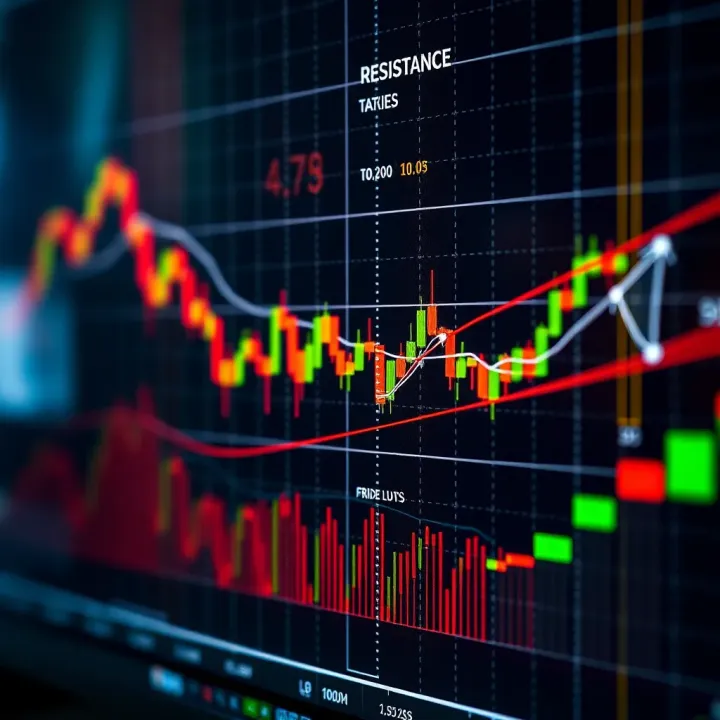
📈 Master effective Forex trading strategies like trend following, range trading, and breakout tactics to boost profits with smart risk management and clear goals.
📚 Discover top books for forex trading success! Learn strategies, market analysis, psychology & risk management tailored for Kenyan traders and beyond.

📊 Find the best forex trading platform in Kenya with our detailed guide on security, fees, ease of use, features, and local regulations for all traders.
Based on 11 reviews