
Effective Risk Management in Forex Trading
Manage forex risks wisely with proven tools like stop-loss, position sizing, and discipline ⚖️ tailored for Kenyan traders aiming for steady growth 🇰🇪 trade smart!
Edited By
James Harrington
Effective risk management is the backbone of successful forex trading. Especially for Kenyan traders, understanding how to shield your capital from losses is key to staying in the game longer and growing wealth steadily. Forex markets are famously volatile — currencies can swing rapidly due to economic news, geopolitical events, or sudden shifts in sentiment. Without solid risk controls, even experienced traders may face significant losses.
This section breaks down practical ways to manage your risk in forex trading. You'll learn how to determine the right level of exposure, correctly apply stop-loss orders, and build a trading plan that keeps emotions in check.
Before opening any forex position, know exactly how much you are willing to lose. Many Kenyan traders overlook this, leading to reckless trades. A common rule is to risk no more than 1–2% of your trading capital on any single trade. For example, if you have KSh 100,000, your risk per trade should not exceed KSh 1,000 to 2,000. This approach prevents one bad trade from wiping out your account.
A stop-loss order automatically closes your position at a predetermined loss level. It’s a powerful tool to limit damage when the market moves against you. For instance, if you buy EUR/USD at 1.1000 and set a stop loss at 1.0950, your maximum loss on that trade is capped at 50 pips. Setting stop losses at logical points — like below support levels or recent lows — makes your risk management more effective.
Discipline prevents unnecessary losses caused by impulsive decisions. Your trading plan should clearly define entry and exit points, risk per trade, and criteria for adjusting or closing positions. Stick to the plan even when the market tempts you to chase quick profits. Consistency in following a well-thought-out plan greatly improves long-term results.
Good risk management isn’t about avoiding losses altogether; instead, it’s about managing losses so they don’t derail your trading career.
Remember, in the Kenyan forex context, access to reliable internet and fast execution platforms matters — delays can heighten risk exposure. Always trade on trusted platforms with stable connectivity.
By incorporating these strategies, Kenyan traders can protect their capital, improve trading discipline, and step closer to sustainable success in forex markets.
Understanding risk in forex trading is the foundation for protecting your capital and improving your chances for sustained success. Forex markets are known for their fast pace and potential for quick gains, but without a clear grasp of the risks involved, traders can quickly experience heavy losses. It’s not just about knowing that risk exists; it’s about recognising the specific risks that can affect your trades and managing them effectively.
In forex trading, risk primarily refers to the possibility of losing money due to adverse price movements in currency pairs. Every trade you open carries the risk that the market doesn’t move in your favour, sometimes very suddenly. Besides price changes, risk also includes factors like poor execution of trades, slippage (where the trade is executed at a different price than expected), and the risk related to leverage that amplifies both profits and losses. For example, if you buy USD/KES expecting the dollar to strengthen but political unrest causes the shilling to spike unexpectedly, you face the risk of losing your investment.
Market volatility refers to how much the price of currency pairs fluctuate over a short period. Kenyan traders often encounter sharp swings during events like Central Bank of Kenya (CBK) policy announcements or major global economic reports. Volatility can offer opportunities for profit, but it can also lead to sudden losses if a position isn’t properly managed. For instance, during the rainy season when agricultural exports influence the shilling’s strength, the market may see sudden fluctuations, making timing and risk control crucial.
Leverage allows traders to control larger positions with a smaller amount of capital, often offered at levels like 1:50 or 1:100. While this can boost profits if trades go well, it magnifies losses just as much. Many Kenyan traders are tempted by high leverage on platforms like Olymp Trade or local brokerages, but it’s easy to lose more than your initial deposit if the market turns unexpectedly. Ensuring you understand your broker’s leverage terms and stick to recommended levels, like a maximum of 1:10 for beginners, can help avoid wiping out your account.
Kenya’s political landscape and economic policies can significantly affect forex markets. Elections, budget speeches, or changes in trade agreements within the East African Community (EAC) can create uncertainty, influencing currency prices. For example, during the 2022 general elections, the shilling experienced fluctuations as investors assessed potential policy changes. Keeping an eye on such events and factoring them into your trading strategy is essential for managing risk.
Liquidity refers to how easily you can buy or sell currencies without affecting the price. Forex markets for major pairs like USD/EUR have high liquidity, but some exotic pairs involving the Kenyan shilling may see less activity. Lower liquidity can lead to wider spreads and difficulties in executing trades at desired prices. Execution risk arises when your trade order is delayed or partially filled, especially during volatile periods or outside regular trading hours. Being mindful of these risks can help avoid surprises; for example, avoid entering large trades during low liquidity hours or major holidays.
Understanding these risks gives Kenyan traders the edge needed to manage their forex positions wisely, protect capital, and trade with confidence.
Controlling risk is at the heart of successful forex trading, especially for Kenyan traders who face unique market and economic conditions. Setting risk limits helps you protect your capital from large, unexpected losses, while exposure control ensures you don't overcommit to risky trades. With the forex market's usual swings, maintaining limits becomes a safeguard against wiping out your account in one go.
Calculating risk per trade is one of the most practical ways to keep your losses manageable. This means deciding beforehand how much of your capital you're ready to lose on a single trade. For example, if you have a trading account with KSh 100,000, you might decide to risk at most 2% per trade. That’s KSh 2,000 at risk. Suppose you enter a trade where the stop-loss is 50 pips away; you calculate the position size so that if the trade hits this stop-loss, you only lose KSh 2,000. This approach prevents one bad trade from causing disproportionate damage.
The percentage of capital method simplifies risk management by linking your trade size directly to the size of your trading account. Instead of guessing, you stick to a fixed percentage—a common rule is 1-3%. This way, as your trading capital grows or shrinks, your position sizes adjust automatically. For instance, if your account climbs to KSh 150,000, risking 2% per trade means KSh 3,000 risk now. Conversely, if your account drops, your risk lowers too. This method keeps your trading disciplined and prevents reckless bets fueled by emotional decisions.
Understanding leverage impact is vital in forex. Leverage lets you control large positions with small amounts of capital, which sounds attractive, but it also amplifies losses. Take a leverage of 1:100—this means for every KSh 1 you have, you control KSh 100 in the market. While this can multiply profits, it also turns small market movements into big losses quickly. Many Kenyan traders might be tempted by high leverage, but without proper management, it can drain their accounts in hours.
As for recommended leverage levels for traders, keeping it moderate is key. Beginners and even seasoned traders commonly use between 1:10 and 1:30 leverage to reduce risk. This level still allows decent exposure but limits the chances of a margin call. For Kenyan traders, especially those relying on local brokers, understanding the broker’s leverage policy and using stop-losses in combination provides a solid defence against unwanted surprises. The goal here is to balance potential gains with acceptable risk, preventing the urge to overextend just because higher leverage is available.
Setting clear limits on the size of your trades and your use of leverage isn't just good trading practice—it’s essential to survive and thrive in the forex markets.
By carefully managing position sizes and leverage, you put yourself in control. This discipline not only protects your money but also builds a foundation for steady, long-term growth in your forex trading journey.
In forex trading, stop-loss and take-profit orders are vital tools to manage risk and lock in gains. They automatically close trades when prices hit certain levels, preventing emotional decision-making during volatile market swings common in forex. For Kenyan traders, who often face unpredictable currency movements due to political or economic shifts, using these orders can safeguard capital and improve trading discipline.
A fixed stop-loss is a set price level where a trade is automatically closed to limit losses. For example, if you buy USD/KES at 110 and set a fixed stop-loss at 108, the trade will close if the price falls to 108, preventing further losses. This method is straightforward and ideal for traders who want predictable risk exposure per trade. Setting a fixed stop-loss requires analysis of support and resistance levels to avoid premature exits from normal price fluctuations.
Trailing stop-loss moves with the market price, locking in profits while protecting against reversals. Suppose you buy EUR/USD at 1.1000 with a trailing stop set 20 pips below. If the price rises to 1.1050, your stop-loss moves to 1.1030, securing some profit. If the price then drops to 1.1030, the stop gets triggered. This dynamic adjustment helps Kenyan traders stay in profitable trades longer while still managing downside risk during sudden swings.
A mental stop loss is not an automatic order but a self-imposed limit where the trader decides to exit manually. This relies heavily on discipline, which can be challenging under pressure. Some traders use mental stops because they want flexibility to react to changing conditions without being stopped out by brief price spikes. However, Kenyan traders new to forex should be cautious, as neglecting to execute a mental stop often leads to bigger losses than planned.
Take-profit orders close trades once a desired profit level is reached. Setting realistic targets requires a good grasp of recent price swings and market conditions. For instance, if USD/KES usually moves about 100 pips during the day, expecting 500 pips profit might be unrealistic. A common approach is targeting a risk-to-reward ratio of 1:2 or better—if risking 50 pips, aim for at least 100 pips gain.
By using well-placed take-profit orders, traders avoid greed-driven decisions and can consistently capture profits. Realistic targets should also consider upcoming news events or data releases that could disrupt trends unexpectedly. Kenyan traders can monitor economic calendars from sources such as the Central Bank of Kenya or international news to adjust targets accordingly.
Using stop-loss and take-profit orders is about controlling what you can—the risk and reward—and not chasing the market. This calm approach keeps your trading grounded, especially in the fast-paced forex environment.
Through these methods, you can better protect your capital, improve trade management, and build a more consistent forex trading approach suitable for the ever-shifting Kenyan market conditions.
A solid trading plan sets the foundation for managing risks effectively in forex trading. It acts as a roadmap, detailing your entry and exit points, risk tolerance, and overall strategy. Without this, it's easy to get swayed by market emotion or unexpected news, leading to hasty decisions that cost capital. For Kenyan traders, having a clear plan helps balance forex trading alongside everyday responsibilities, reducing the stress of impulsive moves.
Discipline is the backbone of a reliable trading plan. Sticking to your predetermined rules avoids chasing losses or deviating from your strategy when markets get choppy. Consistency compounds small wins and helps manage losses within acceptable limits. For instance, if you commit to risking only 2% of your capital per trade and consistently apply this, you protect yourself from ruinous losses during volatile periods. Even seasoned traders sometimes lose focus, but those who regularly review and follow their plan tend to last longer in the market.
Risk-reward ratio is a key concept in managing forex risk. It compares the potential profit of a trade to the possible loss, often expressed as a ratio like 1:3, meaning you’re willing to risk KS00 to make KS00. This helps ensure your profitable trades cover the unsuccessful ones. For example, a Kenyan trader might target a take-profit level three times the size of the stop-loss to maintain positive expectancy over time.
Having a good risk-reward ratio stops you from entering trades where the reward is too small compared to the risk taken. It encourages careful trade selection rather than random speculation.
Routine review and adjustment is also essential. Markets, especially forex, change rapidly due to economic data releases, political events, or shifts in global sentiment. Regularly reviewing your trading plan ensures it stays relevant. For example, if you realise your current stop-loss distances are either too tight – leading to premature exits – or too wide – causing heavy losses – adjusting them can improve overall performance.
Set aside weekly or monthly time to analyse your trades, learn from mistakes, and recalibrate your strategy. This keeps you adaptable and prepared for evolving market conditions.
A trading plan without discipline or updates becomes ineffective, like a map without directions. Keeping it fresh and following it strictly can be the difference between steady growth and significant losses.
Together, discipline, consistency, and embedding risk management principles form the backbone of a robust trading plan. Kenyan traders who take these elements seriously build resilience against forex market swings and maximise their chances for sustained success.
In forex trading, monitoring risk isn't just an option—it's essential. Without the right tools and techniques, Kenyan traders can quickly find themselves exposed to unexpected losses, especially since forex markets can be volatile and move fast. Being able to track risk in real-time helps you stay on top of your trades, adjust strategies as needed, and protect your capital.
Volatility indicators measure how much a currency price swings over a given period. This is crucial because high volatility often means higher risk—but also bigger profit chances. A trader using the Average True Range (ATR) indicator, for example, can quantify volatility and decide where to place stop-loss orders safely. If the ATR shows that a currency typically moves 100 points in a day, setting a stop-loss too close might lead to getting stopped out unnecessarily.
On the other hand, using indicators like Bollinger Bands can visually show price ranges and signal when a currency is experiencing unusual volatility. In practice, this helps traders avoid entering trades during turbulent market times or alerts them to potential breakout opportunities.
Margin and equity monitoring tools are vital for avoiding margin calls, which happen when your account balance falls below the required maintenance level. Most trading platforms display your current margin use and available equity in real-time. By carefully watching these figures, you can prevent overexposing yourself.
For example, if your margin level drops below 100%, it means your open positions are eating into your capital too much, risking automatic liquidation. Regularly checking margin levels lets you reduce positions or add funds to your account before trouble starts. Keeping a close eye on your equity ensures that you know when your balance is decreasing steadily, prompting you to adjust your risk or even pause trading.
Kenyan traders should focus on sources that provide timely updates on global and local economic events impacting forex markets. News outlets like Reuters, Bloomberg, and local financial news sites provide daily economic calendars, including announcements like Central Bank of Kenya (CBK) meetings, US Federal Reserve decisions, or employment figures which influence currency prices.
Following these sources helps you anticipate market moves rather than react blindly. Suppose you learn the CBK is about to adjust its benchmark rate; you can expect the Kenyan Shilling to respond. Acting early on such news prevents nasty surprises.
Scheduling updates around trading hours enhances risk management by ensuring you are alert during the most active market periods. The forex market runs 24 hours, but some sessions are busier—like the London and New York overlaps. These times often bring higher liquidity and volatility.
For instance, if you trade the USD/KES pair, keeping an eye on economic reports released at 2 pm Nairobi time can be particularly useful. Setting alerts before such releases means you can prepare or avoid trades that might become risky if volatility spikes. This habit saves you from losses during sudden market moves and helps maintain consistent trading performance.
Monitoring your risk with the right tools lets you catch small problems before they balloon. Real-time data, combined with disciplined observation, builds the foundation for steady profits in forex trading.
Understanding common pitfalls in forex trading is key to improving your risk management. Avoiding mistakes like overleveraging, ignoring stop-losses, or failing to adapt keeps your capital safer and increases chances of steady profits. Let’s explore these errors and how to steer clear of them.
Overleveraging happens when you use too much borrowed money relative to your capital. While leverage can boost profits, Kenyan traders must remember it magnifies losses equally. For example, borrowing 50:1 leverage means a 2% market move against you wipes out your entire trade. This can lead to rapid account depletion if not controlled.
Overtrading often goes hand in hand with overleveraging. When emotions take over, traders may enter multiple trades to recover losses, ignoring their strategy or capital limits. This behaviour rapidly increases exposure and risk. Consider a trader starting with KS00,000 using high leverage and placing several quick trades without clear analysis; the result is usually bigger losses.
To avoid this, set strict limits on leverage and daily trading volume. Stick to planned position sizes and take breaks to reset your mindset. Always remember, less can be more in forex.
Stop-loss orders are your safety nets, limiting how much loss you accept per trade. Ignoring them or shifting them erratically, hoping the market will turn your way, leads to larger losses. This practice often comes from impatience, fear, or overconfidence.
For instance, a trader may set a stop-loss 50 pips away but move it farther after a few losing candles. This doubles or triples their exposure without proper risk reassessment. In Kenya’s forex scene, where volatility can be high during political events or economic data releases, this mistake can be costly.
The best practice is to trust your initial stop-loss levels and review your trades only after your exit is triggered. Use trailing stops carefully but avoid impulsive changes.
Markets don’t stay the same; they shift with global news, economic trends, and investor sentiment. Failing to adjust your risk management approach to these changing conditions is risky.
For example, during Kenya’s election periods or major global announcements like US Federal Reserve meetings, forex markets often spike in volatility. Holding positions with usual-sized stops during such times may expose you to outsized losses.
Instead, monitor the trading environment actively and be ready to tighten stops, reduce trade size, or pause trading during unsettled periods. Being flexible and responsive protects your account and helps you survive tough periods.
Consistently avoiding these common mistakes strengthens your risk management and builds confidence. For Kenyan traders, where market risks are compounded by local economic and political factors, careful discipline is the best defence.
Manage forex risks wisely with proven tools like stop-loss, position sizing, and discipline ⚖️ tailored for Kenyan traders aiming for steady growth 🇰🇪 trade smart!
Learn essential forex risk management strategies tailored for Kenyan traders 📊. Master position sizing, stop losses, and trading psychology for safer trades.
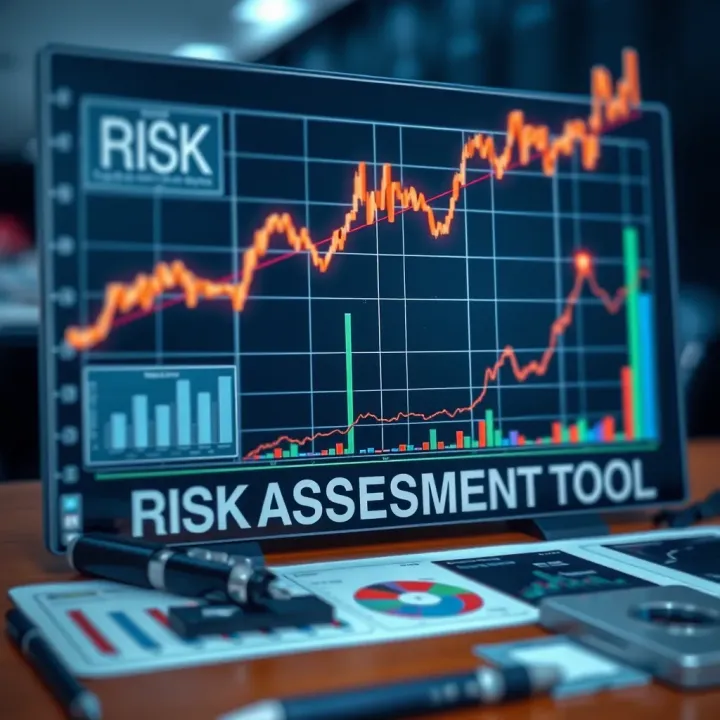
Manage business and daily risks with proven methods like assessment, sharing, and reduction. Protect your resources and prepare for uncertainty effectively in Kenya 📊🔒

🛡️ Learn how Kenyan businesses can identify risks, assess threats, and implement practical controls to safeguard assets and stay resilient amid economic changes. 📊
Based on 7 reviews