
Forex Risk Management for Kenyan Traders
Learn essential forex risk management strategies tailored for Kenyan traders 📊. Master position sizing, stop losses, and trading psychology for safer trades.
Edited By
Ethan Price
Forex trading carries inherent risks due to its high volatility and use of leverage. For Kenyan traders aiming to grow steadily, understanding and managing these risks keeps capital safe and trading sustainable. Risk management means controlling potential losses and protecting your funds against sudden market swings.
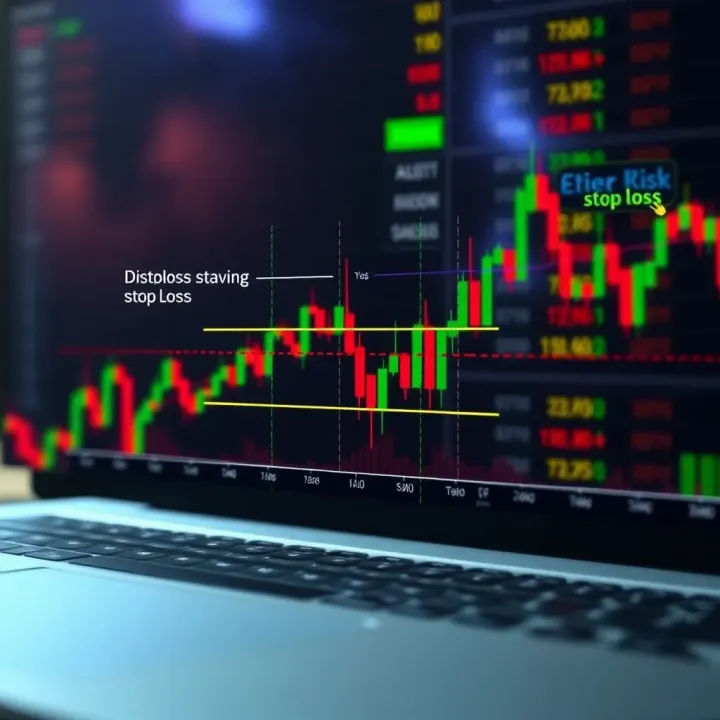
A key practice is setting stop-loss orders. This tool automatically closes your trade once the price hits a certain level, limiting loss without needing to monitor the market constantly. For example, if you buy USDKES at 110 and set a stop-loss at 109, your position closes if the rate drops to that point, capping your loss.
Another vital factor is position sizing, which determines how much of your capital goes into each trade. Avoid risking more than 1-2% of your total trading funds per trade. Suppose your account has KSh 100,000; risking 2% means a maximum loss of KSh 2,000 per trade, depending on your stop-loss.
Managing emotions is just as critical as tools. Fear and greed often misguide traders to hold losing trades too long or chase profits recklessly. Maintaining discipline means sticking to your strategy and risk limits without letting emotions push you off course.
Diversification also helps reduce risk exposure. Kenyan traders can diversify by trading multiple currency pairs or combining forex with other investment types like stocks or bonds. This approach avoids the total loss impact if one trade turns bad.
Lastly, stay informed on global and local economic events. Central bank decisions, political shifts, and even weather patterns affecting agriculture (a big part of Kenya's economy) can move forex markets suddenly. Checking reliable financial news sources helps anticipate and adapt to these changes.
In summary, effective forex risk management balances practical tools like stop-losses and position sizing with psychological control and market awareness. This combination, applied consistently, lays a strong foundation for steady growth in Kenya’s trading environment.
Risk management is not just another box to tick in forex trading; it forms the backbone of sustainable success. Traders often dive into the forex market chasing quick profits but overlook how vital managing losses and exposure to risk really is. Without solid risk control, even the most promising strategies can fall apart after just a few bad trades.
Forex markets are famously volatile, with currency prices shifting rapidly in response to economic data, political events, or even unexpected global news. This volatility means that without managing risk carefully, traders can face substantial losses that wipe out their account balances quickly. For example, a Kenyan trader holding a leveraged position on the US dollar could see their capital stretch thin if the dollar swings sharply against their position. This situation highlights why setting limits—like using stop-loss orders—is crucial. Risk management also helps traders maintain emotional control, preventing rash decisions driven by fear or greed when markets move unpredictably.
Proper risk management means you can stay longer in the game, adjusting your approach instead of losing your bet all at once.
Forex traders in Kenya face several specific risks that call for particular attention. One typical risk is leverage misuse. Leverage allows traders to control larger positions with smaller capital, but it also magnifies losses. Running a 1:100 leverage without adequate safeguards can turn a small adverse price move into a full account blowout. Another risk is inadequate market knowledge—traders who enter the market without understanding currency pairs, economic indicators, or global events may be caught off guard.
Currency risk itself is inherent since forex trading involves Jumia Kenya's payment currency variations, affecting trade value. Liquidity risk can also hit, especially with exotic currency pairs that don’t trade as frequently; sudden price gaps or slippage can occur.
External factors such as economic instability, political unrest, or sudden changes in CBK policies influence currency values unpredictably in the Kenyan context. For example, unexpected decisions by the Central Bank of Kenya (CBK) regarding interest rates can cause forex market tremors, catching traders unprepared.
Understanding these risks and addressing them through sound risk management tools lets a trader guard their capital and adapt quickly. It moves trading beyond guesswork to a more calculated, controlled endeavour.
By learning to identify the kinds of risks present and actively managing exposure, Kenyan forex traders stand a much better chance of building long-term profitability and avoiding the pitfalls that trip up so many newcomers.
Effective risk control is the backbone of any trading strategy. Without clear principles guiding how to manage risk, traders may expose their capital to unnecessary losses, especially in a volatile market like forex. Kenyan traders, for example, operate in a market influenced by fluctuating currencies such as the Kenyan shilling against the US dollar, euro, or British pound. This means a solid understanding of risk controls can safeguard against sudden shifts and unexpected downturns.

Knowing your risk tolerance is fundamental. It means defining how much of your trading capital you are prepared to lose on a single trade or over a set period without it affecting your overall financial health or psyche. For instance, many seasoned Kenyan traders risk no more than 1–2% of their total capital on one trade. So, if you have KSh 100,000, risking KSh 1,000 to KSh 2,000 per trade might be a sound approach.
A realistic risk tolerance protects you from chasing losses or making impulsive decisions during a market dip. It also helps to keep emotions in check, which is vital because panic or greed can lead to poor trade decisions. By setting clear limits, you create a buffer that keeps your capital safe and lets you trade consistently over time.
Leverage lets you control a large position with a relatively small amount of capital. For example, a leverage of 1:100 means you can trade KSh 100,000 while only putting up KSh 1,000. While this can boost profits, it can equally multiply losses quickly.
Wise use of leverage involves understanding that high leverage also increases risk. Many beginner traders in Kenya are tempted to go for the highest leverage available to maximise gains, but this often backfires. A good rule is to use the lowest leverage that fits your strategy—something like 1:10 or 1:20 for most retail traders is more manageable.
Additionally, watch your margins carefully. Kenyan brokers registered with the Capital Markets Authority (CMA) provide clear leverage options and margin requirements. Familiarise yourself with these to avoid margin calls or forced liquidations, which can drain your account fast.
Remember: Leverage is a double-edged sword—it can multiply gains but also magnify losses. The key is controlling how much exposure you take relative to your capital.
By setting realistic risk limits and using leverage carefully, Kenyan traders can better shield their funds from the market’s unpredictability. That said, consistent review of these principles as your experience grows is essential for long-term success.
Managing risk effectively means having the right tools at your fingertips. In forex trading, practical tools like stop-loss orders, position sizing, and diversification are essential to protect your money from sudden market swings and unexpected moves. These tools help you control how much you can lose on any trade and protect your capital from slipping away.
Stop-loss orders are your safety net—they automatically close a trade when the price hits a certain level, cutting losses before they get out of hand. For example, if you buy USD/KES at 110 and want to limit your loss to 2%, set a stop-loss order just below that level. This way, if the price drops quickly, you won’t lose more than you planned. Take-profit orders work in the opposite way, locking in gains once a target price is reached. These orders prevent the temptation to hold onto a winner for too long and watch profits evaporate. Both stop-loss and take-profit orders free you from staring at charts all day and help you trade with discipline.
Position sizing is about adjusting the amount you invest in each trade based on your risk tolerance and capital. A common rule among Kenyan traders is not to risk more than 1-2% of your total trading capital on a single trade. For example, if your trading account has KS00,000, risking 1.5% means putting KS,500 on a trade. If the stop-loss is 50 pips away, you calculate the lot size so that a 50-pip loss equals KS,500. This calculation keeps losses manageable and ensures that one bad trade won’t wipe out your savings. Many brokers, including those popular in Kenya such as HotForex or FXPesa, offer position size calculators to make this easier.
Relying on just one currency pair can be risky, especially in volatile times. Diversification means spreading your trades across different currencies to reduce the chance that a single event, like a political shift in the US or an economic surprise in Kenya, will badly affect your whole portfolio. Kenyan traders often combine major pairs like EUR/USD or GBP/USD with regional pairs like USD/KES or USD/ZAR. This mix balances out local and global risks. However, diversification should be strategic. Trading too many pairs without enough capital can stretch your focus and lead to careless decisions.
Using these practical tools helps Kenyan forex traders not only to guard their capital but also to trade more confidently, knowing they have measures in place to manage the market's uncertainties effectively.
Trading forex isn't just about numbers and charts; your mindset has a big say in how well you manage risk. Psychological factors often decide whether a trader sticks to their plan or abandons discipline when the market moves unexpectedly. Understanding these elements helps you stay in control, avoid impulsive decisions, and keep your trading consistent.
Discipline is the backbone of risk management. When emotions like fear or greed take over, they cloud judgment and can lead to rash moves. For example, after a few losing trades, some traders panic and start increasing their position sizes to "win back" losses, a dangerous habit that can wipe out their account quickly. Maintaining discipline means sticking to your trading rules — such as using predetermined stop-loss levels and not exceeding your risk tolerance — no matter what the market does.
Practical ways to maintain discipline include keeping a trading journal to record your decisions and emotions, setting alerts for when to enter or exit trades, and reviewing your strategy regularly. This approach prevents chasing losses and encourages calm decision-making even when markets are volatile.
Losses are part and parcel of forex trading, but it is how you handle them that sets successful traders apart. Accepting losses without letting them affect your confidence is key. Instead of trying to recoup losses quickly, focus on consistent, small gains that add up over time.
For example, Kenyan traders influenced by local economic disruptions, like unexpected interest rate changes by the Central Bank of Kenya (CBK), must adjust their strategies without panicking. Recognising that losses are inevitable helps you maintain a steady approach and avoid emotional swings.
Here are practical tips:
Set a maximum daily or weekly loss limit to stop trading when reached.
Take breaks after a losing streak to refresh your mind.
Practice mindfulness or simple breathing techniques to stay calm during trades.
Remember, forex trading is a marathon, not a sprint. Consistency in applying your risk management plan, especially when emotions run high, protects your capital and builds long-term success.
By focusing on psychological discipline and managing your reactions to losses, you improve your chances of trading profitably and sustainably in the unpredictable forex market.
Risk management in forex trading must align with Kenya's unique economic and technological landscape. Kenyan traders face different challenges compared to other regions – from market access limitations to local economic events and regulatory requirements. Customising risk management strategies to these realities improves decision-making and protects capital effectively.
Selecting a trustworthy broker available to Kenyan traders is fundamental. Many international brokers operate online but may not be accessible or regulated in Kenya, risking delays in fund withdrawals or customer service issues. Kenyan traders benefit from brokers approved by the Capital Markets Authority (CMA), which monitors fair trading standards.
Mobile-friendly platforms with seamless integration to M-Pesa are a practical choice, as M-Pesa remains the most popular and reliable payment method. For example, brokers like HotForex and FXTM support M-Pesa deposits and withdrawals, easing the funding process for local traders. Furthermore, platforms offering clear local-language support and education materials help traders understand risks better.
Check for features such as real-time price feeds, transparent spreads, and robust order execution. Avoid brokers with hidden fees or those that encourage over-leveraging without suitable warnings, as this could endanger your capital. Regularly reviewing user feedback from Kenyan traders on forums or social media can signal any emerging issues.
Kenya's economy is influenced by specific factors such as agricultural cycles, political developments, and regional trade agreements within the East African Community (EAC). For instance, yearly events like the long rains season affect commodity prices, with ripple effects on forex pairs linked to the Kenyan shilling (KSh).
Incorporating local news helps predict currency volatility. A good example is monitoring Central Bank of Kenya (CBK) policy decisions or government budget announcements, which tend to impact the KSh/USD rate significantly. Keeping up with developments like elections or infrastructure projects can signal upcoming currency shifts.
Using eCitizen and reputable local news sources provides timely information. Integrating these insights into your trading plan reduces surprises and helps set realistic stop-loss levels, limiting potential losses in volatile times.
Remember: No forex strategy works well without considering the local context. Tailoring your risk management to Kenya's environment sharpens your edge and guards against unexpected shocks.
By focusing on reliable brokers and staying informed about local economic events, Kenyan forex traders can make smarter decisions and protect their investments in this fast-moving market.
Learn essential forex risk management strategies tailored for Kenyan traders 📊. Master position sizing, stop losses, and trading psychology for safer trades.

Navigate compliance risk management in Kenya 🇰🇪 with strategies on culture, risk assessment, and monitoring to avoid legal and reputational pitfalls.
📈 Master effective Forex trading strategies like trend following, range trading, and breakout tactics to boost profits with smart risk management and clear goals.

📚 Discover top books for forex trading success! Learn strategies, market analysis, psychology & risk management tailored for Kenyan traders and beyond.
Based on 9 reviews