
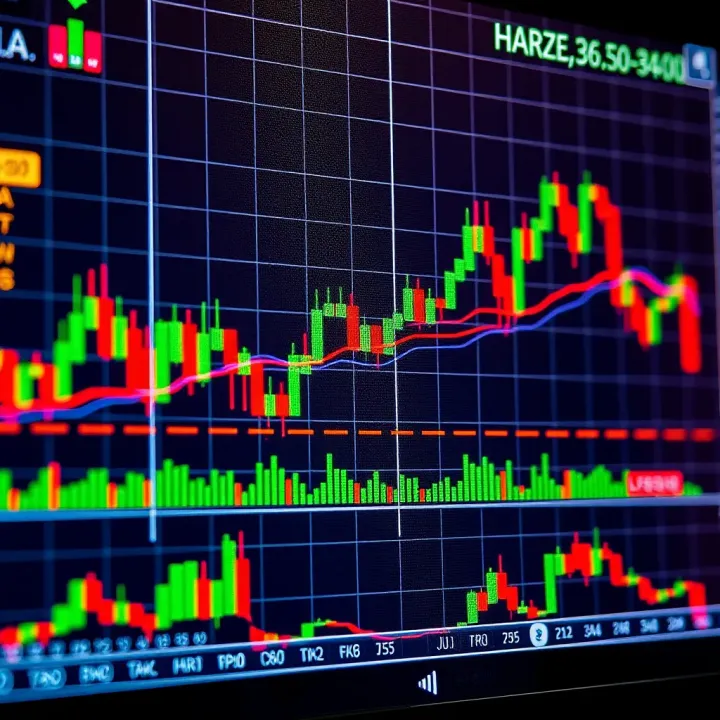
Forex Trading Charts Guide for Kenyan Traders
📊 Master Forex trading charts in Kenya! Learn to read patterns, choose time frames, and use indicators confidently for smarter currency trading decisions.
Edited By
James Hamilton
Forex trading remains a popular way for many Kenyans to engage with global financial markets. It involves buying and selling currency pairs to profit from price changes. However, navigating the forex world can be confusing without reliable information and clear guidance. This is where PDF resources tailored for Kenyan traders come in handy.
Using PDFs for forex trading offers several benefits. They are easily downloadable, can be accessed offline, and often compile essential knowledge in one place. For example, a well-structured PDF might cover basic forex terms, common trading strategies, risk management techniques, and tips specific to trading from Kenya, such as how to use local platforms or manage currency volatility involving the Kenyan shilling.

Understanding forex starts with grasping key concepts like currency pairs, pip values, leverage, and margin. PDFs often explain these clearly, using charts or examples. For instance, a practical scenario might show how trading USD/KES differs from EUR/USD in terms of volatility and spreads, highlighting what Kenyan traders should watch out for.
Beyond theory, good PDF guides include actionable strategies. They may outline how to use technical analysis tools like moving averages or RSI indicators, or explain basics of fundamental analysis such as interpreting economic news released by the Central Bank of Kenya (CBK). Including these details helps traders make informed decisions, improving their chances of success.
Risk management is another vital topic usually covered in PDFs. It teaches how to set stop-loss orders and calculate position size to avoid heavy losses. For example, a PDF could illustrate why risking only 1-2% of one's trading capital per trade is a prudent practice.
Finding reliable PDF resources involves selecting those produced by credible brokers, financial educators, or organisations compliant with Kenyan financial regulations. Beware of outdated materials or those promising quick, unrealistic profits.
Having a reliable PDF guide serves as a handy reference during trading sessions and study, especially for those balancing forex activities with other commitments.
In summary, using PDF materials designed for Kenyan traders provides a practical, structured way to learn and improve forex trading skills. It helps traders stay grounded in solid knowledge while navigating the fast-moving currency markets.
Forex trading can seem like a maze at first, but getting the fundamentals right sets you on a solid path. For Kenyan traders and investors, understanding forex basics is essential before diving into actual trading or using educational materials like PDFs. This introduction lays the foundation by clarifying what forex trading involves and who the main players are. That way, you grasp the market dynamics better and avoid costly mistakes.
Forex trading is simply the buying and selling of currencies to make a profit from their price changes. Unlike trading stocks, forex markets operate 24 hours day, five days a week, which means your opportunities to trade stretch beyond typical Nairobi business hours. For example, you might buy the US dollar against the Kenyan shilling (USD/KES) hoping the dollar strengthens, then sell later at a profit. It’s all about understanding currency pairs and how global news, interest rates, or political events influence their value.
Forex isn’t just speculation; some businesses use it to manage risk. For instance, Kenyan exporters sometimes sell dollars in forex markets to cover costs in Kenyan shillings. Knowing how forex works helps you spot these fluctuations. Using PDFs that explain these basics with clear examples lets you learn anywhere offline, which is handy when internet access is patchy.
The forex market has different types of players who influence trends and liquidity. Major banks, multinational firms, hedge funds, central banks—and retail traders like yourself—make up this mix. For example, the Central Bank of Kenya (CBK) occasionally intervenes to stabilise the shilling, impacting forex prices locally.
News from the US Federal Reserve or economic data like inflation figures can sway currency values globally. Imagine a political event disrupting oil supply: oil exporters’ currencies might rise, while importers’ might fall. Kenyan traders should keep an eye on such factors because they affect pairs like USD/KES, EUR/USD, or USD/UGX.
Successful forex trading starts with understanding who moves the market and why. Without this, even the best strategy in a PDF won’t deliver results.
Breaking down the market into these components helps you connect theory to real trading. PDFs that include profiles of market players and their typical influences make this link clear. In Kenya, pairing local market knowledge with global forex insight gives you a trading edge.
With this introduction cleared up, you’re ready to use PDF resources more effectively and deepen your trading skills based on solid facts and real market behaviour.
PDFs remain a solid tool for learning forex trading, especially when you want a clear, offline resource to refer back to. They are handy for breaking down complicated concepts into bite-sized, manageable sections that you can study in your own time. Unlike videos or scattered web articles, well-prepared PDFs often bundle essential information, charts, and examples in one place, making the learning process smoother and less distracting.
PDFs offer several key benefits for anyone serious about mastering forex trading. First, they work offline, so once downloaded, you’re not tied to the internet. This comes in handy for traders in areas with patchy connectivity, such as rural parts of Kenya. Second, many PDFs allow highlighting and note-taking, helping you personalise your learning and quickly revisit important points. Additionally, their fixed layout preserves charts, tables, and graphics exactly as intended by the author, unlike some web pages that may render content poorly on different devices.
Beyond convenience, many PDFs come from reputable sources and include proven strategies, risk management techniques, and practical trading examples. For instance, a PDF on day trading strategies might detail how to interpret candlestick patterns or calculate pivot points, with step-by-step instructions you can practise on demo accounts.

Official sites from central banks and financial institutions sometimes provide high-quality PDFs tailored to newcomers and experienced traders alike. For example, the Central Bank of Kenya offers resources that explain forex market basics and regulations affecting Kenyan traders. These documents are trustworthy and well-researched, reflecting local trading environments and laws, which helps traders stay compliant and informed.
Similarly, global institutions like the Bank for International Settlements publish guides outlining forex market mechanics and safety measures. While these might be more technical, they’re invaluable for anyone seeking a deep understanding of market function beyond just trading tips.
Many licensed forex brokers in Kenya provide free educational PDFs as part of their client onboarding or training programmes. Companies such as AvaTrade, FXTM, and local firms often offer materials covering everything from trading platform tutorials to advanced indicators. These PDFs are practical, often containing screen captures showing how to place trades or manage risk using specific tools.
Training centres and forex academies around Nairobi, Mombasa, and other towns also compile detailed guides to help beginners avoid early pitfalls. These resources usually accompany workshops or online webinars, allowing you to learn from experienced coaches while having written materials to revisit.
Local forex communities and forums frequently share curated PDFs that address challenges specific to Kenyan traders. These might include guides on navigating the Kenyan forex regulatory landscape, tips for trading the KSh against major global currencies, or strategies that take local economic events into account.
Such community-shared resources reflect Kenyan market nuances and often incorporate practical advice, such as effective money management on modest accounts or integrating M-Pesa deposits with trading platforms. Joining these groups can lead you to well-updated PDFs created by fellow traders who understand the day-to-day realities of forex trading here.
Accessing the right PDF resources, especially those tailored to Kenyan contexts, helps you build a sensible, practical forex trading foundation and avoid costly mistakes early on.
Using PDFs effectively gives you a reliable, portable learning toolkit that naturally fits into busy or unpredictable schedules common among Kenyan traders. They complement real-time practice well, providing the background knowledge needed before jumping into live trading.
Using PDFs to master forex trading strategies offers a clear advantage for many learners. PDFs organise complex strategies into digestible formats, allowing you to study at your own pace and revisit important points easily. For Kenyan traders, this means being able to balance trading education with daily work, without losing key details. Also, reliable PDFs often include real charts and examples, which are priceless for understanding how strategies perform under different market conditions.
Scalping is a strategy that focuses on making quick trades to gain small profits repeatedly throughout the day. It requires fast decision-making and closely monitoring market moves. Scalping suits those with access to real-time data and a stable internet connection—both crucial for executing trades within seconds. For instance, a trader might use a 1-minute chart to spot tiny price fluctuations in currency pairs like USD/KES and take advantage of these small moves frequently.
Day trading involves opening and closing trades within the same day, avoiding overnight risks that can come from after-hours price swings. This strategy balances more trade opportunities than scalping but requires careful analysis to catch the right entry and exit points. PDFs dedicated to day trading often provide checklists and time-based strategies to help manage trades efficiently during Nairobi’s active market hours, when global markets like London and New York overlap.
Swing trading takes a longer view by holding positions for several days to weeks to capitalise on expected price trends. This suits traders who cannot sit in front of screens all day but still want to participate actively. Swing traders might use weekly or daily charts in their PDFs to learn about trend lines and momentum indicators. For example, a trader might hold a position on EUR/USD expecting a 3-day upward trend based on economic news and technical signals.
Technical analysis studies past price movements and patterns using charts and tools like moving averages and the Relative Strength Index (RSI). PDFs on this topic usually include step-by-step guides on drawing support and resistance levels, which inform when to enter or exit trades. This method fits well with Kenyan traders who prefer visual data since it simplifies decision-making.
Fundamental analysis, on the other hand, looks at economic indicators, political events, and news releases that affect currency values. For instance, releases like Kenya’s GDP reports or US Federal Reserve interest rate decisions can impact forex pairs involving the Kenyan shilling. PDFs covering fundamentals teach how to interpret these events and integrate them into trading plans. Combining technical and fundamental analysis, as shown in many PDFs, helps you form a more balanced strategy and avoid relying solely on one type of data.
Understanding these strategies through well-crafted PDFs equips you with the knowledge to choose an approach that fits your style and schedule while preparing you for real Kenyan market conditions.
Forex trading can be quite rewarding, but it carries significant risks if not managed carefully. Managing risks helps protect your capital from unexpected market swings and prevents losses from spiralling out of control. Avoiding common pitfalls further strengthens a trader’s ability to make sound decisions and stick to their plan. Using PDFs that cover risk management techniques gives you clear guidelines and strategies, allowing you to trade more confidently and reduce costly mistakes.
A stop-loss order is a tool that automatically closes your trade once it hits a specific loss level. It acts like an insurance to limit the amount you can lose on any single trade. For instance, if you buy the USD/KES at KS10 and set a stop-loss at KS08, your trade will close to prevent losses exceeding KS. This helps avoid emotional decisions during sharp market moves, which are common in forex trading.
Stop-loss orders are vital because forex markets can move fast, especially during news or economic reports. Without a stop-loss, losses can accumulate quickly, wiping out your account. Many PDF guides include step-by-step examples on how to calculate and place stop-losses effectively based on your trading strategy and risk appetite.
Position sizing means deciding how much of your capital to invest in each trade. Instead of risking a large chunk on one position, prudent traders risk only a small percentage — typically 1-3% of their total trading capital. This spreads risk across multiple trades and prevents one bad trade from causing major damage.
For example, if your account balance is KS00,000 and you risk 2% per trade, you limit your loss to KS,000 even if the trade hits your stop-loss. PDFs with trading worksheets often provide formulas and tables to help you calculate your ideal position size based on stop-loss distance and account size. This avoids guesswork and encourages disciplined money management.
Diversification in forex means trading different currency pairs or combining forex with other financial instruments to avoid exposure to just one market event. For a Kenyan trader, relying only on USD/KES or EUR/USD can increase vulnerability if those pairs move unfavourably.
By diversifying into pairs like GBP/USD, USD/JPY, or commodities-related forex pairs, you lower the risk of a single economic event ruining your portfolio. PDFs that explain diversification often share examples of balanced portfolios and highlight the pros and cons of various currency correlations. This helps traders build a more resilient trading approach.
Many traders fall into avoidable traps such as overtrading, chasing losses, or ignoring economic news affecting currency values. PDFs geared towards forex education lay out these pitfalls in clear terms and provide actionable advice on steering clear of them.
For example, a PDF might include checklists to stop overtrading or reminders to review economic calendars before entering trades. Such resources also emphasise maintaining trading discipline and reviewing past trades, which helps identify weaknesses and improve future performance.
Avoiding risks and pitfalls isn’t just about knowing what can go wrong — it’s about having practical tools and strategies to prevent losses and maintain steady growth. Using well-prepared PDF guides gives you this safety net as you explore forex trading.
Through these risk management techniques and learning from common mistakes, Kenyan traders can approach forex with a stronger foundation, protecting their investments while seeking opportunities to profit.
Forex trading in Kenya comes with unique challenges and opportunities that traders must understand to succeed. Practical tips tailored to the local market and how to effectively use PDF resources help traders make smarter decisions. PDFs provide detailed, portable guides on subjects like trading rules, strategy application, and market monitoring — all in one place for easy reference.
Kenyan forex trading is overseen primarily by the Capital Markets Authority (CMA), which regulates brokers and trading platforms operating in the country. Traders must choose brokers authorised by the CMA to avoid falling into unregulated schemes or scams. This ensures that their funds enjoy protection and trading activities adhere to Kenyan law.
For instance, popular brokers such as FXPesa, Exness, and HotForex offer CMA-regulated accounts, which adds a layer of security. PDFs that explain CMA rules and compliance requirements help traders spot legitimate brokers and understand their rights, including dispute resolution mechanisms.
While major forex pairs like EUR/USD or GBP/USD dominate global markets, Kenyan traders often focus on pairs involving the Kenyan Shilling (KES) such as USD/KES and EUR/KES. These pairs are influenced by local economic conditions, government policy, and cross-border trade with countries like the US and EU.
PDF resources covering the behaviour of USD/KES or EUR/KES provide valuable insights about interest rate trends from the Central Bank of Kenya (CBK), inflation data, and political events that may impact price movements. For example, during planting seasons or political campaigns, the KES often sees volatility, which traders can anticipate using well-structured PDF guides.
PDFs become more useful when combined with practical trading on platforms like MetaTrader 4 or 5, available through local brokers. Kenyan traders benefit from keeping strategy PDFs open while practising chart analysis or placing trades. Many PDFs include screenshots, step-by-step tutorials, and examples that can be directly applied.
Moreover, some brokers offer access to educational PDFs within their platforms, allowing traders to review lessons without leaving the trading interface. This integration supports better retention and immediate application of learned concepts.
Keeping your PDF studies paired with hands-on practice on your trading platform strengthens understanding and improves confidence, especially when starting.
By incorporating locally relevant PDF resources into daily trading routines, Kenyan forex traders can stay informed, manage risks better, and adapt to market movements that directly affect their trades. This practical approach bridges the gap between theory and actual trading performance.
📊 Master Forex trading charts in Kenya! Learn to read patterns, choose time frames, and use indicators confidently for smarter currency trading decisions.

📱Explore top Forex trading apps in Kenya! Learn features, risks, regulations & smart tips to trade confidently in the mobile Forex market.💹

Explore effective forex trading strategies in Kenya 🇰🇪 including analysis, risk management, and psychology to boost your trading confidence and success 📈💡

Discover the best forex trading times in Kenya 📈. Learn how market hours, liquidity, and news impact currency pairs for smarter trades 🕒💹.
Based on 9 reviews