

Smart Forex Trading Tips for Kenyans
Explore effective forex trading strategies in Kenya 🇰🇪 including analysis, risk management, and psychology to boost your trading confidence and success 📈💡
Edited By
Oliver Bennett
Forex trading in Kenya has become increasingly popular, driven by the country's growing access to digital platforms and mobile payment systems like M-Pesa. However, succeeding in this market means more than just opening an account on a trading app. It requires solid strategies tailored to Kenya's unique financial environment and the global forex market.
For Kenyan traders, understanding market dynamics alongside risk management is key. Currency pairs involving the Kenyan shilling (KES), US dollar (USD), euro (EUR), and some East African currencies often feature in local trading. Keeping an eye on regional economic indicators such as inflation rates, central bank policies from the Central Bank of Kenya (CBK), and trade developments within the East African Community (EAC) can give traders an edge.

Successful forex trading in Kenya demands blending global insights with local realities, especially in managing risks and timing trades.
To build effective forex trading strategies, Kenyan traders usually start with fundamental and technical analysis. Fundamental analysis looks at economic news, interest rates, and geopolitical events affecting currency values. For example, a sudden change in CBK's monetary policy or inflation reports can heavily influence the KES/USD pair.
Technical analysis, on the other hand, relies on price charts and indicators like moving averages, RSI, and support/resistance levels to predict market moves. Many traders in Nairobi and beyond use platforms such as MetaTrader 4 or 5 for this purpose.
Risk management cannot be overstated. Setting stop-loss orders, using appropriate trade sizes relative to one’s capital, and avoiding over-leverage protects against sudden market swings. In Kenya, where many traders balance forex with other income streams, protecting the principal investment is vital.
Monitor local economic news from sources like CBK releases and Kenya National Bureau of Statistics reports.
Use demo accounts to test strategies without risking real KSh.
Be mindful of trading hours since forex operates 24/5 globally but local market access and liquidity can vary.
Understand how transaction costs and spreads impact profitability, especially when trading with smaller amounts.
By combining these approaches, traders can tailor forex strategies that fit both global trends and the Kenyan market context, improving their chances of consistent profits.
Getting a grip on forex trading strategies is the first step for any Kenyan trader serious about gaining an edge in the global currency market. These strategies form the roadmap, guiding how you enter, manage, and exit trades rather than relying on guesswork or emotion. Understanding how to apply them increases your chances of consistent profits and helps protect your capital against unexpected swings.
Major currency pairs like EUR/USD, GBP/USD, and USD/JPY dominate forex trading volumes worldwide and are popular among Kenyan traders due to their liquidity and tighter spreads. For instance, trading EUR/USD often means lower transaction costs which suits traders starting with smaller capital in Kenya. The US dollar (USD) also features frequently as it’s the global reserve currency and deeply influences the Kenyan shilling’s value.
The forex market operates 24 hours from Monday to Friday, opening first in Asia, then Europe, and finally North America. For Kenyans, the best trading times often coincide with the London and New York sessions between 3 pm and 11 pm EAT, where volume and volatility are higher. Knowing when major markets open can help you time trades better — outside these hours, the market tends to be sluggish with wider spreads, which can raise trading costs.
In Kenya, forex trading takes place mostly online through licensed brokers regulated by the Capital Markets Authority (CMA). These brokers offer access to international currency pairs with facilities for deposit via M-Pesa or bank transfer, making the process smooth for locals. However, traders should always verify broker licences to avoid scams — the CMA publishes a list of authorised brokers that Kenyans can safely use. It's also vital to be aware of the time difference when trading overseas markets, as well as the impact of local economic events on forex pairs involving the Kenyan shilling.
Without a strategy, forex trading can quickly become a gamble where emotions like fear or greed take over. Strategies instil discipline, ensuring decisions are based on objective analysis rather than instant reactions. For example, a Kenyan trader using a clear stop loss and take profit plan is less likely to lose heavily during sudden market moves. A well-defined strategy also helps identify consistent patterns and smoothens out the spikes of wins and losses over time.
There is no one-size-fits-all strategy; rather, traders pick depending on their goals, time availability, and risk tolerance. Some common types include scalping (quick trades within minutes), day trading (positions closed before market close), and swing trading (holding trades for days). For instance, a busy Kenyan professional might prefer swing trading to avoid constant screen monitoring, while a young hustler might embrace scalping for quick profits. What’s key is to test a strategy using demo accounts before risking real money, and to adapt it based on local market conditions like the influence of weather on commodity prices impacting the shilling.
A sensible forex strategy in Kenya blends global market understanding with awareness of local factors and personal trading style for the best results.
Technical analysis plays a vital role in forex trading by helping traders make sense of price movements using historical data. For Kenyan traders, this approach offers practical insights that are especially useful given the fast-paced nature of the forex market. By studying price charts and indicators, traders can identify patterns and trends that guide timely entry and exit decisions.
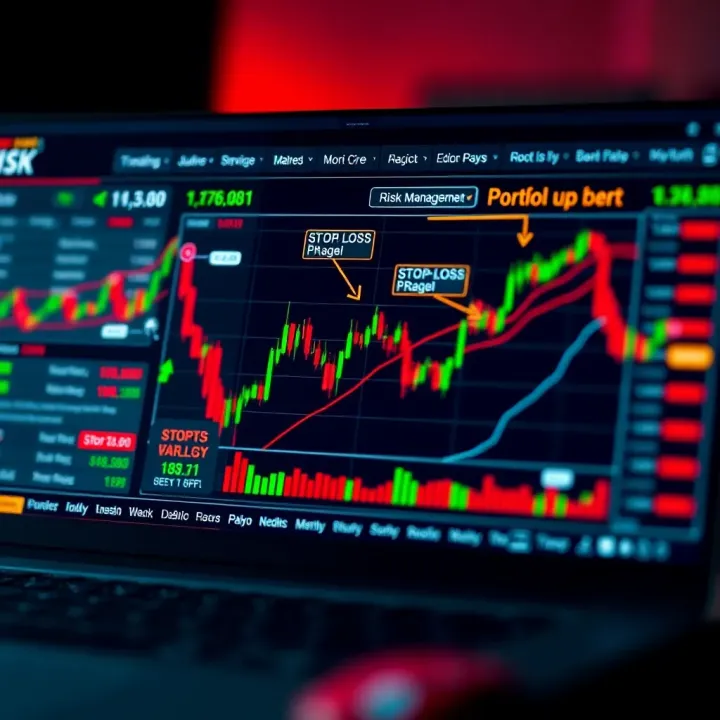
Charts are the backbone of technical analysis. The candlestick chart is particularly popular because it provides detailed information about the opening, closing, high, and low prices within a specific period. This makes it easier to spot reversal signals or continuation patterns. For example, a candlestick showing a long wick on the upper side might indicate selling pressure, signalling a potential price drop.
Besides candlesticks, traders often use line charts for a simple overview of closing prices over time, useful when focusing on overall trends rather than detailed candle patterns. Bar charts fall somewhere in between, displaying open, high, low, and close prices—though not as visually intuitive as candlesticks.
Indicators add another layer of insight. The Moving Average (MA) smooths out price data, helping traders identify the prevailing trend. For instance, a 50-day MA crossing above the 200-day MA often signals a bullish trend, which Kenyan traders can use to time longer-term trades effectively.
The Relative Strength Index (RSI) measures momentum, indicating whether a currency pair is overbought or oversold. An RSI above 70 suggests an overbought market, hinting at a possible price reversal downward, while below 30 points to oversold conditions.
The Moving Average Convergence Divergence (MACD) combines trend and momentum analysis by showing the relationship between two moving averages. Crosses of the MACD line over its signal line can reveal buy or sell opportunities. Many Kenyan traders find MACD helpful in volatile times when quick decisions matter.
Identifying and sticking to trends is one straightforward way to trade forex. Trends show the general direction prices are moving, either up (bullish) or down (bearish). For example, if the USD/KES pair has been steadily rising over days or weeks, a trend follower would seek buying opportunities rather than going against the move.
Practical trend identification might involve looking at moving averages or drawing trendlines connecting recent lows or highs. This helps to spot when a trend is strong enough to ride for potential profits.
Momentum strategies focus on the speed of price changes rather than just direction. By using momentum indicators like RSI or MACD, traders can time their market entries and exits better. For instance, a sharp rise in momentum might signal an opportunity to enter a trade early before the price moves further.
Momentum can sometimes catch price moves ahead of visible trend changes. Kenyan traders watch this closely, especially during key economic releases when currency pairs like USD/KES or EUR/USD can swing wildly.
In sum, mastering these technical analysis techniques empowers Kenyan forex traders with practical tools to make informed decisions. Familiarity with charts and indicators, combined with trend and momentum strategies, helps manage risk and improve the chances of consistent gains.
Fundamental analysis helps traders understand what drives currency values beyond price charts. For Kenyan forex traders, it is especially useful because Kenya’s shilling (KES) is influenced not just by local factors but also by global economic events. Looking at economic data, government policies, and political developments gives clear signals about currency strength or weakness, helping you make informed trading choices.
Interest rates set by central banks, like the Central Bank of Kenya (CBK), strongly affect forex markets. When CBK raises rates, holding investments in Kenyan shillings becomes more attractive because higher returns offset inflation and risk. This usually pushes the shilling higher against other currencies. Conversely, cuts in interest rates can make the shilling less appealing, leading to depreciation.
Globally, traders watch central banks like the US Federal Reserve or the European Central Bank since their rate decisions impact major currencies like the US dollar or euro. For example, if the Fed raises rates unexpectedly, the dollar tends to strengthen, which could weaken the KES/USD pair. Kenyan traders need to monitor both local and international rate moves to adjust their trading positions accordingly.
Inflation shows the rise in prices of goods and services. Moderate inflation is normal, but high inflation means purchasing power drops, hurting a currency’s value. Kenya’s inflation rate is released monthly; a sudden spike can signal weakening of the shilling because investors fear higher costs and potentially lower economic stability.
GDP reports provide insight into overall economic health. When Kenya’s GDP growth beats expectations, it signals a robust economy, encouraging foreign investment and strengthening the shilling. On the flip side, sluggish or negative GDP growth can cause the currency to lose ground. Tracking these reports helps traders anticipate long-term currency trends beyond short-term price moves.
Politics can rattle forex markets, especially during election seasons or times of unrest in Kenya. Political uncertainty often leads traders to avoid the shilling, causing it to dip as demand falls. For instance, tense elections or delays in political processes have in the past led to shilling volatility.
On the other hand, stable governance and smooth political transitions boost investor confidence. Kenyan traders should watch political news closely since sudden developments can dramatically impact currency pairs, sometimes overnight.
Economic calendars list key upcoming events like rate announcements, inflation releases, and GDP data, along with their expected timings. For Kenyan traders, using these calendars helps plan when to enter or exit trades to avoid or take advantage of market swings.
A well-timed trade that takes account of scheduled economic news can reduce surprises. For example, staying out of the market just before a CBK rate decision or preparing for sudden price moves can protect your capital.
Not all news affects the market as expected. Sometimes, even if economic data is strong, geopolitical tensions or unexpected global events might reverse currency trends. Kenyan traders should avoid overreacting to one-off announcements and instead look for confirmation across multiple data points.
Developing a clear plan on how to handle news — whether to trade immediately or wait for the dust to settle — is essential. Practising patience and sticking to risk limits reduces emotional trading, which often leads to losses. This measured response increases chances of making profits based on fundamentals rather than rumours or speculation.
Trade Tip: Combining fundamental analysis with technical tools lets you see the big picture. For instance, if inflation rises but your charts show strong support levels for KES/USD, you can decide on a better entry or exit point rather than reacting blindly to headlines.
Effective risk management and disciplined trading are the backbone of consistent success in forex trading. Without protecting capital and controlling emotions, even the best strategies can fail. For Kenyan traders, where market volatility can be influenced by global trends and local factors like shilling fluctuations and political events, managing risk is especially key. Staying disciplined means you don't get swayed by greed or fear, which often leads to costly mistakes.
Protecting capital with stop losses is crucial to avoid deep losses when the market moves unexpectedly. A stop loss automatically closes your trade at a predefined level, limiting how much you lose on that position. For example, if you buy the USD/KES pair at KS10 and set a stop loss at KS08, your trade will exit if the rate drops, protecting your capital from further decline. This tool is practical especially for retail traders who cannot monitor the market constantly.
Determining realistic profit targets helps lock in gains before the market reverses. Setting take profit orders means you plan your exit based on achievable price moves rather than hope. If historical data shows USD/KES often moves 150 points a day, aiming for a target of 500 points might be unrealistic and expose you to risks. Instead, target a reasonable profit that reflects current market conditions and your trading timeframe.
Understanding leverage risks is a must because while leverage can magnify gains, it can also wipe out your account quickly if used carelessly. Many Kenyan brokers offer leverage of up to 1:100 or more, but blind use can be dangerous. For example, trading with KSh 10,000 and 1:100 leverage means you control KSh 1,000,000 in the market. A 1% adverse move would lose you your entire KSh 10,000.
Calculating position sizes for Kenyan traders means adjusting how much you trade based on your total capital and risk tolerance. Many recommend risking only 1-2% of your trading capital per trade to stay safe. So, if your account balance is KS00,000, risking 2% means you should limit your loss to KS,000 per trade. This requires careful calculation of lot sizes and stop loss distances to ensure you don’t overexpose yourself.
Avoiding impulsive decisions is crucial because emotional trading often leads to chasing losses or jumping into trades without proper analysis. For Kenyan traders, it’s common to hear stories of people putting in large sums after a bad streak hoping to recover quickly, only to lose more. Being patient and sticking to your plan prevents this.
Developing a consistent trading routine builds good habits that filter out noise and improve decision-making. Setting specific times to analyse charts, prepare for trades, and review results helps avoid overtrading or random guesses. Treating forex like a business builds discipline and reduces emotional stress, leading to better outcomes over time.
Keeping risk and emotions in check is not just theory; it's about protecting your hard-earned money and maintaining steady progress in forex trading.
Advanced trading strategies provide Kenyan traders with methods to capture profits more actively and manage varying market conditions. These approaches require a deeper understanding of market behaviour and demand quick decision-making, making them suitable for traders ready to sharpen their skills beyond basic techniques. Employing such strategies can improve trade timing and capitalise on short-term fluctuations or medium-term trends, especially in Kenya’s dynamic forex scene.
Scalping is a fast-paced strategy focused on making many small trades throughout the day to profit from tiny price movements. Kenyan scalpers often target major currency pairs like USD/KES or EUR/USD, exploiting high liquidity and low spreads. This approach demands intense focus and quick reactions, as positions often last mere seconds or minutes. It’s practical for traders who can monitor the market closely during active hours and have reliable internet access to handle prompt order execution.
For scalping and day trading, traders in Kenya benefit from platforms offering real-time data and low latency execution, such as MetaTrader 4 or 5, which most local brokers support. Additionally, strong mobile connectivity is crucial; many use Safaricom’s 4G network or fibre-optic broadband in urban centres for stability. Tools like one-click trading and price alerts help seize brief opportunities quickly. Kenyan traders should also consider brokers with competitive spreads and minimal commissions to keep trading costs low during frequent trades.
Swing trading aims to capture significant price moves over several days or weeks. Kenyan traders can take advantage of this approach by analysing daily or 4-hour charts to spot unfolding trends. It suits those balancing trading with other daily responsibilities, as it doesn’t require constant market watching like scalping.
Technical signals such as moving averages crossing or RSI divergence guide swing traders on entry and exit points. Meanwhile, fundamental factors—like changes in Kenya’s inflation rates or CBK’s policy decisions—add context for validating or adjusting trades. This blend helps traders ride meaningful price shifts without getting caught in short-lived swings.
Kenyan forex traders need to factor in local currency fluctuations, especially the Kenyan shilling (KES), which can be volatile due to trade balances, government borrowing, or election cycles. For example, during festive seasons or political events, sharp KES movements offer trading opportunities but also risks requiring close monitoring.
Besides national events, regional East African Community (EAC) economic news can impact forex markets. Updates on infrastructure projects or trade agreements often shift investor sentiment, influencing forex pairs linked to the region. Being aware of these developments helps Kenyan traders adjust strategies timely to avoid surprises and capture fresh market trends.
Advanced strategies aren’t for every trader, but they offer scalable approaches tailored for Kenya’s unique forex environment, combining fast trades, steadier gains, and local market insights for an edge.
Explore effective forex trading strategies in Kenya 🇰🇪 including analysis, risk management, and psychology to boost your trading confidence and success 📈💡
📊 Master Forex trading charts in Kenya! Learn to read patterns, choose time frames, and use indicators confidently for smarter currency trading decisions.

📱Explore top Forex trading apps in Kenya! Learn features, risks, regulations & smart tips to trade confidently in the mobile Forex market.💹
📊 Discover smart binary trading strategies for Kenyan investors! Learn to analyze markets, manage risks, and enhance your trading skills with practical tips.
Based on 5 reviews