

Best Forex Trading Books for Kenyan Traders
📚 Looking for the best forex trading books in Kenya? Discover key criteria, top picks, and practical tips to boost your trading skills today!
Edited By
Henry Foster
Forex trading in Kenya is gaining traction as more individuals look to capitalise on currency fluctuations. The market, however, comes with its own language that can confuse any new or even experienced trader. Understanding key terms makes a big difference—it helps you follow market trends and make smarter choices with your money. This section introduces the essential forex terminology every Kenyan trader should have under their belt.
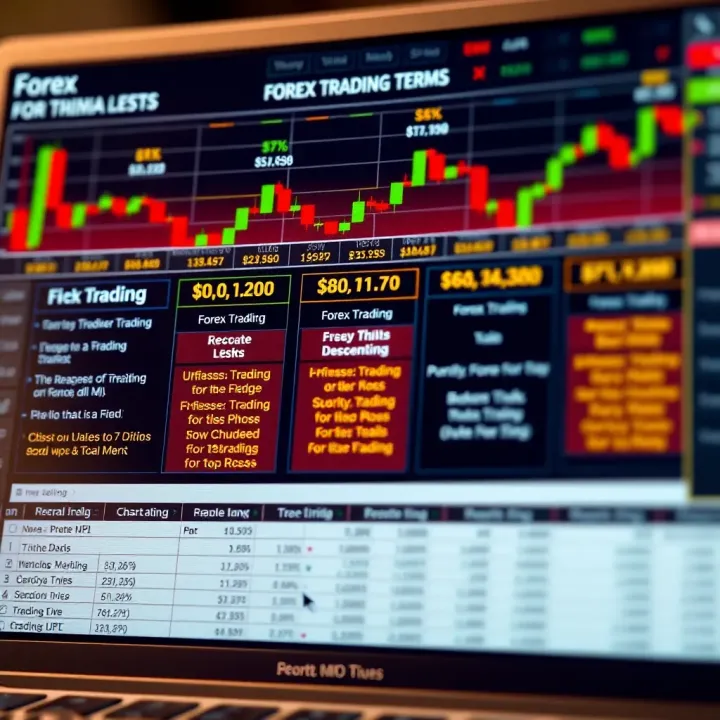
In forex, currencies are always traded in pairs, like USD/KES (US Dollar to Kenyan Shilling) or EUR/USD (Euro to US Dollar). The first currency is called the ‘base currency’ and the second one the ‘quote currency’. The forex price tells you how much of the quote currency you need to buy one unit of the base currency.
The bid price is the highest price a buyer is willing to pay for a currency, while the ask price is the lowest price a seller accepts. The difference between the two, known as the spread, represents the broker’s commission. For example, if the bid for USD/KES is 110.00 and the ask is 110.05, your cost per trade includes that 0.05 spread.
Kenyan traders often use leverage to increase buying power. Leverage lets you control a larger position with a smaller amount of money, called margin. For instance, with 1:100 leverage, you only need to put up KSh 1,000 to control KSh 100,000 worth of currency. But remember, leverage can amplify losses as much as gains.
A pip is the smallest price move in forex markets, usually the fourth decimal place (0.0001) in currency pairs like EUR/USD. For USD/KES, due to its higher value, pips might be measured differently. Tracking pips helps you understand price changes and calculate profits or losses.
Tip: Knowing these terms helps you navigate offers from brokers like EGM Securities or Banc de Binary Kenya with confidence.
While the spread is how brokers earn on each trade, some also charge a commission especially on lower spreads. Be clear which method your broker uses to avoid surprise fees.
Trades are measured in lots. A standard lot equals 100,000 units of the base currency, a mini lot is 10,000 units, and a micro lot is 1,000 units. Kenyan traders often start with mini or micro lots to manage their risks better.
Understanding these basic terms forms a solid foundation. Next, you’ll find more advanced vocabulary explained, giving you even better control over your forex journey in Kenya’s trading environment.
Getting a solid grasp on forex trading basics sets the foundation for making smart trading decisions. Without clear understanding, even the most experienced trader can get lost in jargon or make costly mistakes. For Kenyan traders, knowing the key elements behind currency exchange and the structure of forex markets helps in navigating global currencies, especially while using platforms like M-Pesa or bank transfers.
Forex trading simply means exchanging one currency for another. For instance, when a Kenyan buys US dollars for their shillings, they participate in currency exchange. This is a practical activity that happens daily from tourists exchanging cash to companies settling international invoices. Traders in forex aim to profit from changes in exchange rates — if they buy dollars when cheaper and sell when the price rises, they make gains. Understanding this helps traders know what they’re really buying or selling.
The forex market operates worldwide, running 24 hours a day from Sunday evening to Friday night in Kenyan time. In Kenya, forex trading offers opportunities for those who want to tap into global financial flows without leaving their homes. The availability of platforms like Safaricom’s cyber services and bank online portals has enabled many to join this market directly. While banks and large institutions dominate forex volumes globally, retail traders in Kenya increasingly find niche opportunities by trading currency pairs relevant to the shilling.
Every forex trade involves two currencies, known as a currency pair. The first currency in the pair is called the base currency, while the second is the quote currency. The price shows how much of the quote currency you need to buy one unit of the base currency. For example, in the pair USD/KES, USD is the base and KES (Kenyan shilling) is the quote. If the rate is 110, it means 1 US dollar costs 110 Kenyan shillings.
For Kenyan traders, common pairs include USD/KES, EUR/USD, and GBP/USD since they reflect currencies often involved in business or travel. Understanding which currency is base or quote is crucial since it influences profit calculations and risk management. The exchange rate movement can be seen as the shilling weakening or strengthening against the dollar, depending on trade flows or economic news.

Knowing the basics of currency pairs and how trading the exchange rate works gives Kenyan traders an edge in managing their investments and handling market movements pragmatically.
In summary, understanding these forex basics — currency exchange concepts, market operations, and currency pairs — is the first step for any Kenyan trader aiming to navigate forex confidently and effectively.
Understanding common forex trading terms is fundamental for every trader, especially in Kenya, where forex trading is gaining momentum as a source of income and investment. These terms are not just technical jargon; they shape how you interpret market movements, manage risks, and make informed decisions. By mastering terms like pip, spread, leverage, and margin, you position yourself to trade forex more confidently and avoid costly mistakes.
A pip is the smallest price change a currency pair can make, often the fourth decimal place in price quotes. For example, if the USD/KES rate moves from 110.2500 to 110.2501, that movement is one pip. Understanding pips helps you measure how much profit or loss you gain from small price shifts. For Kenyan traders, grasping the value of a pip is crucial, especially when calculating returns or risks given the volatility of currencies like the US dollar (USD) and Kenyan shilling (KES).
The spread is the difference between the buy and sell prices quoted by your broker. Imagine you want to buy USD/KES at 110.50 but can only sell at 110.45; the spread here is 0.05. This difference represents the broker’s fee and the cost you incur when entering and exiting trades. Smaller spreads mean lower transaction costs, which is vital in keeping forex trading affordable, especially for retail traders operating with modest capital.
Leverage allows you to control a larger position with a smaller amount of your own money. In Kenya, many brokers offer leverage ratios like 1:100 or 1:200. This means with KS0,000, you could control a forex position worth KS million or KS million, respectively. While leverage can make gains bigger, it also magnifies losses, so it’s important to use it carefully to avoid wiping out your trading account.
Margin is the amount of money your broker requires you to hold as a guarantee when you trade with leverage. If you open a position worth KS million with 1:100 leverage, your broker might ask for a margin of KS0,000. Think of margin like a security deposit rather than the full value of the trade. Without enough margin, you cannot maintain your open trades, and the broker may close positions automatically to prevent losses from growing. Keeping track of your margin is essential to avoid unexpected margin calls, which can disrupt your trading plan.
Mastering these terms helps you not only trade smarter but also understand how brokers operate. It’s the first step in turning forex trading from guesswork to a calculated activity, particularly in vibrant markets like Kenya’s forex scene.
Knowing how to use different order types and understanding position directions are key for traders in the forex market. These tools help you control when and how trades are executed, which can protect your capital and improve your chances of making profits. In Kenya, where market conditions can shift quickly due to local and global economic news, mastering these basics pays off.
A market order is the simplest type—it instructs your broker to buy or sell a currency pair immediately at the current price. Think of it like buying petrol at a duka where you pay the price shown on the pump without bargaining. It’s useful when you want to enter or exit the market fast, but the downside is you might get a slightly different price if the market moves quickly.
On the other hand, a limit order lets you specify the price at which you want to buy or sell. For example, if the USD/KES rate is 110 but you believe it will drop to 108 before rising again, you can place a buy limit order at 108. Your trade will only happen if the price hits 108 or better. This helps you avoid paying more than you want. It’s like arranging with the duka owner to buy petrol only if they reduce the price to a set figure. Limit orders provide control but might mean you miss out if the price never reaches your target.
Protecting your funds is critical, and that’s where stop loss orders come in. This order automatically closes a trade at a pre-set level to limit losses. Suppose you buy EUR/USD at 1.10 but don't want to lose more than 50 pips, you can place a stop loss at 1.0950. If the price falls to this level, the trade closes, saving you from bigger losses. Many Kenyan traders use stop loss to avoid wiping out their savings in volatile moments.
Take profit orders work the other way—they close your trade once it reaches a profit target. If you bought GBP/USD at 1.25 and expect it to rise to 1.27, a take profit at that level locks in gains automatically. This removes the temptation to hold on too long and risk losing profits. With these orders, you can trade confidently knowing your worst-case and best-case scenarios are mapped out in advance.
Going long means buying a currency pair because you expect the base currency to strengthen against the quote currency. For instance, if you go long on USD/KES, you anticipate the US dollar will appreciate relative to the Kenyan shilling. The goal is to sell later at a higher price for profit. It’s like buying maize when prices are low, hoping to sell at a better price during the festive season.
Going short is the opposite—you sell a currency pair expecting its price to drop so you can buy it back cheaper later. For example, if you short GBP/USD, you think the British pound will weaken versus the dollar. This strategy allows traders to profit even when markets are falling. However, it carries risks since prices can rise unexpectedly. For Kenyan traders, short positions can protect or diversify portfolios especially during times of international uncertainty.
Understanding when to use market or limit orders, plus how to go long or short, gives you strong control over your forex trading journey. These are fundamental skills to help navigate Kenya’s forex market more effectively.
Managing risks is essential in forex trading, especially for Kenyan traders dealing with unpredictable markets and fluctuating currencies. Risk management terms cover tools and techniques that help you protect your capital and avoid big losses. They are practical parts of every trading plan, giving you a way to control how much you could lose and lock in profits when things go your way.
A stop loss order tells your broker to close a trade automatically when the price hits a certain level, limiting your losses. For example, if you buy the USD/KES pair at KS10 and set a stop loss at KS08, your position will close if the price drops to KS08, protecting your money from falling further. This tool helps you avoid emotional trading decisions that might lead to bigger losses unexpectedly.
Take profit orders work the other way around by automatically closing your trade once the price reaches your target profit. Say you enter a trade on EUR/USD at 1.1000 and set a take profit at 1.1100; when the price hits that level, your trade closes, securing gains without watching the market all the time. This technique ensures you don’t lose profits by waiting too long for further moves.
Lot size is the number of currency units you trade. A standard lot equals 100,000 units of the base currency, a mini lot 10,000 units, and a micro lot just 1,000 units. Kenyan traders new to forex may prefer mini or micro lots to start because the risks are smaller. For example, trading with one micro lot on USD/KES means every pip move is worth about KS0. This lets you practise without risking too much capital.
Picking the right lot size depends on your account size, risk tolerance, and the stop loss distance. A common approach is risking only 1–2% of your trading balance on any single trade. So, if your account is KS0,000, you might risk KS00 on a trade. If your stop loss is 50 pips, you calculate the position size so that 50 pips equals KS00 loss. Proper position sizing ensures you can stay in the game longer and recover from inevitable losing trades without wiping out your account.
Managing risk well isn’t just about avoiding losses; it’s about making sensible decisions so you can trade consistently and grow your funds over time.
Market analysis is fundamental for every forex trader in Kenya aiming to make wise decisions. This process involves examining various factors that influence currency prices to predict market movements better. Understanding core market analysis concepts helps traders spot opportunities and avoid costly mistakes, especially when trading volatile pairs like USD/KES.
Chart reading and indicators demand a keen eye for price movements displayed graphically over time. Chart patterns such as head and shoulders or double tops help traders predict future direction based on past trends. Indicators like moving averages or Relative Strength Index (RSI) provide clues about market momentum or potential reversals. For instance, a Kenyan trader noticing an upward trend in USD/KES alongside a bullish signal on the RSI may choose to enter a long position confidently.
On the other hand, economic factors affecting currency values focus on real-world events influencing supply and demand. Inflation rates, interest rate changes by the Central Bank of Kenya (CBK), and political stability impact the shilling’s strength against other currencies. For example, news of rising inflation in Kenya may weaken KES, affecting forex positions involving the local currency. Traders who follow economic calendars closely get ahead by adjusting trades before markets react fully.
Volatility in forex refers to how much and how quickly currency prices move. High volatility offers chances for bigger profits but comes with increased risk. During Kenya’s election periods or unexpected CBK policy announcements, volatility spikes often create rapid price swings. Traders must handle such times carefully to protect their capital.
Liquidity describes how easily a currency pair can be bought or sold without causing significant price changes. Major pairs like EUR/USD enjoy high liquidity, meaning trades fill quickly with tight spreads. Conversely, less traded pairs involving KES might have lower liquidity, leading to wider spreads and possibly delayed executions. Understanding liquidity conditions helps Kenyan traders pick the right time and pairs to trade efficiently.
Slippage happens when there is a difference between the expected price of a trade and the price at which it actually executes. This usually occurs during fast market movements when prices shift too quickly. For example, if a Kenyan trader places a stop loss order during a sudden drop in USD/KES caused by unforeseen political news, the execution might trigger at a worse price than set, increasing potential losses. Knowing about slippage encourages traders to use limit orders or trade during calmer hours when possible.
Mastering market analysis and related terms equips Kenyan forex traders with the tools to read conditions accurately, manage risks well, and capitalise on market movements with confidence.
📚 Looking for the best forex trading books in Kenya? Discover key criteria, top picks, and practical tips to boost your trading skills today!

📈 Discover practical tips on binary trading in Kenya, learn about key platforms, risks, and strategies to trade smart and secure your financial future.

📚 Discover top books for forex trading success! Learn strategies, market analysis, psychology & risk management tailored for Kenyan traders and beyond.
📊 Master Forex trading charts in Kenya! Learn to read patterns, choose time frames, and use indicators confidently for smarter currency trading decisions.
Based on 6 reviews