
Forex Trading Guide for Kenyan Investors
🌍 Learn how forex trading works, key strategies, risks, and regulations tailored for Kenyan investors. Start trading smart with practical steps today! 📈💼
Edited By
James Whitaker
Forex trading, also called foreign exchange trading, involves buying and selling different currencies. The goal is to profit from changes in exchange rates—that is, the price one currency commands against another. For instance, trading the US dollar against the Kenyan shilling (USD/KES) allows traders to speculate on whether the shilling will strengthen or weaken.
This market is the largest in the world, with daily volumes exceeding $6 trillion globally. Unlike stock markets, forex doesn't have a centralised exchange. Instead, trading happens over-the-counter (OTC) through networks of banks, brokers, and other financial institutions, often 24 hours a day during weekdays.
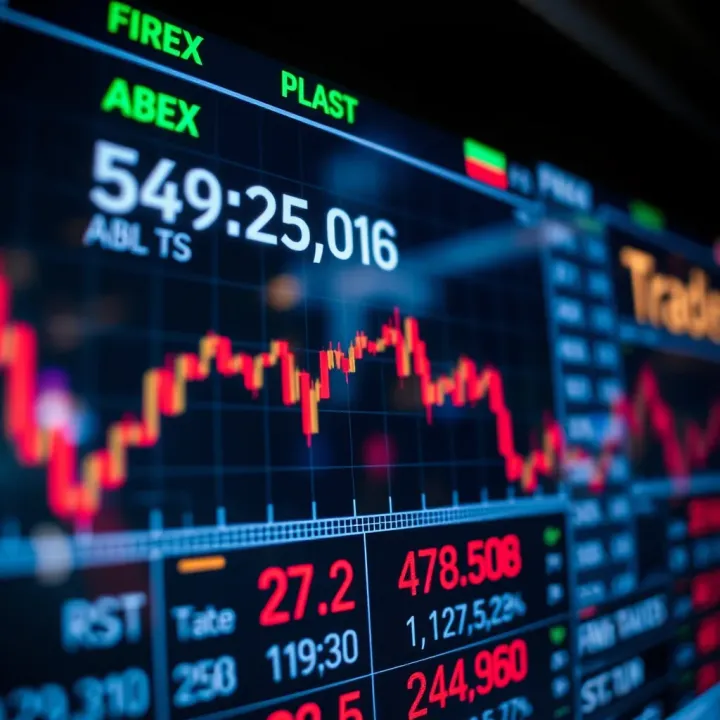
Traders buy one currency and simultaneously sell another. Currency pairs always come in pairs—like EUR/USD or USD/JPY—with the first called the base currency and the second the quote currency. If you buy EUR/USD, you are buying euros by selling US dollars. If the euro gains value against the dollar, you make a profit.
Understanding the bid and ask prices is key. The bid is the price at which you can sell a currency pair, whereas the ask is the price you buy it. The difference between the two is called the spread, which determines your initial cost.
Various players operate in forex, including:
Banks and financial institutions: These dominate market liquidity.
Central banks: They influence currencies by controlling monetary policy.
Businesses: Companies engaged in international trade use forex to hedge currency risks.
Individual traders: In Kenya, many retail traders access forex through licensed brokers, using platforms that allow trading with small capital.
Brokers connect individual traders to the broader forex market. They offer trading platforms where clients can execute trades, access real-time prices, and use tools for analysis. Kenyan traders commonly fund accounts via M-Pesa or bank transfers, making entry straightforward.
Suppose a Kenyan trader believes the US dollar will strengthen against the Kenyan shilling due to recent economic data from the US. The trader buys USD/KES at 110.50. If the rate rises to 111.00, a KS0 gain per dollar is possible, minus trading costs.
This basic understanding prepares traders to explore strategies and risk management in forex trading. The next sections cover these areas in-depth to help you trade smarter and safer.
Grasping the basic concepts of forex trading is the foundation for anyone serious about trading currencies. This knowledge helps traders make informed decisions rather than guessing or following tips blindly. For instance, understanding how currency pairs work or why exchange rates fluctuate can save you from unnecessary losses and set you on the path to consistent profits.
The foreign exchange market (forex) is where currencies are bought and sold. It’s the largest financial market globally, with daily trading volumes exceeding $6 trillion. In practical terms, forex connects buyers and sellers across countries, allowing them to exchange one currency for another—for example, exchanging Kenyan shillings (KSh) for US dollars (USD) to pay for goods from outside Kenya.
This market operates 24 hours a day through different time zones—from Asia to Europe to the Americas—so traders can participate anytime. For someone in Nairobi, this means you can buy or sell currencies even in the middle of the night.
Currencies in forex are always traded in pairs, such as USD/KSh or EUR/USD. The first currency is the base currency; the second is the quote currency. The price you see for a pair shows how much of the quote currency is needed to buy one unit of the base currency. For example, if USD/KSh is quoted at 110, it means one US dollar costs 110 Kenyan shillings.
For practical trading, this matters because you don't just bet on whether one currency will go up or down; you trade how it performs relative to another. If you expect the US dollar to strengthen against the Kenyan shilling, you would buy USD/KSh.
Every currency pair has two prices: the bid and the ask. The bid price is what a buyer is willing to pay for the currency, while the ask is the price a seller wants. The difference between them is called the spread, which is how brokers earn their money.
For instance, suppose the USD/KSh pair has a bid price of 109.95 and an ask price of 110.05. A trader buying USD would pay 110.05 KSh per dollar, while one selling would receive 109.95 KSh.
This difference directly impacts trading costs and potential profits. It's why careful choice of broker and currency pairs matters, especially when trading frequently or in small amounts.
Currency values change mainly due to supply and demand in the market. More demand for a currency pushes its value up, while increased supply lowers it. For example, if many importers in Kenya need US dollars to pay for machinery, demand for USD rises, making it more expensive relative to the shilling.

Events like harvesting of major crops, tourism seasons, or political stability can shift supply and demand quickly. Traders watch these factors closely to predict currency moves and plan their trades.
Economic reports such as GDP growth, inflation rates, and unemployment figures influence traders’ views of a currency’s strength. For example, if Kenya’s inflation rate rises sharply, the Kenyan shilling may weaken because inflation reduces purchasing power.
Similarly, strong GDP growth signals a healthy economy, attracting investment and boosting currency demand. Traders track monthly reports from the Kenya National Bureau of Statistics or global data from the International Monetary Fund to guide their decisions.
Central banks, like the Central Bank of Kenya (CBK), affect currency values by setting interest rates and controlling money supply. Higher interest rates usually attract foreign investors seeking better returns, increasing demand for the currency.
For example, if CBK raises rates to tackle inflation, the shilling might strengthen as investors bring in capital. On the other hand, if rates are cut, the currency could weaken.
Understanding these fundamentals helps you anticipate market shifts beyond mere guesswork and craft trading strategies grounded in real economic forces.
By mastering these basics, traders in Kenya gain a better edge in the forex market, allowing for clearer judgement and improved risk control while navigating currency trades.
Forex trading is open to a variety of participants, each with different goals and approaches. Understanding who these traders are and how they enter the market helps you appreciate the size and dynamics of the foreign exchange market. Whether you are an individual getting started or a business hedging currency risks, knowing the types of traders and how to access the market through brokers is essential.
Retail traders are individual people who trade on their own accounts, usually via online platforms. In Kenya, many retail traders start with modest amounts, often using local brokers that accept deposits through M-Pesa or bank transfers. Retail traders typically focus on short-term trades, trying to profit from small currency fluctuations. These traders benefit from access to leveraged trading through brokers, allowing them to control larger sums than their actual capital. However, risks are equally high if not managed properly.
Institutional traders include banks, hedge funds, asset management firms, and large financial institutions. They often deal with massive volumes of currency transactions daily. Their trades influence liquidity and price movements in the market. For example, Equity Bank or KCB Treasury departments actively engage in forex trading to manage the bank's currency exposure and to profit from market opportunities. Unlike retail traders, institutions employ sophisticated strategies supported by extensive market research and dedicated teams.
Many companies involved in international trade participate in forex markets to hedge against currency risk. For instance, a Kenyan exporter receiving payments in US dollars will trade forex to convert their earnings to Kenyan shillings, protecting profits from adverse exchange rate moves. Similarly, importers locking in costs for goods priced in foreign currencies use forex markets to stabilise future expenses. These businesses usually work with banks or brokers to execute large trades and may use forward contracts or options alongside spot forex trading.
Forex brokers act as intermediaries connecting traders to the global forex market. In Kenya, brokers are often regulated by the Capital Markets Authority (CMA), providing some level of assurance for investors. Brokers provide access to trading platforms and offer leverage, margin facilities, and support services. Choosing a reliable broker ensures better execution of trades and adherence to regulatory standards.
Opening a forex trading account typically involves submitting identification documents, proof of address, and sometimes financial status declarations. Brokers usually offer both demo and live accounts—starting with a demo allows you to practice trading without risking real money. Kenyan traders can fund accounts conveniently via M-Pesa, bank transfers, or debit cards. Once verified, you can start trading instantly, focusing on currency pairs that suit your strategy.
Trading platforms like MetaTrader 4 (MT4) and MetaTrader 5 (MT5) are common as they provide user-friendly interfaces and robust charting tools. Kenyan traders appreciate platforms that work well on mobile devices due to widespread mobile internet use. Brokers may offer additional tools such as economic calendars, real-time news, and technical indicators, helping you make informed decisions. Some platforms also allow algorithmic trading for advanced users.
Access to reliable brokers and good tools can make the difference between a frustrating experience and a successful forex trading journey. Choose carefully and always start small while you learn.
Understanding key mechanisms in forex trading is essential for making informed decisions and managing your investments well. These mechanisms, including how trades are placed, the types of orders used, and chart reading, form the backbone of successful trading. Whether you're a retail trader or financial analyst, mastering these elements helps to navigate the fast-moving currency markets confidently.
A market order is the most straightforward way to enter or exit a trade. It means buying or selling a currency pair immediately at the best available price. For instance, if you want to buy USD/KES urgently because of recent economic news, placing a market order ensures your trade executes quickly. The drawback is you might get a slightly different price than expected, especially in volatile conditions.
These orders are practical when speed is more important than price precision. Kenyan traders often rely on market orders during periods of high market activity, such as when the Central Bank of Kenya announces interest rate decisions.
Limit orders let you specify the exact price at which you want to buy or sell a currency pair. For example, if EUR/USD is trading at 1.1000 but you believe it will drop to 1.0950 before rising, you can set a limit buy order at 1.0950. Your trade will only execute if that price is reached. This helps control the entry point and can improve profitability.
Stop orders act as safety nets. A stop-loss order sells your position to avoid further losses once the market hits a particular adverse price. Meanwhile, a stop-entry order triggers a trade once a set price level is crossed. Both help to manage risk and automate decisions, which is crucial in a fast-paced market like forex.
Leverage allows traders to control larger positions than their actual capital by borrowing funds from brokers. For example, with 1:100 leverage, a KSh 10,000 deposit can control KSh 1,000,000 worth of currency. This can multiply profits but also losses, so it's a double-edged sword.
Margin is the money you must keep in your trading account to maintain these leveraged positions. If the market moves against you, your broker may issue a margin call, asking you to add funds or close positions. Kenyan traders should use leverage carefully, understanding the risks, especially given the volatile nature of currencies affected by local and global events.
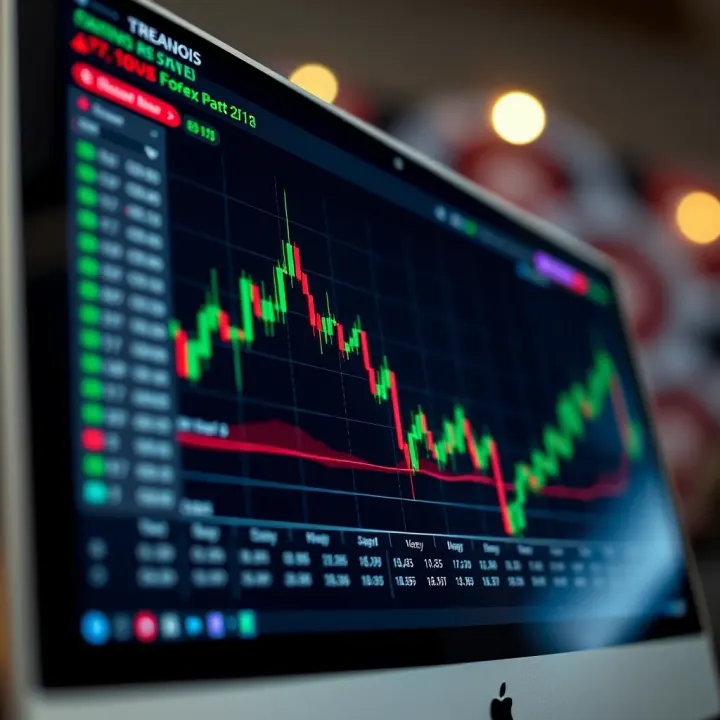
Charts visually represent currency price movements over selected periods. Common formats include line, bar, and candlestick charts, with the latter favoured for the rich info they provide in each bar — including opening, closing, high, and low prices.
Time frames vary from one minute up to monthly charts. Traders might use 15-minute charts for quick trades or daily charts for longer trends. For example, a Kenyan retail trader watching USD/KES may scan daily charts to spot major trends before zooming into one-hour charts to time their trades.
Technical indicators help interpret price data to forecast market direction. Popular tools include Moving Averages, which smooth out price action to highlight trends, and the Relative Strength Index (RSI), which signals when a currency pair is overbought or oversold.
Using indicators allows traders to add objectivity to decisions. A simple strategy in Nairobi could be buying a currency pair when the 50-day Moving Average crosses above the 200-day, signalling an upward trend.
Fundamental analysis studies economic indicators, political developments, and central bank policies to gauge currency value. For example, if Kenya’s inflation rate spikes, fundamental analysis might predict KES weakening.
Technical analysis, on the other hand, focuses on patterns and statistical signals from price charts without considering underlying economic factors.
Both approaches serve different purposes but can complement each other. Kenyan traders often watch national economic reports (fundamental) while timing their entries/exits with chart patterns (technical) for better trading outcomes.
Successful forex trading depends not only on understanding market concepts but also on handling the mechanics of placing trades and interpreting market signals effectively. Knowing when and how to use various orders, leverage, and analysis tools can safeguard investments and boost profitability.
Managing risks is at the heart of successful forex trading. Without a clear strategy to control potential losses, traders face the danger of wiping out their accounts quickly, especially in the fast-moving forex markets. Beyond just protecting your capital, effective risk management also helps maintain discipline, preventing emotional decisions that can lead to costly mistakes. For Kenyan traders working with limited funds or those using borrowed money like HELB loans or savings, managing risks properly is essential to preserve hard-earned shillings.
Economic news and political events often drive sharp swings in currency prices. For example, when the Central Bank of Kenya (CBK) announces an unexpected change in interest rates, the Kenyan shilling can either strengthen or weaken significantly against the dollar within minutes. Similarly, political events such as election outcomes or regional instability in East Africa frequently lead to increased volatility on the forex charts, catching many traders off guard. Keeping an eye on the news calendar and understanding the likely market impact allows traders to prepare and adjust their positions accordingly.
Handling volatility requires patience and a well-planned strategy. Traders could use smaller trade sizes during times of expected market turbulence to avoid large losses. Some may choose to stay out of the market when major economic reports are due, such as Kenya’s GDP figures or US non-farm payroll data. Using tools like limit orders can also help lock in profits or cap losses amid sudden price jumps. Overall, staying calm and sticking to your pre-set plan is more fruitful than trying to guess volatile market moves.
Setting stop losses and take profits is fundamental for controlling risks. A stop loss instructs your broker to close a trade once the price hits a certain unfavorable level, preventing bigger losses. For instance, if you buy USD/KES at 110 and set a stop loss at 108, your maximum loss is limited to the difference, helping you avoid heavy damage if the market turns sharply. Similarly, a take profit order locks in gains by closing the trade when it reaches a desired price point, locking in profits before prices reverse.
Position sizing and diversification also reduce risks. Position sizing means deciding how much of your trading capital to invest in a single trade. A common rule is risking no more than 1-2% of your account per trade. If you have KSh 100,000, you might risk KSh 1,000-2,000 per trade to avoid wiping out funds quickly. Diversification involves trading different currency pairs or asset classes, so losses in one area don’t drain your entire portfolio. For example, balancing trades between USD/KES and EUR/USD can smooth out market risks.
Avoiding overtrading is another key point. Overtrading happens when traders take too many positions or larger trades driven by emotion rather than strategy. It often results from frustration after losses or greed chasing quick gains. This behaviour usually leads to bigger losses and poor decisions. Successful traders set daily or weekly limits for their trades and stick to them, helping keep control and preventing burnout.
Consistent risk management and respect for market volatility do more to preserve your capital than any fancy trading strategy. Managing your forex trades like a careful fundi, always prepared for surprises, helps you last longer and succeed in the market.
🌍 Learn how forex trading works, key strategies, risks, and regulations tailored for Kenyan investors. Start trading smart with practical steps today! 📈💼
Explore top forex trading classes in Kenya 🇰🇪, learn key basics, pick the right course, and boost your skills with expert tips for success 📈💡.
Discover how top forex trading companies operate in Kenya 🇰🇪, navigate local regulations, pick trusted brokers, and avoid scams with expert tips 💡
🔍 Discover how to pick the right forex brokers in Kenya! Understand regulations, broker types, key features & avoid common pitfalls for smarter trading choices.
Based on 5 reviews