

Choosing the Best Binary Bot for Trading Success
Explore how to pick the best binary bot for trading in Kenya 🇰🇪. Learn about features, reliability, rules, and tips to boost your trading success 📈🤖.
Edited By
Henry Watson
Creating a binary bot can transform how you handle trading or repetitive financial tasks. In Kenya, where mobile and online trading continue to grow, automating processes with a binary bot offers both speed and consistency that human traders sometimes miss. But what exactly is a binary bot?
A binary bot is a computer programme designed to execute trades or operations based on binary decisions — essentially yes/no or true/false choices. For instance, in binary options trading, the bot predicts whether a price will go up or down within a specific period, allowing for automatic buying, selling, or closing of positions.
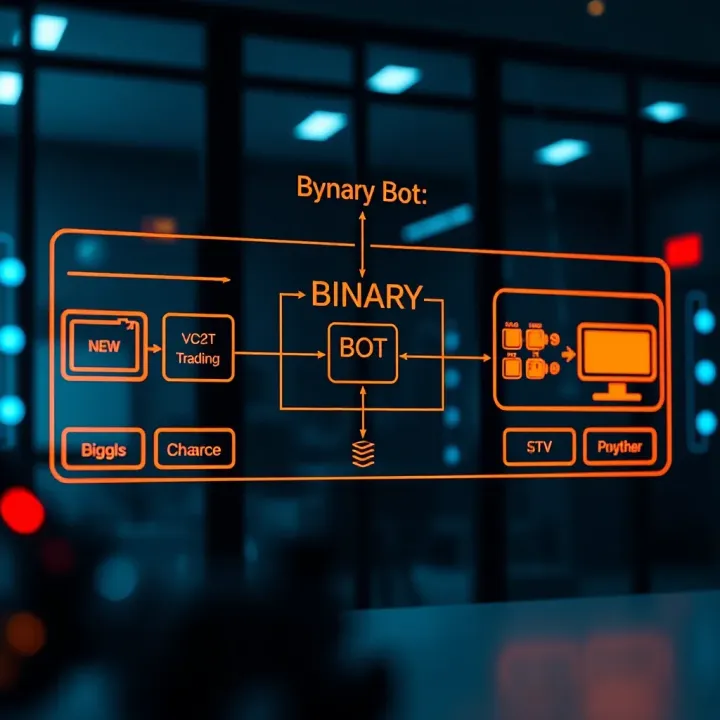
Before you start coding your binary bot, it’s crucial to understand the environment and tools you need. Many Kenyan traders prefer platforms that integrate with M-Pesa payments or allow local broker APIs for easier fund management. Languages like Python are popular for their simplicity and wide range of libraries that support financial data analysis and automation.
Let’s look at some of the practical tools and components:
Programming languages: Python, JavaScript, or C# offer flexibility when connecting to trading platforms.
APIs: Most brokers provide application programming interfaces (APIs) to allow your bot to interact directly with their systems.
Testing environment: Simulators or sandbox accounts allow you to test your bot without risking real money.
Data feeds: Real-time price data from reliable financial sources is key for accurate decisions.
Good bots start with a clear strategy. Before coding, outline your trading rules and risk management approach. Ask yourself: when should the bot buy? When should it sell? What stop-loss thresholds will keep your capital safe?
This guide will walk you through each step, from understanding how binary bots operate, setting up your programming tools, writing your first lines of code, to testing and improving your bot. By following practical steps tailored for Kenyan traders, you can create an automation tool that fits your trading style and local market context.
Grasping what binary bots are and how they function lays a solid foundation for anyone looking to build or use one effectively. A binary bot is a software tool designed to automate binary options trading, executing trades on your behalf based on programmed criteria. This automation can save time and reduce emotional decision-making, which often cloud traders' judgment.
A binary bot is a computer program that interacts with trading platforms to buy or sell binary options using coded strategies. These bots follow rules set by the developer or trader to decide when to enter or exit trades. For example, if a bot is programmed to act when the price of a forex currency pair reaches a specific level, it will trigger a buy or sell based on those parameters without the trader's direct involvement at that moment.
Unlike manual trading, binary bots can analyse multiple indicators instantly and trade at any time of day. This level of automation often interests traders in Kenya and beyond who want to access markets 24/7 without being glued to screens.
Binary bots most often find use in executing fast trades where timing counts, such as short-term binary options on indices, commodities, or forex pairs. Kenyan traders might use bots to apply scalping strategies, where small profits are made repeatedly within minutes. Bots can also help implement technical analysis signals backed by algorithms, such as moving averages or RSI (Relative Strength Index).
Besides speed, bots provide consistency. Human traders may make mistakes under pressure, but bots follow their coding strictly, which can reduce errors. That said, it’s wise for Kenyan traders to backtest strategies using historical data before deploying a bot live, to see how it performs under different market conditions.
While binary bots offer convenience, they also carry risks that traders should understand clearly. Not all bots are reliable; some might be poorly coded or even scams promising unrealistic profits. There’s also the risk of market volatility causing unexpected losses, especially if the bot lacks safeguards.
Legally, Kenya doesn’t have specific laws targeting binary bots, but binary options trading itself is regulated under the Capital Markets Authority (CMA). Traders should ensure they work with licensed brokers and avoid platforms banned in Kenya. Additionally, any bot used should comply with the terms of service of the trading platform. Using bots against platform rules can lead to account suspension.
Remember, a binary bot is a tool, not a guaranteed income source. Approach its use with clear strategies, proper risk management, and within Kenya’s regulatory framework.
Understanding these basics equips you to move forward confidently in creating or using a binary bot. The next steps involve selecting the right tools and programming techniques to bring your trading ideas to life efficiently and safely.

Creating a reliable binary bot involves more than just writing code. You need the right tools and software to ensure your bot operates efficiently and adapts to real trading conditions. This section highlights the essential components—from choosing the coding language to setting up your workspace—that will shape your bot’s performance.
Your choice of coding language has a big impact on your development speed and the bot’s capabilities. Popular options include Python, JavaScript, and C#. Python is widely favoured by traders and developers because it’s easy to learn and offers extensive libraries for data analysis, such as Pandas and NumPy. For example, if you want your bot to analyse trends or react quickly to price movements, Python simplifies complex calculations.
JavaScript shines when integrating with web-based trading platforms. If your bot is meant to operate inside a browser or on platforms with web APIs, JavaScript eases interaction with front-end interfaces. Alternatively, C# is known for speed and robustness, often preferred in professional trading systems requiring fast execution and multitasking.
Choose a language that matches your skill level and the technical demands of the trading platform you plan to use.
A key part of building a binary bot is selecting trading platforms and APIs that allow automation. Most binary options brokers offer APIs for programmatic trade execution, market data feeds, and account management. For instance, Pocket Option and IQ Option provide APIs that let you automatically place trades or fetch live market data.
Besides broker APIs, consider third-party platforms like MetaTrader 4 and 5, which support algorithmic trading and have strong community support in Kenya. Their APIs enable your bot to run sophisticated strategies using built-in indicators without starting from scratch.
Using reliable APIs ensures your bot can smoothly execute trades and retrieve up-to-date market information, so it reacts promptly to market changes.
A proper development environment organises your workflow and simplifies testing. At minimum, install an Integrated Development Environment (IDE) such as Visual Studio Code for Python or JavaScript projects. IDEs offer features like debugging, syntax highlighting, and version control integration, which help spot errors early.
In addition, setting up virtual environments isolates your bot’s dependencies, preventing software conflicts. For example, Python’s virtualenv allows you to install specific library versions tailored to your bot, avoiding clashes with other installed packages on your computer.
Lastly, consider using a version control system like Git. It tracks changes and lets you revert to earlier code versions if bugs arise during development. This practice especially helps when collaborating or maintaining the bot over time.
Proper tools and software lay the foundation for a bot that’s both reliable and adaptable. Skipping setup or relying on ill-suited tools risks creating a bot prone to failures or limited functionality.
In summary, selecting the right coding language, working with established platforms and APIs, and creating a well-organised development environment are vital steps in building a successful binary bot. Such preparation ensures your bot handles real trading demands and evolves over time without constant headaches.
Understanding basic programming concepts is key to building an effective binary bot that actually works in real trading situations. These concepts lay the groundwork for how your bot will process information, make decisions, and carry out trades automatically. Without this foundation, it would be like trying to drive a matatu without knowing how to steer.
Logic forms the backbone of any trading bot. It determines how your bot decides when to buy or sell an asset based on predefined rules. For example, you might set a condition like "if the price of a stock goes up by 2% within 5 minutes, then place a buy order." This involves conditional statements in programming, such as if, else if, and else. Understanding Boolean logic (true or false) is crucial because your decisions rely on scenarios being met or not.
Decision making also involves combining multiple conditions. For instance, your bot might only execute a trade if the moving average indicates a bullish trend and the volume is above a certain threshold. Such compound conditions help avoid false signals and improve trade accuracy.
Solid logic helps your bot to avoid costly mistakes and stick to strategies even when emotions might push a human trader off course.
Your binary bot depends on input data like market prices, historical charts, and indicators. Understanding how to process this data correctly is essential. Inputs usually come from APIs (Application Programming Interfaces) provided by trading platforms or data providers. Your bot needs to fetch these inputs continuously or at set intervals.
After processing input, your bot produces outputs—actions like placing trade orders or sending alerts. Properly handling outputs means ensuring trades are sent to the platform securely and responses from the platform are accurately read. For example, if a trade fails, your bot should know to retry or notify you.
Managing inputs and outputs requires basic knowledge of data handling, looping through datasets, and error checking. This reduces the risk of your bot making wrong moves due to missing or incorrect data.
Programming skills alone won’t guarantee success; you also must understand the trading strategies you want the bot to follow. Integrating these strategies into your bot means coding specific rules and parameters that guide its behaviour.
For example, a common strategy is the RSI (Relative Strength Index) where the bot buys when RSI falls below 30 (oversold) and sells when it rises above 70 (overbought). To integrate this, your code must calculate RSI from price data and trigger trades accordingly.
Different strategies require different logic complexity. Some might be straightforward, like following moving averages, while others involve multiple indicators and risk management rules. Make sure your coding reflects these rules carefully to avoid unintended trades.
By mastering these programming basics—logic, inputs/outputs, and strategy integration—you'll build a solid foundation for your binary bot. This ensures it acts consistently, responds properly to real market data, and follows your trading plan with less hassle.
Creating a binary bot requires careful planning, clear coding practices, and continuous improvement to ensure it performs efficiently in real-market conditions. This step-by-step guide breaks down the main stages for developing a reliable and effective bot, allowing traders and financial analysts to automate their strategies confidently.
The first step is mapping out your bot's strategy and how it will operate. Begin by defining clear objectives: are you targeting short-term trades or longer expiry times? Like a boda boda driver deciding which routes to take during rush hour, your bot's workflow must consider the trading hours and market conditions it will operate in. This planning includes choosing entry and exit criteria, risk management measures such as stop-loss levels, and how the bot reacts to different market signals.
For instance, if you want your bot to trade based on moving averages crossing, outline precisely when it should buy or sell. Also, account for how the bot will handle exceptions, such as data feed errors or connection drops. Having this blueprint saves time during coding and helps avoid unexpected behaviour later.
After planning comes the coding phase, where you translate your strategy into instructions the computer understands. Use your chosen programming language, like Python or JavaScript, to write clean and modular code. Break down tasks into functions—for example, one function might fetch market data, another analyses signals, and a third executes trades.
Keep your code readable and document it well. Writing comments explaining each function helps you or other developers understand what the code does, especially when debugging. Also, consider integrating APIs from popular platforms such as IQ Option or Binomo that allow your bot to communicate with the trading service.
Here is a simple illustration of how you might write a function to check if the bot should buy:
python
def should_buy(short_ma, long_ma): if short_ma > long_ma: return True return False
This function compares short-term and long-term moving averages and returns a decision accordingly.

### Debugging and Improving Your Bot

No code works perfectly the first time. Testing and debugging your bot is crucial to catch bugs and improve performance. Use simulated or historical data to spot errors without risking real cash. For example, you may find that your bot enters trades too frequently and quickly depletes the account, signalling a need to refine entry rules.

Debugging tools within your development environment, plus additional logging in your code, help track variable values and decision points step by step. Once the bot picks up errors or logic flaws, modify the code, test again, and repeat until the bot behaves as expected.

Continuous improvement is key because market conditions change. Regularly review your bot's performance and refine its strategies to adapt. Remember, a bot that worked well during the last rainy season might need adjustments for this year's short rains affecting market patterns.

> Building a binary bot is a process of clear planning, careful coding, and ongoing refinement. Taking it step by step ensures your bot serves you reliably over time, especially in the dynamic markets of Kenya.

This approach minimises surprises and maximises your bot's effectiveness in automating financial trades.

## Testing, Deployment, and Maintenance of Your Binary Bot

When it comes to creating a binary bot, testing and ongoing upkeep are just as important as writing the code. Testing ensures your bot acts as expected and helps avoid costly mistakes once you start trading live. Deployment is the phase where your bot moves from a controlled environment to real market conditions, demanding careful attention. Maintenance keeps the bot effective as markets change or as new regulations come up. These stages are essential not only for smooth operations but for protecting your funds and adapting to Kenya’s unique trading environment.

### Simulated Testing and Backtesting Methods

Before sending your bot to trade with real money, use simulated testing and backtesting to assess its performance. Simulated testing involves running your bot in a controlled environment that mimics live market conditions without risking actual money. For example, you can use demo accounts provided by Kenyan brokers or platforms that support paper trading. This helps identify bugs and lets you fine-tune parameters.

Backtesting is running your bot against historical market data to see how it would have performed in the past. This gives an idea of its profitability and risk levels. However, remember that past performance doesn’t guarantee future results, especially in volatile markets like forex or commodities trading common in Kenya. Ensure your historical data matches the asset classes your bot will trade for more reliable results.

### Launching Your Bot Live

Transitioning your bot to live trading involves more than flipping a switch. Start with small stakes to minimise risks while monitoring closely. For instance, if your bot trades binary options on the Nairobi Securities Exchange (NSE) listed assets, begin with minimal investments to test actual market behaviour and slippage.

Choose a reliable trading platform with strong security and regulatory compliance specific to your asset type. Kenyan traders often prefer platforms integrated with M-Pesa for easy deposits and withdrawals. Also, set clear limits and automatic stop-loss measures within your bot’s code to avoid unforeseen heavy losses.

### Monitoring and Updating Your Bot Regularly

Once live, your bot won’t be a ‘set and forget’ system. Markets change, and what worked last month may fail today. Constant monitoring helps catch issues early, such as connectivity problems, unexpected market moves, or new broker policies.

Plan regular updates informed by the bot’s trading logs and market analysis. For example, during Kenya’s election cycle, market volatility often rises sharply, which might require recalibrating your bot’s risk strategies. Use alerts and notifications to stay informed of unusual trading patterns and system errors.

> Continuous testing and improvements keep your binary bot functioning well and responsive to market shifts, saving you from unnecessary losses.

In summary, thorough testing with demo accounts and historical data builds a solid base. Careful live deployment with risk controls keeps your investments safe. Ongoing monitoring and updates adapt the bot to evolving market conditions specific to Kenya’s trading scene.Explore how to pick the best binary bot for trading in Kenya 🇰🇪. Learn about features, reliability, rules, and tips to boost your trading success 📈🤖.
🤖 Understand bot binary: what it is, how it functions, common uses, risks, and security tips. Learn to spot & manage bot binaries effectively in automation.

Explore how binary bot analysis tools help traders and developers in the binary options market. Learn features, tips, and challenges 📊🤖
Learn how Binary Bot XML powers automated trading in Kenya. Explore file structure, creation tips, and troubleshoot your trading bots with ease 🤖📈
Based on 11 reviews