

Forex Risk Management for Kenyan Traders
Learn essential forex risk management strategies tailored for Kenyan traders 📊. Master position sizing, stop losses, and trading psychology for safer trades.
Edited By
Chloe Morgan
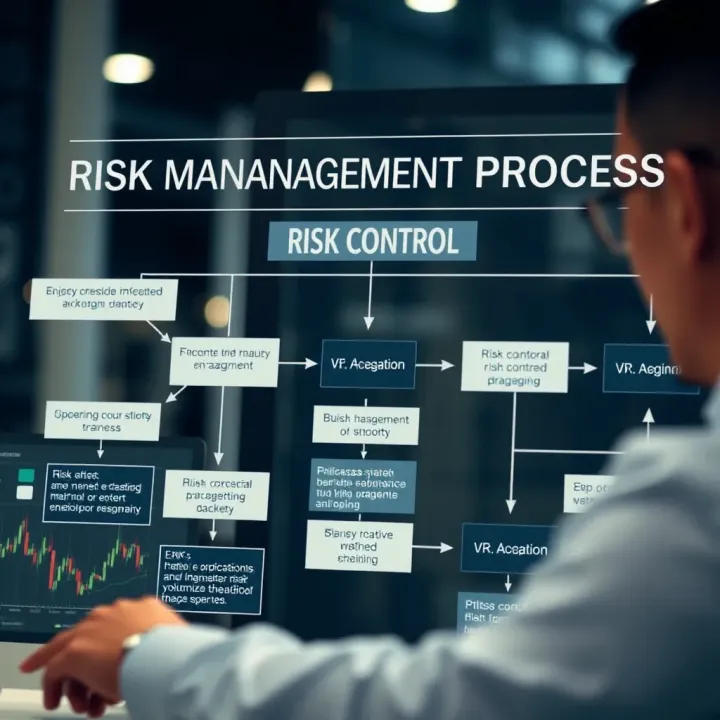
Risk management is a vital practice for any business, especially those operating in the dynamic Kenyan market. It involves recognising potential threats that could disrupt operations, cause financial loss, or damage reputation, then taking steps to reduce those risks. Traders, investors, financial analysts, and brokers regularly face uncertainties ranging from market fluctuations to regulatory changes. Understanding the process of risk management helps these professionals protect their investments and make more informed decisions.
At its heart, risk management follows a clear, structured approach that anyone can apply. It begins with risk identification, where you pinpoint what could go wrong. This step might involve scanning market trends, regulatory updates, or even internal weaknesses such as outdated technology. For instance, a small retailer in Nairobi could identify risks such as unreliable suppliers or security issues around their shop.

Next is risk assessment, which involves evaluating how likely these risks are and the impact they might have. This often means estimating potential financial losses or operational downtime. For example, a trader might assess how currency fluctuations between the Kenyan shilling and the US dollar could affect profit margins when importing goods.
Following this, organisations move onto risk control, focusing on strategies to manage or mitigate these threats. Controls could include diversifying suppliers to avoid supply chain interruptions or using hedging tools to protect against currency risk.
Finally, risk management is about monitoring and reviewing the measures put in place. Market conditions and business environments evolve quickly, so revisiting your risk plan regularly ensures it stays relevant. In Kenya, where factors like political shifts or weather patterns (long rains impacting agriculture) may affect business, continuous monitoring is essential.
Every step in the risk management process should connect clearly back to protecting your business assets and operations. Skipping or rushing any part can leave gaps that expose your venture to unnecessary danger.
Here’s a quick look at the key steps:
Identify risks relevant to your sector and location
Assess the likelihood and impact of each risk
Decide on and implement controls to reduce risk
Keep reviewing your risk strategy as conditions change
Kenyan businesses that adopt this disciplined approach are better positioned to stay resilient and seize opportunities with greater confidence. This article breaks down these steps with practical insights suited to the local context, helping you integrate effective risk management into your day-to-day strategies.
Identifying potential risks is the first vital step in managing uncertainty within any organisation. Without pinpointing the areas where threats could arise, efforts to mitigate or control negative impacts fall flat. In the Kenyan business environment, recognising risks early can mean the difference between survival and loss, especially for SMEs that often operate with tight margins.
Internal risks originate within the organisation and typically relate to processes, people, or systems under a business's direct control. Examples include faulty operational procedures, employee misconduct, or outdated technology systems. In a Nairobi-based manufacturing firm, for instance, a lack of proper machine maintenance could cause frequent breakdowns, disrupting production and resulting in financial losses.
Another common internal risk is poor financial management. If a company’s accounting system fails to track expenses accurately, it could lead to cash flow problems. Identifying these risks helps businesses focus on areas to strengthen internally before external factors cause damage.
External risks stem from factors outside the organisation and are often harder to predict but no less impactful. Political instability, such as sudden changes in government policies or tax regulations, can affect business operations in Kenya. For instance, a new tax law increasing VAT could reduce profit margins for retailers.
Additionally, environmental factors like the prolonged long rains may disrupt supply chains, especially for agricultural businesses relying on timely delivery. Global events such as currency fluctuations or international market trends can also expose firms to risks beyond their immediate control.
Gathering a diverse group of employees through brainstorming sessions can bring forward varied perspectives on potential risks. These interactive workshops create a platform for discussing vulnerabilities in operations or strategy that might not be obvious to management alone.
In a financial services company, for example, a brainstorming session could uncover risks related to new fintech technologies that frontline staff notice from customer interactions but that management has yet to consider.
Using checklists provides a systematic approach to ensure no common risks are overlooked. These lists, often derived from past experiences or industry standards, act as prompts to guide thorough assessments.
A risk register goes further by recording identified risks, their potential impact, and status of mitigation efforts, enabling better tracking and accountability. Kenyan companies increasingly adopt digital risk registers to keep this data updated and accessible across departments.
Engaging stakeholders such as suppliers, customers, and regulatory bodies enriches the risk identification process. Stakeholders can offer insights on external pressures or compliance issues that insiders may miss.
For example, a supplier may warn of upcoming logistical problems due to fuel shortages, signaling supply chain risks. Similarly, feedback from customers could highlight vulnerabilities in product quality or delivery services that require urgent attention.
Identifying risks early helps businesses not only avoid pitfalls but also seize opportunities by preparing in advance.
By applying these methods thoughtfully, organisations in Kenya can build a robust foundation for their risk management process, setting the stage for effective assessment and control strategies.
Understanding the impact and likelihood of risks is a key step in managing them effectively. For traders, investors, and financial analysts, clear assessment helps to focus on risks that could severely disrupt operations or investments. For example, a risk of regulatory changes that might affect commodity imports carries greater weight if the financial losses are huge and the chances of enforcement are high. By assessing both impact and probability, you avoid wasting resources on low-impact or unlikely threats.
Financial impact refers to the cost that a risk event might inflict on an organisation or investment. For instance, suppose a Kenyan exporter’s shipment is delayed due to poor matatu transport connections. The delay may lead to penalties, lost sales, or extra storage charges, all translating into direct financial loss. Knowing this helps both businesses and investors decide if they need insurance cover or alternative supply routes.
In financial trading, a sudden market drop could mean capital erosion. Evaluating these losses beforehand provides insight into how much buffer a trader should keep to withstand shocks without liquidating positions at a loss.
Operational consequences cover the disruption to the day-to-day running of a business. Imagine a manufacturing plant in Nairobi facing power outages from unreliable grid supply. Beyond immediate halts in production, there might be overtime costs, missed delivery deadlines, or machinery damage due to abrupt stops. Such effects reduce efficiency and profitability.
For investors, understanding operational risks offers a clearer picture of company stability. A firm heavily reliant on unstable power or imported inputs might struggle to meet targets when disruptions occur.
Reputational damage concerns how a risk event affects public perception and trust. Take a Kenyan bank involved in a data breach. Even if the financial loss is manageable, the loss of customer confidence could cause withdrawals, reduced new accounts, and tougher regulatory scrutiny.
Investors should weigh reputational risks because they often have longer-term consequences which can be tougher to quantify but are very real. A damaged reputation can lower stock valuation or cause partners to be wary.
Historical data helps predict how likely specific risks are based on past events. For example, traders can look at past market volatility to estimate the chances of future price swings. Kenyan investors referencing historical rainfall records may better anticipate agricultural output risks.
Of course, past frequency isn’t foolproof, especially if external conditions have shifted. But it grounds decisions in concrete experience rather than guesswork.
Sometimes there is little data available, or evolving conditions make history less reliable. Here, expert judgement becomes vital. Specialists with knowledge of local market trends, regulatory environments, or industry shifts provide practical assessments about risk likelihood.
For instance, a fund manager familiar with Kenya’s political climate may gauge the risks of election-related protests impacting business differently than raw data alone indicates.
Quantitative models use algorithms to estimate probabilities based on multiple variables. A bank might employ statistical models to calculate credit default probabilities for loan applicants given their income, borrowing history, and economic indicators.
Though powerful, these models require careful calibration and should be combined with qualitative insights. In Kenya’s dynamic markets, relying solely on models without local context risks misjudging the probability of risk events.
Assessing both the impact and likelihood of risks allows for prioritising the most threatening issues effectively. This step ensures that limited resources go to managing risks that could truly hamper financial goals or operational stability.
Prioritising risks is a vital step in managing risk effectively because it helps organisations decide where to focus their limited resources. Not all risks pose the same level of threat, so understanding which ones need immediate attention avoids wasted effort and missed opportunities. For example, a Kenyan trader facing currency fluctuations may prioritise risk differently from a financial analyst concerned with regulatory changes in the capital markets.
A risk matrix offers a clear visual tool to assess risks based on their likelihood and impact. Risks are plotted on a grid where one axis shows the probability of occurrence and the other the potential severity. This method provides a quick way to determine which risks are low, medium, or high priority. For instance, a broker might use a risk matrix to evaluate the threat of system outages, distinguishing technical glitches unlikely to occur from more frequent network failures that could halt trading.
This technique helps businesses spot urgent risks that require immediate actions, while lesser threats may be scheduled for later monitoring. By categorising risks simply and effectively, organisations can direct their efforts towards areas that could cause the most financial or reputational damage.
Heat maps take the risk matrix concept further by using colour coding to highlight risk levels, making the prioritisation of risks more intuitive. Red zones typically indicate critical risks demanding swift intervention, yellow represents moderate risks needing caution, and green signals acceptable risk levels. This visual tool is especially useful in presentations to stakeholders who may not have technical risk knowledge.
In practical terms, a financial analyst can present a heat map showing market risks and their urgency during a team meeting, helping colleagues grasp the situation and focus on pressing concerns. Heat maps also assist in tracking risk changes over time, allowing for swift adjustments to strategies as conditions evolve.
Organisations must define their risk appetite – the amount and type of risk they are willing to accept in pursuit of objectives. Closely related is risk tolerance, which specifies acceptable limits for particular risks. This clarity guides decision-makers in knowing when to act and when to hold back.
For example, a Kenyan investment firm might have a low appetite for market risk but a higher tolerance for operational risks like power outages. Having these thresholds helps set the boundary between risks to accept and those requiring controls, preventing unnecessary alarm while maintaining preparedness.
Prioritising risks also means ensuring interventions align with the organisation's goals. Managing a risk without considering the broader objectives can waste resources or conflict with strategic plans. For instance, a financial services company aiming to expand into digital platforms should prioritise cyber risks even if they currently score lower in impact, since they directly affect growth targets.
Aligning risk priorities with organisational aims promotes cohesive action and better resource allocation. It ensures risk management activities support—not undermine—the overall business strategy.
Effective risk prioritisation means focusing on what matters most to your organisation, balancing urgency with strategic goals. Without this focus, risk management can become a check-box exercise rather than a tool for real business resilience.
Effective management of risks requires not only recognising and assessing them but also putting in place strategies to control their impact. Developing and implementing risk controls helps organisations shield themselves from potential losses, ensuring stability and continuity. In Kenyan businesses, where volatility in markets and regulatory changes can be sudden, these controls become even more vital.
Risk Avoidance involves steering clear of activities or decisions that expose an organisation to risk. For example, a company that has experienced repeated losses from speculative investments might choose instead to focus on more stable ventures, such as long-term government bonds or conservative stock picks. Avoiding high-volatility sectors can save a business from unexpected shocks. However, total avoidance isn’t always possible or profitable, especially for dynamic traders or investors.
Risk Reduction aims to lessen the chances or the impact of risks. This could include diversifying investments across different sectors rather than concentrating in one area, reducing exposure to any single risk. For a Kenyan forex trader, this might mean setting stop-loss orders or limiting margin to avoid heavy losses during currency fluctuations. In operational terms, a business may adopt tighter credit checks to reduce loan defaults, effectively lowering risk levels.
Risk Sharing spreads potential losses to other parties. Insurance is the most common example: a Kenyan exporter might purchase cover against cargo damage or political risk in volatile markets. Similarly, joint ventures distribute risks among partners, meaning no single party shoulders all the burden. This approach allows businesses to undertake ventures they might otherwise avoid due to high stakes.
Risk Acceptance is a deliberate decision to acknowledge the risk but not take immediate action, typically for risks that are low in impact or likelihood. For example, a small retailer in Nairobi may accept the occasional theft loss as a cost of doing business because prevention costs more. Understanding when to accept risks helps concentrate resources on more threatening exposures.
Policy Development creates the framework for consistent risk management practices. Kenyan firms benefit from clear policies that outline procedures for assessing and responding to risks. A bank, for example, might develop a credit risk policy detailing loan approval limits and monitoring practices. Well-crafted policies also align with regulations from bodies like the Central Bank of Kenya, reducing compliance risks.
Staff Training ensures that employees understand the risk controls in place and their roles in maintaining them. Training equips teams with skills to spot and manage risks early. For instance, training sales agents on fraud detection helps prevent losses. Regular workshops and refresher courses maintain awareness, encouraging a risk-conscious culture across departments.
Monitoring Systems keep track of risk indicators and control effectiveness in real-time. Kenyan financial institutions use electronic dashboards and Key Risk Indicators (KRIs) to monitor loan portfolios or market exposures continuously. Such systems alert managers to anomalies, enabling quick responses before problems escalate. Regular monitoring coupled with audits strengthens the organisation’s ability to adapt to changing risk conditions.
Developing and implementing risk controls is not a one-time task but an ongoing cycle of action and review, crucial for safeguarding business interests in Kenya's fast-moving economic environment.
By systematically applying these risk response types and practical steps, traders, investors, and financial analysts can better shield their activities from loss and position themselves advantageously despite uncertainties.
Monitoring and reviewing the risk management process ensures that the strategies put in place continue to work effectively as the business environment changes. This stage is vital because risks don't stay the same; they evolve due to internal changes or external shocks. For instance, a Kenyan tea export company might face new export tariffs or changing weather patterns, which require re-evaluating their risk controls. By regularly checking how risks are managed, an organisation can avoid costly surprises and keep its operations resilient.
Regular risk assessments involve revisiting past risk evaluations to check if the identified risks have changed in severity or likelihood. In practice, this could mean quarterly or biannual reviews where risk managers at a Nairobi-based manufacturing firm verify if operational risks tied to equipment breakdown have increased due to ageing machinery. This approach helps spot new threats early and confirms whether existing controls need strengthening or can be relaxed.
Key Risk Indicators are measurable values that signal potential increases in risk exposure before losses occur. For example, a Kenyan bank might track the number of late loan repayments as a KRI, indicating rising credit risk. By setting thresholds for such indicators, decision-makers can act promptly, like tightening lending conditions or increasing client follow-up, to prevent escalation. This proactive method sharpens the organisation’s ability to manage risks day-to-day.
Audits offer an independent check on whether risk controls are working as intended, while feedback from staff and stakeholders reveals practical challenges or gaps. For instance, an audit at a Nairobi tech startup might uncover lapses in data security controls, while employees might report difficulties in following complex procedures. Combining these insights supports targeted improvements that align controls with actual operational realities.
Businesses operate within dynamic conditions—economic shifts, new technologies, or regulatory changes demand regular adjustment of risk management efforts. A transport company in Mombasa might need to revise its risk approach following new county traffic laws or fluctuating fuel prices. Staying agile through continuous review helps the organisation remain compliant, competitive, and safeguarded against emerging threats.
Effective monitoring and review are not one-off acts but ongoing commitments that strengthen an organisation’s ability to foresee, prevent, and manage risks responsibly.
These steps form an integral part of a practical risk management framework, enabling organisations to withstand shocks and seize opportunities with confidence.
Learn essential forex risk management strategies tailored for Kenyan traders 📊. Master position sizing, stop losses, and trading psychology for safer trades.

📊 Learn financial risk management essentials in Kenya—identify, assess, and control risks using practical tools and best practices for business security.

Explore how Enterprise Risk Management frameworks help Kenyan businesses identify, assess, and manage risks 📊 for smarter decisions and stronger protection.

Explore practical risk management strategies 🛡️ for Kenyan businesses. Learn to identify, assess, and control risks with key tools and frameworks.
Based on 11 reviews