
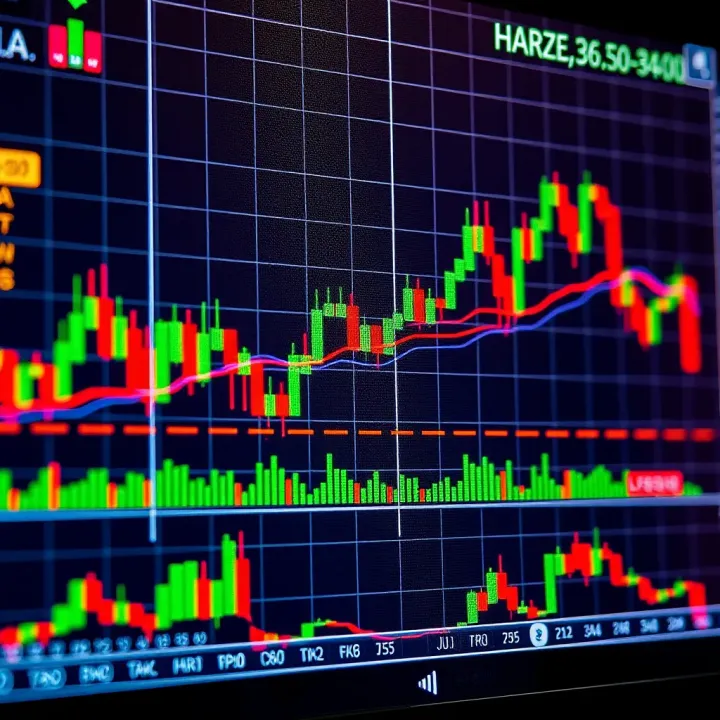
Forex Trading Charts Guide for Kenyan Traders
📊 Master Forex trading charts in Kenya! Learn to read patterns, choose time frames, and use indicators confidently for smarter currency trading decisions.
Edited By
James Hamilton
Forex trading in Kenya has become a popular way to earn additional income, especially as the shilling fluctuates against major currencies like the US dollar, euro, or British pound. To build profits, traders must understand how forex markets operate and what factors influence currency prices.
At its core, forex trading involves buying one currency while selling another, profiting when the exchange rate moves favourably. For example, if you buy dollars with Kenyan shillings and the dollar strengthens, you gain when converting back. The difference between the buy and sell rates minus transaction costs is your profit.

Many Kenyan traders confuse volume with profitability. It’s not about how much you trade, but how well you manage risks and capitalise on market moves. Successful forex trading requires a mix of market knowledge, strategic planning, and discipline.
A key point: Consistent profits come from managing losses first, not chasing big wins. Protecting your capital keeps you in the game long enough to benefit from currency swings.
Currency prices react to various factors such as changes in interest rates by the Central Bank of Kenya (CBK), political events, international trade balances, and developments in major economies. For instance, when the US Federal Reserve adjusts rates, it impacts the dollar's value worldwide, including against the shilling.
Kenyan traders should also consider local market conditions: supply and demand for the shilling, inflation rates, and government policies. These factors influence the forex market in Nairobi and across the country.
Before jumping in, it helps to use demo accounts offered by platforms like MetaTrader or local brokers to test strategies without risking real money. Watching how pairs like USD/KES or EUR/KES behave during different times of the day reveals opportunities unique to Kenyan trading hours.
In the coming sections, we’ll explore practical ways to maximise profit while managing risks tailored for the Kenyan context. Whether you trade on your mobile during breaks or have dedicated desktop setups, understanding core concepts puts you ahead of many casual traders who jump in without a plan.
Understanding how forex trading generates profit is the foundation for any Kenyan trader aiming to succeed. At its core, forex trading involves exchanging one currency for another with the expectation that price movements will work in your favour. This process depends on carefully watching currency pairs and market dynamics.
Exchange rates show how much one currency costs in terms of another. For example, if the USD/KES rate is 110, it means one US dollar equals 110 Kenyan shillings. These rates fluctuate constantly due to factors like trade balances, interest rates, and economic news, influencing trading decisions.
Kenyan traders need to be especially alert to both global trends and local events affecting the shilling. When the Central Bank of Kenya adjusts its monetary policy, or when tourism receipts shift, these can cause noticeable movement in the KES exchange rate. Tracking these changes lets you anticipate whether a currency will strengthen or weaken.
Profit in forex is made by buying a currency at a lower price and selling it later at a higher one, or vice versa. For instance, if you buy EUR/USD at 1.1000 and later sell at 1.1050, you have gained 50 pips (the smallest price movement).
Practical trading means pinpointing moments when the price is undervalued and likely to rise. Kenyan traders often watch key news releases or technical patterns to catch such chances. The opposite also holds – selling high and buying low later if you expect a currency’s value to fall.
The spread is the difference between the buying price (ask) and selling price (bid) of a currency pair. Brokers make money via this spread, so traders must consider it when calculating potential profit. If the spread is too wide, it can eat into your gains.
Pips measure price movement; a typical pip for most pairs is 0.0001. Suppose you trade USD/KES where the price moves from 110.0000 to 110.0100, that is 100 pips. Your profit depends on the number of pips gained and the trade size. A small pip movement can mean solid profit when working with sufficient trade volume.
Leverage allows traders to control larger positions than their cash deposit. For example, with 1:100 leverage, KSh 10,000 lets you trade KSh 1,000,000 worth of currency. This means even a small price move can multiply your profit.
Kenyan traders should understand that proper use of leverage can enhance returns, especially when market movements are small but consistent. However, it requires discipline to avoid taking on too much.
While leverage boosts profits, it also magnifies losses. If the market moves against you, losses can exceed your initial investment, leading to margin calls or forced position closures.
To manage this, traders should use stop-loss orders and practise sound risk management. Using too much leverage without adequate safeguards is a common mistake that can wipe out trading accounts quickly.

A good rule of thumb is to use only as much leverage as you can afford to lose, and always plan your trades with clear entry and exit points to safeguard your capital.
Demystifying how forex generates profit gives you solid footing. Combining this knowledge with your local market insights improves your chances of steady gains in the exciting world of forex trading.
For Kenyan traders looking to improve their earnings in forex trading, having the right strategies matters a lot. The forex market can be quite unpredictable, but using tested approaches tailored to local market dynamics helps traders avoid costly mistakes and build consistent profits. These strategies include understanding technical analysis methods, monitoring relevant economic indicators, and combining different analysis styles for steadier results.
Chart patterns such as head and shoulders, double tops, and triangles give practical clues about potential market movements. For instance, spotting a double bottom on the USD/KES currency pair might indicate a reversal from a downtrend to an uptrend — useful to plan a buy entry. Indicators like moving averages and the Relative Strength Index (RSI) help Kenyan traders filter noise from price action. Using a 50-day moving average can smooth short-term fluctuations in volatile currency pairs such as EUR/USD, making it easier to identify longer-term trends.
Knowing when to enter or exit a trade can make the difference between profit and loss. Technical signals alone may not be enough, especially if entered at the wrong moment. Timing tools like Fibonacci retracements assist traders to spot support and resistance zones, improving entry precision. For example, a Kenyan trader watching GBP/USD might wait for a price bounce on the 61.8% retracement before entering a trade. Exit timing can be managed through trailing stops, allowing profits to run while protecting against sudden reversals. This approach suits busy traders who cannot watch the market throughout the day.
Forex prices react sharply to economic events globally and locally. For example, announcements from Kenya's Central Bank on interest rates or inflation reports can impact the Kenyan shilling's strength against major currencies. Similarly, US Federal Reserve decisions often cause ripple effects in forex markets worldwide. Understanding the timing of these events helps traders avoid surprises and position themselves better. For instance, Kenyan traders might avoid opening positions just before the release of US nonfarm payroll data due to high volatility.
Key indicators include inflation rates, GDP growth, and trade balances. Kenya’s economic growth figures influence the KES outlook, while global indicators from the US, Eurozone, or China impact the major currency pairs Kenyan traders deal with. Monitoring commodity prices like oil and coffee also matters for forex pairs coupled with resource-rich economies. Traders should keep an eye on scheduled releases through economic calendars and local news to stay informed about market-moving data.
Relying on just one technique can expose traders to unnecessary risks. Combining technical patterns with fundamental analysis can give Kenyan traders a clearer picture. For example, before buying USD/KES based on a bullish chart pattern, checking if Kenya’s economic data supports shilling strength can confirm the trade’s viability. This blend helps reduce false signals and smoothens trading ups and downs.
Successful forex trading isn’t about chasing quick wins but building a reliable system that works across different market conditions.
Such consistency often comes from adapting strategies suited to Kenyan market conditions while staying alert to global events affecting currency flows. Traders who develop this skill generally see more stable profits over time.
Managing risk is one of the most important steps you must take to safeguard your gains in forex trading. Without proper risk control, even consistent winning strategies can lead to losses. Kenyan traders, especially those working with moderate capital, need to prioritise protecting their wallets while aiming for growth.
Setting stop loss and take profit orders helps you automate your exit points to protect against huge losses and lock in gains. For example, if you buy the USD/KES pair at KS10 and decide your maximum loss can be KS per unit, you set a stop loss at KS08. This means if the rate drops to that level, your position closes automatically to prevent further loss. Similarly, you can set a take profit level at KS15 if you want to secure gains once the price hits that target. This discipline prevents emotional decision-making and ensures you stick to your trading plan.
Stop loss and take profit orders are especially useful for Kenyan traders who cannot monitor markets 24/7 due to commitments like work or school. These tools reduce the risk of waking up to large losses caused by market gaps overnight.
Knowing how much capital to allocate per trade is crucial to manage your overall risk exposure. Position sizing means determining the size of your trade based on the amount you can afford to lose without hurting your total trading pot. For instance, if you have KS0,000 for trading and your maximum risk per trade is 2%, you shouldn't risk more than KS,000 on any single trade.
By controlling position size, you avoid getting wiped out by a few bad trades. Many beginner Kenyan traders are tempted to put all their funds into one bet; this usually ends badly. Instead, spreading risk and only risking a small portion of your capital per trade improves the chance of long-term survival and profit.
Overtrading happens when you place too many trades in response to market fluctuations or losses, often fueled by emotions like fear or greed. This habit drains capital quickly and increases the chance of mistakes. Kenyan traders familiar with the busy daily hustle may find it tempting to react impulsively without reflection.
To counter this, adopt a planned approach: trade only when clear setups meet your strategy criteria and avoid chasing losses by doubling down hastily. Keeping a trading journal to track decisions and emotions can also help identify bad patterns. Taking breaks after losses or wins prevents burnout and preserves mental sharpness.
Managing risks in forex trading is not about avoiding losses entirely but controlling them so your profits can grow steadily.
Good risk management in Kenyan forex trading requires consistent application of stop loss and take profit levels, careful position sizing, and self-discipline to avoid overtrading. Combining these practices helps you protect your capital, improves your confidence, and builds a solid foundation for profitable trading over time.
Traders looking to boost their forex profits need more than just strategies; they require the right tools and resources to make informed decisions. These tools provide real-time data, analysis capabilities, and user-friendly interfaces that help monitor market conditions and manage trades effectively. In Kenya's dynamic forex market, access to reliable platforms and timely economic information can be the difference between gains and losses.
MetaTrader 4 (MT4) and MetaTrader 5 (MT5) are the most widely used forex trading platforms worldwide, including among Kenyan traders. MT4 offers a simple yet powerful interface suitable for beginners, with excellent charting tools and automated trading options through Expert Advisors (EAs). On the other hand, MT5 provides enhanced features such as more timeframes, additional technical indicators, and an economic calendar integrated within the platform. The choice between MT4 and MT5 often depends on the trader's experience and specific needs.
Using these platforms, Kenyan traders can execute trades swiftly, analyse currency pairs with built-in indicators, and automate strategies, which safeguards against missing market moves even during busy days. Both platforms support M-Pesa payments through selected brokers, fitting Kenyan users' preference for mobile money.
Choosing the right broker is crucial for maximising profits. Kenyan traders should consider brokers regulated by recognised authorities such as the Capital Markets Authority (CMA) or international bodies like the Financial Conduct Authority (FCA). Regulation ensures your funds are safe and trading conditions are fair.
Look for brokers offering low spreads and commissions, transparent pricing, and ease of deposit/withdrawal using local methods like M-Pesa or bank transfers. Additionally, assess the broker’s customer support responsiveness and availability during Kenyan market hours. Avoid brokers with hidden fees or withdrawal delays, as these can erode your profits.
Economic calendars list upcoming financial events and data releases that influence forex markets. Kenyan traders benefit from tracking global events—such as US Federal Reserve announcements—and local economic indicators like Central Bank of Kenya (CBK) policy decisions or Kenya National Bureau of Statistics (KNBS) reports.
News feeds integrated into trading platforms or accessed via apps provide real-time updates and analysis on market-moving events. Staying current helps traders avoid surprises and position themselves ahead of volatility, which is vital for protecting and growing forex profits.
Continuous learning is key in forex trading. Kenyan traders should take advantage of online courses, webinars, and tutorials available from reputable sources, including CMA workshops and broker educational sections. These resources strengthen understanding of technical and fundamental analysis.
Active online communities and forums enable sharing of insights and strategies among Kenyan traders. Engaging with peers offers support, fresh perspectives, and practical advice that can improve trading outcomes. For example, joining local forex groups on platforms like Telegram or Facebook can connect you to real-time experiences relevant to the Kenyan market.
Equip yourself with reliable platforms, informed broker choices, timely economic data, and ongoing education to build a solid foundation for profitable forex trading in Kenya.
Many Kenyan traders enter forex markets without fully understanding common pitfalls that eat into profits. Realising these errors early helps safeguard your capital and improve your trading performance. Avoiding clear mistakes like poor risk management, chasing losses, and relying heavily on unverified tips increases your chances of success.
Risk management is the backbone of sustainable trading. Traders who dive into forex without setting stop-loss limits or fail to manage position sizes may lose more than they can afford. For example, a trader using excessive leverage without a proper stop loss can quickly wipe out their account during unexpected market swings. Embracing techniques such as applying stop losses, calculating the right trade size relative to your account, and diversifying trades reduces exposure and protects profits. Risk management isn’t a barrier; it’s insurance that helps you stay in the game longer.
After a losing trade, some traders try to recover quickly by increasing their stakes or making impulsive trades. This behaviour, often called "revenge trading," usually leads to bigger losses rather than gains. For instance, if a trader loses KSh 10,000 on a bad trade and then doubles their next trade to cover that loss, they risk wiping out more funds due to emotional decision-making rather than strategy. Instead, stepping back, reviewing mistakes, and sticking to a tested plan maintains discipline and prevents emotional spirals.
It's common for traders to seek shortcuts—tips from friends, social media groups, or unproven strategies promising quick profits. Kenyan traders might follow Whatsapp groups sharing ‘‘hot’’ forex signals without verifying them, which often results in poor trades. Depending heavily on such advice ignores essential analysis and personal learning. Constructing your own informed strategy, based on market research and using reliable tools like MetaTrader’s charting features, leads to more consistent profits. Remember, no tip substitutes solid groundwork.
Avoiding these common mistakes takes commitment but pays off by preserving capital and building steady gains. Trade smart, respect risk, stay disciplined, and verify information before acting. These practices improve your chances of turning forex into a reliable income source rather than a costly gamble.
📊 Master Forex trading charts in Kenya! Learn to read patterns, choose time frames, and use indicators confidently for smarter currency trading decisions.

📱Explore top Forex trading apps in Kenya! Learn features, risks, regulations & smart tips to trade confidently in the mobile Forex market.💹

Explore effective forex trading strategies in Kenya 🇰🇪 including analysis, risk management, and psychology to boost your trading confidence and success 📈💡

Discover the best forex trading times in Kenya 📈. Learn how market hours, liquidity, and news impact currency pairs for smarter trades 🕒💹.
Based on 10 reviews