
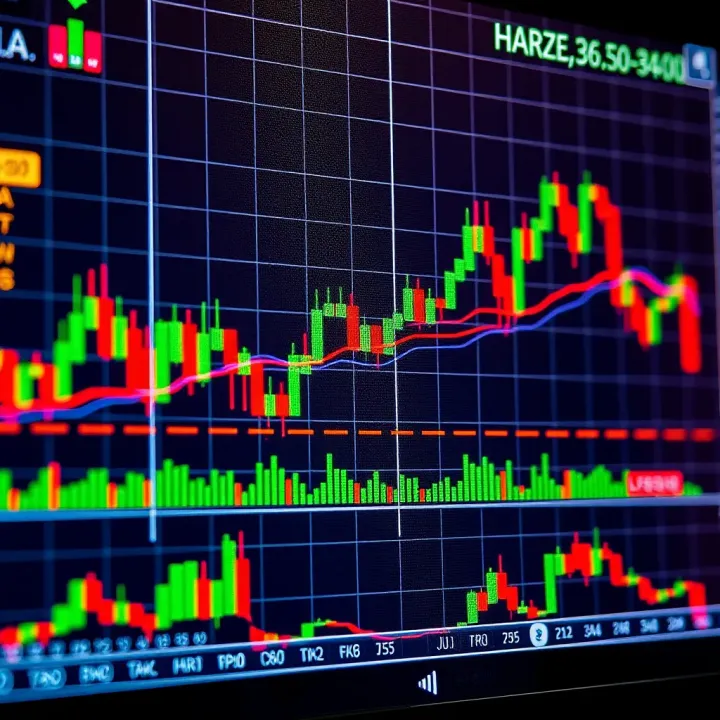
Forex Trading Charts Guide for Kenyan Traders
📊 Master Forex trading charts in Kenya! Learn to read patterns, choose time frames, and use indicators confidently for smarter currency trading decisions.
Edited By
Liam Crawford
Forex trading, often called currency trading, is the buying and selling of currencies on the global market with the goal of making profits from changes in exchange rates. The forex market is the largest financial market worldwide, with daily trading volumes exceeding $6 trillion. For Kenyan investors, engaging in forex trading offers a chance to capitalise on currency fluctuations caused by economic events, political developments, or market sentiment.
At its core, forex trading involves exchanging one currency for another—say, buying US dollars (USD) using Kenyan shillings (KSh) with the hope that the USD will strengthen against KSh. When the exchange rate shifts favourably, you sell back the USD and pocket the difference. This mechanism allows individuals and institutions to speculate on or hedge against currency movements.
The forex market operates 24 hours on weekdays, from the Asian session through the European to the US session, enabling traders in Kenya to participate at convenient times, often outside regular market hours.
Key terms to understand include:
Currency pairs: These are quotations of one currency against another, such as USD/KES (US dollar to Kenyan shilling).
Pip: The smallest price move a currency can make; for most pairs, one pip equals 0.0001.
Spread: The difference between the buying (bid) and selling (ask) price; this represents the broker's fee.
In Kenya, the growth of mobile money platforms like M-Pesa and improved internet access has made forex trading more accessible. Traders commonly use local brokers registered with the Capital Markets Authority (CMA) to ensure safe and regulated operations. Additionally, platforms often allow deposits and withdrawals via M-Pesa, easing fund management.
However, forex trading isn't without risks. Currency markets can be volatile and affected by factors like central bank decisions, geopolitical tensions, and economic data releases. Efficient risk management, including setting stop-loss orders, using reasonable leverage, and staying informed about market trends, is vital to protect your capital.
To sum up, understanding how forex trading works and mastering its basics lays the foundation for smarter and safer participation. Next sections will explore these concepts further, focusing on practical steps to trade forex from Kenya with confidence.
Forex trading, short for foreign exchange trading, is the process of buying and selling currencies. It’s the largest financial market in the world, with an average daily turnover of over $6 trillion. For everyday Kenyans and investors, forex trading offers a chance to profit from changes in currency values, whether it’s between the US dollar and the Kenyan shilling or other global currencies.
Understanding forex trading matters because currencies influence most international trade and investments. For instance, a Kenyan exporter who sells tea to Europe will be affected by fluctuations in the euro versus the shilling. Traders buy currencies they expect to rise in value and sell those they think will fall. This can provide a source of income or a hedge against risks linked to currency swings.
At its core, forex trading involves exchanging one currency for another, hoping the exchange rate moves favorably. Imagine you expect the US dollar (USD) to strengthen against the Kenyan shilling (KES). You would buy USD/KES, meaning you buy dollars and sell shillings. If the dollar gains value, you can sell it back for more shillings, making a profit.
Currencies are always quoted in pairs, for example, EUR/USD or USD/JPY. The first currency (base) is what you buy or sell against the second currency (quote). The price reflects how much of the quote currency you need to buy one unit of the base currency.
The forex market operates 24 hours a day from Monday to Friday across different global financial centres—starting in Asia, moving to Europe, and ending in North America. This continuous trading ensures liquidity and opportunities at nearly any time.
Unlike stock exchanges, forex has no single physical location; it’s an over-the-counter (OTC) market where banks, institutions, brokers, and traders connect electronically. In Kenya, traders often use online platforms like MetaTrader via local or international brokers to access the market.
Prices change constantly based on supply and demand, influenced by economic news, geopolitical events, central bank decisions, and market sentiment. For example, a decision by the US Federal Reserve to raise interest rates typically strengthens the USD, impacting forex pairs involving the dollar.
Success in forex trading depends on understanding market dynamics and using smart strategies, but always be mindful of the risks tied to volatility and leverage.
Getting familiar with these basics sets a solid foundation for anyone looking to engage in forex trading, whether for speculating or managing currency risks.
Understanding the key terms in forex trading helps you navigate the market more confidently. These concepts are not just jargon; they directly affect your trading decisions, profits, and risks. Before you invest even a shilling, getting familiar with these terms is essential.
Forex trading always involves two currencies, known as a currency pair. The first currency in the pair is called the base currency, and the second is the quote currency. For example, in USD/KES, USD is the base currency, and KES (Kenyan Shilling) is the quote currency. The rate tells you how much of the quote currency you need to buy one unit of the base currency. So, if USD/KES is quoted at 110, it means you need 110 Kenyan shillings to buy 1 US dollar.
Prices in forex are always expressed in pairs because trading involves exchanging one currency for another. This means you never buy or sell a single currency alone; you trade it against another. Understanding which is the base or quote currency helps you interpret market moves logically.
A pip stands for “percentage in point,” representing the smallest price movement a currency pair can make. For most pairs, one pip equals 0.0001 of the quoted price. For instance, if USD/KES moves from 110.0000 to 110.0001, that’s one pip. Tracking pips helps traders calculate profits or losses precisely.
Lots refer to the size of your trade. A standard lot is 100,000 units of the base currency, but you can also trade mini-lots (10,000 units) or micro-lots (1,000 units). Smaller lots help you manage risk and start trading with less capital.
Leverage means borrowing funds from your broker to control a larger position than your actual deposit. For example, with leverage of 1:100, a KS,000 deposit can control KS00,000 worth of currency. While leverage can boost profits, it also magnifies losses, making careful money management essential.
In forex, the bid price is the amount a buyer is willing to pay for a currency pair, while the ask price is the amount a seller wants. The difference between these two is the spread, which represents the broker’s fee or transaction cost.
For example, if USD/KES has a bid of 109.950 and an ask of 110.000, the spread is 0.050 shillings. Traders aim for tight spreads because smaller spreads reduce costs per trade, directly impacting profitability.
When starting with forex trading, focusing on these basic terms gives you a solid foundation. Trading without understanding pips, lots, leverage, or the bid-ask spread is like driving a matatu blindfolded—risky and unpredictable.
Grasping these key concepts equips you to make smarter choices as you enter the forex world. It also helps you compare brokers on spreads and leverage, pick suitable trade sizes, and manage risks effectively.
Trading forex today largely depends on technology, making it accessible to many investors from Nairobi to Mombasa. Understanding how people trade can help you navigate the market and make smarter decisions. It boils down to choosing the right platforms and tools and knowing which strategies to employ. Whether you’re a newbie or seasoned trader, these elements shape how you engage with the forex market.
Most Kenyan forex traders use online trading platforms that connect them directly to the global currency markets. Popular platforms like MetaTrader 4 (MT4) and MetaTrader 5 (MT5) offer user-friendly interfaces and real-time data. These tools let traders analyse currency pairs, track price movements, and place orders instantly. For instance, you can open a position on the USD/KES pair, watch how its value changes during the day, and close at a profit using these platforms.
Many brokers in Kenya also provide mobile apps compatible with Android and iOS, which is vital given the widespread use of mobile phones here. Tools such as interactive charts, economic calendars showing when important data will be released, and automated trading bots can help you trade efficiently. Plus, features like stop-loss and take-profit orders protect you from unexpected market swings without needing to watch the screen all day.
When it comes to approach, forex traders vary widely. Some prefer scalping, which means making many quick trades to earn small profits repeatedly during the day. This suits traders who can dedicate time and attention to fast-paced trading. On the other hand, swing trading involves holding positions for several days or weeks, aiming to benefit from broader market trends.
Another popular method is range trading, where traders identify support and resistance levels to buy low and sell high. For example, if EUR/USD tends to bounce between two price points, a trader could exploit this predictable pattern. Meanwhile, trend following looks to catch bigger moves by buying when a currency is clearly gaining strength or selling if it’s weakening.
It's worth noting that Kenyan traders mix strategies based on market conditions and personal risk tolerance. Some might combine technical analysis with news events to decide when to enter or exit trades. Most successful traders also manage their risks carefully by deciding beforehand how much money they can afford to lose on a trade or overall.
Having the right platform and a solid strategy helps Kenyan traders stay competitive in forex. It’s not about luck; it’s about preparation, tools, and consistent practice.
In summary, how you trade forex depends on the platforms you choose, the tools you use, and the strategies you apply. These factors determine how well you can respond to market movements and capitalise on currency fluctuations. For anyone serious about forex in Kenya, taking time to understand these elements is a good start towards building a profitable trading routine.
Understanding the risks and benefits of forex trading is essential for anyone eager to enter this fast-moving market. Forex offers opportunities to earn but also carries significant challenges, especially if you trade without proper knowledge or preparation. This section breaks down the key advantages and alike realities Kenyan traders should expect.
One clear advantage of forex trading is liquidity. The forex market is the largest financial market worldwide, with daily trading volumes exceeding $6 trillion. This means you can often enter or exit trades quickly without waiting. For a Kenyan investor, this enables flexibility—trades can be made anytime during the 24-hour trading cycle, accommodating different schedules.
Another benefit is the potential to profit from both rising and falling markets. For example, if the US dollar weakens against the Kenyan shilling, traders who correctly predict this movement can earn from the decline. This flexibility is not common in many investment types.
Moreover, forex trading often requires less initial capital compared to stocks or real estate. With leverage provided by brokers, traders in Kenya can control larger positions with a smaller deposit. However, this comes with its own risks, as we will see.
Lastly, forex trading platforms are accessible and usually come with educational tools, charts, and news feeds. This allows Kenyan traders to stay informed about global economic events and make more grounded decisions.
Despite its benefits, forex trading comes with notable risks. The high volatility can cause rapid price swings, which might wipe out deposits quickly if not managed carefully. For instance, a sudden political event in the US or an economic report can shift currency values dramatically within minutes.
Leverage amplifies this risk. While it boosts potential profits, it also increases potential losses. A Kenyan trader using high leverage can lose more than their initial investment if the market moves against them.
To manage these risks, setting stop-loss orders is vital. A stop-loss automatically closes your position at a specified price, limiting losses if the market goes the wrong way. Risk management should also involve only risking a small percentage of your trading capital on a single trade.
Education plays a big part in risk reduction. Understanding fundamental and technical analysis helps you interpret market movements better. Also, choosing a broker regulated by the Capital Markets Authority (CMA) in Kenya ensures your funds are safer and increases trustworthiness.
In forex trading, patience and discipline often separate successful traders from those who lose their savings quickly.
In summary, while forex trading offers Kenyans a chance to earn beyond traditional investments, it demands respect for its risks and a sound plan to navigate the market. Trading with clear strategies, sound risk management, and informed decision-making improves the odds of success and makes the experience more sustainable.
Understanding the local context is vital when stepping into forex trading in Kenya. This section highlights practical points Kenyan forex traders must consider to trade securely and effectively.
Kenya's forex trading activities are regulated mainly by the Capital Markets Authority (CMA). The CMA ensures that brokers operating in Kenya follow specific rules to protect investors. Before you start trading, check if a broker is licensed by the CMA, as unregulated brokers can pose serious fraud risks. For example, a Kenyan trader dealing with an unlicensed broker isn’t covered if the broker suddenly disappears with client funds. The Central Bank of Kenya (CBK) also plays a role, especially concerning forex transactions linked to foreign exchange controls. Knowing these frameworks can help you avoid legal troubles and scams.
In Kenya, mobile money services like M-Pesa dominate the financial landscape, making forex deposits and withdrawals easier than ever. Many reputable brokers accept M-Pesa payments, which means you don’t need a bank account to fund your trading wallet. Still, it's crucial to confirm with your chosen broker which payment methods they accept. Some also allow bank transfers or card payments. Fast and reliable payment options save time and reduce risks of failed transactions. At the same time, a good internet connection is essential for real-time market access. Many Kenyans rely on mobile data or Wi-Fi hotspots to connect to forex platforms.
Selecting the right broker involves more than just looking for low spreads or leverage. Put priority on a broker’s reputation, transparent fee structure, and responsive customer support within Kenya. For instance, some brokers offer local phone numbers or WhatsApp support, making communication easier. Verify that the platform you choose has user-friendly interfaces compatible with common devices like smartphones and laptops. Also, a local broker or one with a strong presence in East Africa can better understand your needs and regulatory requirements. Avoid brokers promising guaranteed returns or unusually high leverage, as these are often red flags for high risk.
Staying informed about Kenya’s regulations, using convenient payment methods like M-Pesa, and picking a trustworthy broker will help you trade smartly and reduce risks.
By focusing on these local specifics, Kenyan traders can approach forex trading with confidence, balancing opportunities with safety on the global currency markets.
📊 Master Forex trading charts in Kenya! Learn to read patterns, choose time frames, and use indicators confidently for smarter currency trading decisions.

📊 Get to know forex trading basics in Kenya: currencies, markets, strategies, risks, and tips to trade smartly and confidently.
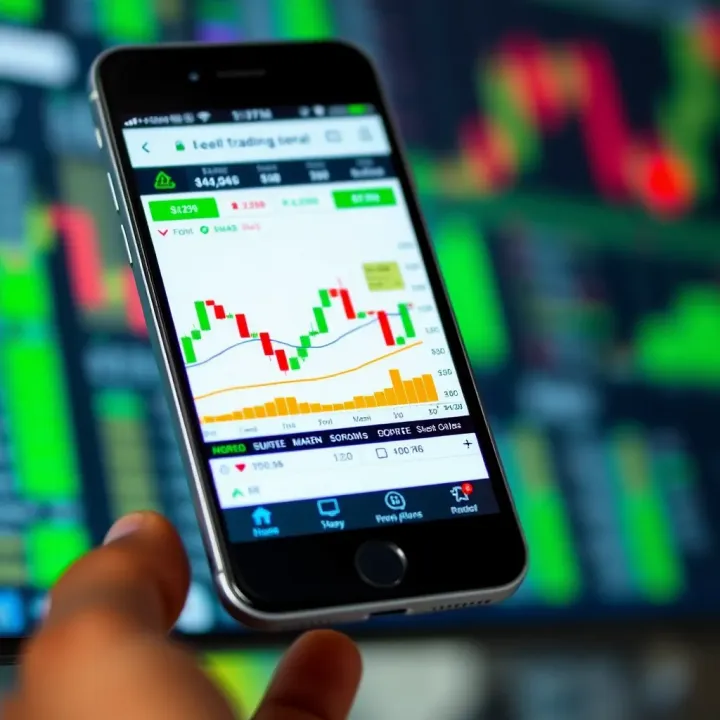
📱Explore top Forex trading apps in Kenya! Learn features, risks, regulations & smart tips to trade confidently in the mobile Forex market.💹
Explore effective forex trading strategies in Kenya 🇰🇪 including analysis, risk management, and psychology to boost your trading confidence and success 📈💡
Based on 15 reviews