
Forex Trading Basics Explained
📊 Get to know forex trading basics in Kenya: currencies, markets, strategies, risks, and tips to trade smartly and confidently.
Edited By
Amelia Scott
Forex trading is the process of buying and selling different currencies against one another with the aim of making a profit from changes in exchange rates. Unlike stock markets that deal with company shares, forex trading revolves around currency pairs, like USD/KES or EUR/USD, which represent how much one currency is worth in terms of another.
The foreign exchange market is the largest financial market worldwide, with daily trading volumes surpassing $6 trillion. It operates 24 hours a day across different time zones, from Asia to Europe to America, allowing traders in Kenya to participate at almost any time convenient for them.
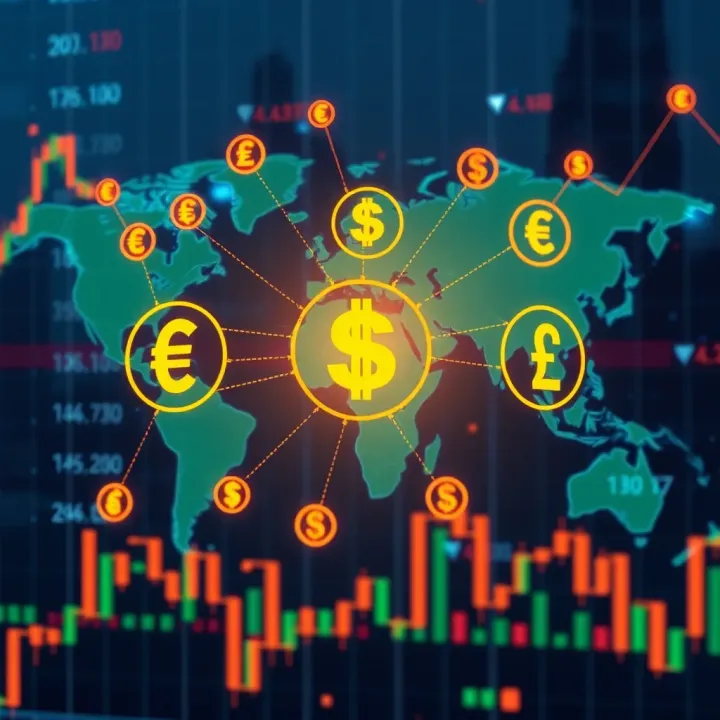
At the heart of forex trading is speculation on whether a currency will strengthen or weaken compared to its pair. For example, if a trader expects the US dollar to rise against the Kenyan shilling, they may buy the USD/KES pair. If the dollar indeed gains value, the trader can sell back at a higher price and earn a profit.
Several players shape the forex market:
Commercial banks: They handle large currency exchanges for clients and act as market makers.
Central banks (e.g., Central Bank of Kenya): These influence currency value by adjusting interest rates or intervening directly.
Hedge funds and investment firms: They trade huge sums to benefit from market trends.
Retail traders: Individual investors in Kenya increasingly join forex through brokers, often using online platforms.
Pip: The smallest price change in a currency pair, usually the fourth decimal place.
Leverage: This allows traders to control large positions with a small amount of capital but comes with high risk.
Spread: Difference between buying (bid) and selling (ask) price, representing transaction cost.
Forex trading carries inherent risks due to high volatility and leverage. It's wise for Kenyan traders to start small, use demo accounts, and develop solid strategies.
Traders in Kenya often use local brokers regulated by the Capital Markets Authority (CMA) to ensure safer trading conditions. Payments and withdrawals typically happen through trusted channels like M-Pesa or bank transfers.
Understanding these basics sets the foundation for deeper exploration into strategies, risk management, and regulatory aspects essential for successful forex trading in Kenya.
Forex trading, at its core, is the buying and selling of currencies. This activity happens on a global scale and plays a significant part in international business and finance. To put it simply, traders exchange one currency for another, hoping to profit from changes in exchange rates. Understanding what forex trading means is essential because it sets the foundation for anyone who wants to participate or gain from this market.
This section helps clarify the basics of forex trading, its differences from other markets, and why people engage in it. For example, a Kenyan exporter receiving payment in US dollars might want to convert those dollars into shillings when the exchange rate is favourable. Another trader might speculate on the Kenya shilling’s behaviour against the dollar to earn a profit from price swings.
Currencies are the official money issued by countries, such as the Kenyan shilling (KES) or the US dollar (USD). Forex trading involves changing one currency into another—for instance, exchanging KES for USD—based on the current exchange rate. This exchange rate fluctuates constantly due to factors like trade flows, interest rates, and political events. Thus, the forex market reflects the relative economic strength and stability of countries.
Every day, individuals, businesses, and financial institutions buy and sell currency to meet different needs. For example, someone travelling from Nairobi to London will convert KSh to pounds. Businesses importing goods pay suppliers in foreign currencies, so they also engage in forex transactions. These practical uses show how currency exchanges are part of daily financial life beyond speculative trading.
What sets forex apart from stock or commodity markets is its 24-hour operation and enormous liquidity. The forex market never really sleeps because trading follows the sun: Asian, European, and American sessions overlap and keep the market active round the clock. This continuous activity means traders can respond quickly to news and events anywhere in the world.
Another difference is the decentralised nature of forex. Unlike the Nairobi Securities Exchange (NSE) with a central venue, forex trading happens over-the-counter (OTC) through a global network of banks, brokers, and electronic platforms. This system gives traders flexibility but also requires careful choice of brokers and robust risk management.
Many forex participants trade currencies to make money by speculating on price changes. For instance, a trader might buy US dollars when they expect the shilling to weaken, aiming to sell dollars later at a better rate. Speculation can be highly profitable but also risky, especially due to forex’s leverage options that amplify gains and losses.
This profit-driven trading attracts retail traders and financial institutions alike. However, it requires understanding market trends, economic indicators, and patience to avoid emotional decisions that can easily wipe out capital.
Hedging means protecting against possible losses from currency fluctuations. Kenyan companies engaged in export or import often use forex trading to lock in favourable rates and avoid business shocks. For example, if a Nairobi-based manufacturer expects to receive payment in US dollars three months later, they might use forex contracts to secure today’s exchange rate, thus sidestepping the risk of a shilling slump.
Without hedging, currency shifts can erode profit margins and create uncertainty. That’s why forex plays a vital role in stabilising business operations exposed to international currencies.
Foreign exchange isn’t just for traders and speculators. It's a daily necessity for many businesses dealing cross-border. Importers in Kenya pay foreign suppliers in euros, dollars, or other currencies, requiring regular currency conversion. Similarly, companies that earn income abroad need to convert these earnings into shillings for local use.
Also, remittance flows from Kenyans working abroad contribute significantly to forex volumes. These business-driven transactions keep the market dynamic and reflect real economic activity rather than just speculation.
Understanding the varied reasons people trade forex helps you grasp the market’s complexity. Whether you’re speculating for profit, managing currency risk for business, or simply exchanging money when abroad, recognising these purposes guides better decision-making.
Understanding how the forex market operates is key to making informed trading decisions. The market’s structure, trading hours, and main players all affect liquidity, price movements, and trading opportunities. By grasping these aspects, traders can better time their trades and anticipate market behaviour.
The forex market is decentralised, meaning there’s no single central exchange like the NSE for stocks. Instead, trading happens electronically over-the-counter (OTC) between participants worldwide. This setup allows currency trading 24 hours a day during weekdays, facilitating constant flows of capital across borders. For instance, a Kenyan trader can buy US dollars during their morning, which corresponds to the late-night session in New York and midday in London.
Because of this decentralisation, pricing can vary slightly between brokers but generally aligns closely due to arbitrage. The decentralised nature also means no single entity controls the entire market, keeping it competitive and liquid.
The forex market follows major trading sessions timed around financial hubs: London, New York, Tokyo, and Sydney. These sessions overlap, creating periods of heightened activity and volatility, which traders watch closely. For example, the London–New York overlap (from 3 pm to 7 pm EAT) often sees more significant price movements due to high volume. Kenyan traders should note that trading during these periods might offer better entry and exit points but may also carry higher risks from volatility.
Banks and financial institutions dominate forex trading, handling the bulk of currency flows for international trade, investment, and client needs. Large commercial banks trade currencies to manage risks or meet client demands, influencing price direction and liquidity. For example, Equity Bank or KCB Kenya might engage in forex to support multinational clients or hedge currency exposure.
Central banks play a strategic role by intervening in forex markets to stabilise or influence their national currency’s value. The Central Bank of Kenya (CBK) can buy or sell shillings to control inflation, manage reserves, or support government economic policies. These interventions can cause sharp, sometimes sudden market moves, making it essential for traders to monitor central bank announcements.
Individual and retail traders, including those in Kenya, form a growing segment thanks to online brokers and accessible platforms. While retail traders' volume is small compared to banks, their collective actions can impact market sentiment and trends. Kenyan traders use platforms supported by M-Pesa for deposits and withdrawals, making forex more accessible. However, retail traders should remain cautious about risks and seek proper education to avoid pitfalls.
The forex market’s decentralised setup and major international participants create a dynamic environment. Knowing market structure, trading times, and key players helps you engage with confidence and avoid surprises.
Forex operates 24/5 due to overlapping sessions in global centres.
Decentralisation means no single exchange; trading is OTC via brokers.
Banks provide liquidity and move large volumes.
Central banks influence currencies through market interventions.
Retail traders in Kenya can access forex via reliable online platforms, often using M-Pesa.
This knowledge helps Kenyan traders understand when to trade and who influences price changes, equipping them to navigate forex smartly.
Understanding the basic terms in forex trading is crucial for anyone aiming to navigate this market effectively. Without a firm grasp of these concepts, traders might easily misinterpret price movements or miscalculate potential profits and losses. By getting familiar with currency pairs, pips, lots, and leverage, you place yourself in a better position to make informed decisions and limit costly mistakes.
Base and quote currencies refer to how currency pairs are presented in the forex market. The base currency is the first currency in the pair, and the quote currency comes second. For example, in the pair USD/KES, US dollar (USD) is the base and Kenyan shilling (KES) is the quote. The price indicates how much one unit of the base currency costs in the quote currency. So, if USD/KES is trading at 120, it means 1 USD equals 120 Kenyan shillings. This system helps traders know exactly what currency is being bought or sold and at what rate.
Identifying the base and quote currencies is practical because it affects how you calculate profits and losses. For instance, if you expect the Kenyan shilling to strengthen against the dollar, you might sell USD/KES, anticipating the price to fall. Knowing which currency you are buying or selling ensures you’re trading according to your market view.
Major, minor, and exotic pairs categorize currency pairs based on liquidity and trading volume. Major pairs involve the most traded currencies globally, such as USD, EUR, JPY, and GBP. In Kenya, pairs like USD/KES or EUR/USD are common majors. These pairs usually have tighter spreads, meaning lower transaction costs.
Minor pairs exclude the USD but combine other major currencies, such as EUR/GBP. Exotic pairs involve less liquid currencies or those from emerging markets, for example, USD/TRY (Turkish Lira) or USD/ZAR (South African Rand). Exotic pairs can have higher price volatility and wider spreads, which might lead to higher risk or reward depending on market conditions.
Measuring price changes with pips is fundamental in forex trading. A pip stands for "percentage in point" and represents the smallest price move a currency pair can make, usually the fourth decimal place for most pairs. For example, if USD/KES moves from 120.0000 to 120.0100, it has moved 1 pip. Monitoring pips helps traders assess gains or losses in precise amounts.
Using pips standardises price changes across different currency pairs, making it easier to compare movements. For Kenyan traders, tracking pips shows how daily fluctuations impact their trades, especially when dealing with pairs like USD/KES or EUR/USD.
Trade size and lots describe how much currency you are buying or selling. A standard lot is 100,000 units of the base currency. Smaller sizes include mini lots at 10,000 units and micro lots at 1,000 units. For many retail traders, including those in Kenya, trading mini or micro lots helps manage risk by limiting exposure.
Knowing your trade size is practical because it directly affects potential profits or losses. If you trade one standard lot of USD/KES and the exchange rate moves by 10 pips, your profit or loss is significantly larger than trading a micro lot for the same pip change.
How leverage magnifies gains and losses explains why forex can be both appealing and dangerous. Leverage allows you to control a larger position with a relatively small amount of capital. For example, with 1:100 leverage, you can trade KSh 100,000 worth of currency with just KSh 1,000.
While leverage increases your potential gains, it also amplifies losses. Traders who over-leverage risk wiping out their accounts quickly if the market moves against them. Kenyan traders should be cautious, using leverage settings recommended by their brokers and maintaining strict risk management to avoid heavy losses.
Getting familiar with these fundamental terms ensures you trade with clearer understanding and better control, especially when operating in markets as dynamic as forex.
Understanding the risks and challenges involved in forex trading is essential for anyone serious about navigating currency markets successfully. Forex is known for its volatility, which can lead to significant gains but also steep losses if not managed properly. Traders must be aware of these risks to avoid common pitfalls and trade more confidently.
Currency prices don't sit still; they jump around due to various factors. The main drivers of these fluctuations are demand and supply changes influenced by trade balances, interest rates, inflation, and market sentiment. For instance, if the US Federal Reserve raises interest rates, investors might move money into the US dollar, pushing its value up against other currencies. This movement impacts traders holding positions in those currency pairs.
Economic shifts in key countries can cause sharp price changes within minutes. This is why volatility is a double-edged sword: it offers chances for profit but also increases the risk of losses. Currency risk, therefore, refers to the chance that the value of the currency trade will move against a trader’s position, causing losses.
Political events add another layer to currency risk. Elections, policy announcements, trade disputes, or unexpected government actions can shake markets heavily. For example, during Kenya's national elections, the shilling often shows increased volatility against USD and other stable currencies as investors react to uncertainty. Such political factors can create abrupt price swings, making it challenging to predict movements accurately.
One major risk is over-leverage. Leverage allows traders to control larger positions with a small margin, but this also magnifies losses. Suppose you use 50:1 leverage on a KSh 10,000 deposit; a small 2% adverse move wipes out your capital. Over-leveraging can quickly drain accounts if discipline isn’t practised.
Emotional trading is another common trap. Fear and greed often cloud a trader’s judgement, causing rushed decisions or hesitation to cut losses. Keeping emotions in check by sticking to a plan is crucial. For example, a trader who refuses to exit a losing position hoping for a rebound might end up with greater losses.
Risk management strategies help reduce these dangers. Setting stop-loss orders limits potential losses, while taking profits at pre-planned points secures gains. Diversifying trades and avoiding putting all capital into one position reduces exposure. Using only a small portion of your trading capital on any single trade ensures you survive the rough patches. Wise management strengthens long-term success in forex.
Managing risks in forex isn’t just good practice—it’s the difference between staying in the game and going broke.
Effective forex trading involves recognising these risks and having a clear strategy to manage them. By understanding volatility, political impacts, and common human errors, traders can improve their chances of consistent, profitable trading.
Forex trading has grown in popularity in Kenya largely due to increased access to the internet and mobile money platforms like M-Pesa. It provides an opportunity for many Kenyans to diversify income streams beyond traditional jobs, especially within the hustler economy. Forex trading allows individuals and SMEs to speculate on currency price changes or hedge against foreign exchange risks when dealing in international trade.
Using online brokers and platforms: Kenyan traders primarily access forex markets through online brokers. These digital platforms connect traders with the global forex market, offering tools like real-time charts, leverage options, and technical analysis indicators. Popular platforms like MetaTrader 4 and 5 are widely used. This flexibility allows traders to operate from Nairobi, Mombasa, or Kisumu, provided they have stable internet. Importantly, these platforms often support demo accounts, helping beginners practise without risking real money.
Payment options including M-Pesa: One key factor easing forex trading in Kenya is the integration of M-Pesa as a payment method. Many forex brokers accept deposits and withdrawals through M-Pesa, making transactions fast, affordable, and secure. This avoids traditional banking delays and fees, especially for users without formal bank accounts. Besides M-Pesa, some brokers accept bank transfers or mobile wallets. However, ensuring the broker supports convenient, trusted payment options is essential to avoid hassles.
Regulatory considerations from CMA Kenya: The Capital Markets Authority (CMA) in Kenya regulates forex trading to protect investors and maintain market integrity. Only brokers licensed by CMA are authorised to operate locally. Kenya’s regulatory framework requires brokers to adhere to transparent practice, proper client fund segregation, and regular audits. For traders, dealing with CMA-approved brokers reduces the risk of scams or malpractice. It’s wise for Kenyan traders to verify broker licences and compliance status before committing funds.
Choosing reliable brokers: Selecting a trustworthy broker is critical for success. Look for brokers registered with CMA or reputable international regulators recognised in Kenya. Review their trading conditions, such as spreads, leverage limits, and withdrawal policies. Avoid brokers promising unrealistic returns or pushing for high leverage without adequate risk warnings. Checking reviews from other Kenyan traders can provide practical insights before committing.
Building knowledge through local and online resources: Education remains the foundation of sustainable trading. Kenyans can benefit from courses offered by local financial schools, webinars by forex educators, and resources on trading websites. Community groups and online forums centred on Kenyan traders also help exchange practical tips and market updates. Developing skills in technical and fundamental analysis increases chances of making informed trading decisions rather than gambling.
Understanding tax implications: Forex trading profits are subject to Kenyan tax laws. The Kenya Revenue Authority (KRA) considers forex earnings as taxable income, whether generated by individuals or businesses. Traders should maintain accurate records of trades, profits, and losses for tax filing using iTax, KRA’s online platform. Consulting with tax professionals helps ensure compliance and efficient handling of forex-related income to avoid later penalties.
Kenyan forex traders who take time to learn, pick reliable brokers, and follow regulatory and tax rules are better positioned to build lasting success in the market.
This grounded approach emphasises practical steps that align with local realities rather than shortcuts or unverified promises.
📊 Get to know forex trading basics in Kenya: currencies, markets, strategies, risks, and tips to trade smartly and confidently.

Explore bot forex trading 🌐: learn how it works, pick the right bots, set them up, and manage risks to boost your forex trading strategy 📈.
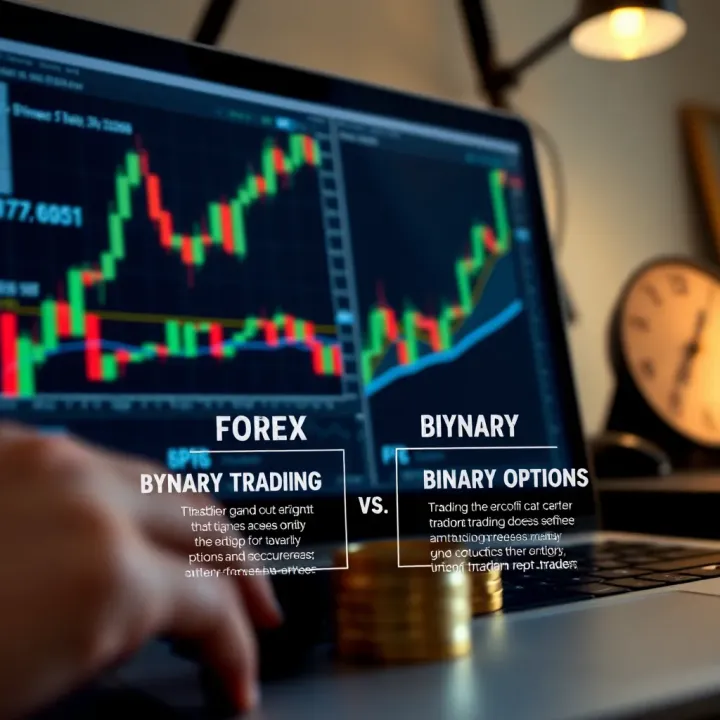
Explore the key differences between Forex trading and Binary Options 📊. Understand mechanics, risks, strategies, regulations, and potential returns to trade smarter in Kenya 🇰🇪.

📚 Discover top books for forex trading success! Learn strategies, market analysis, psychology & risk management tailored for Kenyan traders and beyond.
Based on 5 reviews