

Understanding Risk Management for Kenyan Businesses
📊 Learn how Kenyan businesses can master risk management by identifying, assessing, and minimizing threats to protect their operations and thrive in uncertain times.
Edited By
Sophie Reynolds
A risk management policy is the backbone of any organisation keen on survival and steady growth, especially here in Kenya where businesses face unique challenges. This policy sets out how an organisation finds, measures, and tackles risks that might disrupt its day-to-day activities or long-term objectives.

Imagine a manufacturing firm in Athi River that relies heavily on a steady supply of raw materials. If they don’t have a risk management policy, a delay caused by transport strikes or supplier issues could throw their operations into chaos, leading to lost contracts and unhappy clients. A clear policy means they plan ahead — maybe by having backup suppliers or keeping emergency stocks.
A well-crafted risk management policy boosts confidence among investors and partners because it shows the organisation is prepared for uncertainties typical in the Kenyan market.
When forming a risk management policy, Kenyan organisations need to consider local realities such as fluctuating exchange rates, unreliable power supply, regulatory changes, and even social unrest during election periods. Effective risk policies also consider internal factors like employee fraud or IT system failures.
Risk Identification: Spot possible problems early, from cyber threats to market shifts.
Risk Assessment: Weigh how likely these risks are and the impact they'll have.
Risk Response: Decide whether to avoid, reduce, share, or accept each risk.
Roles and Responsibilities: Who handles what? Clear accountability encourages swift action.
Monitoring and Review: Risks evolve, so keep checking and updating your strategies regularly.
For example, a bank operating in Nairobi might include safeguards against online fraud, while an agricultural exporter may focus heavily on climate risks affecting crop yields.
In Kenya, organisations are expected to align with guidelines from bodies like the Capital Markets Authority (CMA) or comply with sector-specific regulations. Having a documented risk management policy helps demonstrate this compliance.
Ultimately, a practical risk management policy doesn’t just protect — it enhances decision-making by providing a clearer picture of potential pitfalls. For traders, investors, and financial analysts, understanding how companies handle these risks offers insight into their stability and growth potential.
Setting up this policy might seem daunting, but the benefits — from smoother operations to better stakeholder trust — are significant and well worth the effort.
A risk management policy acts as a clear roadmap for organisations, outlining how they will identify, assess, and manage potential risks. For Kenyan businesses and institutions, having such a policy is essential to avoid unexpected setbacks that could disrupt operations or cause financial strain. Consider a Nairobi-based SME that depends heavily on M-Pesa transactions; without a clear risk policy addressing mobile payment failures, it could lose revenue or face dissatisfied customers.
Such policies matter because they go beyond just listing risks—they set the tone for how everyone in the organisation handles uncertainty. When properly designed, the policy helps build a culture of vigilance and accountability, making the whole operation more resilient amid Kenya's unique challenges like regulatory changes, market volatility, or even seasonal disruptions such as the long rains.
The core purpose of a risk management policy is to systematically guide an organisation on how to spot threats and respond to them effectively. The policy defines boundaries—what types of risks (financial, operational, reputational, regulatory) the organisation will focus on and how to prioritise them based on impact and likelihood.
For example, a financial institution like a bank will pay particular attention to regulatory compliance risks and cyber threats, while a manufacturing firm might emphasise operational risks such as equipment breakdowns or supply chain disruptions. Clearly stating the scope keeps resources targeted and avoids spending effort on less critical risks.
Every organisation, no matter the size or sector, benefits from a risk management policy. In Kenya, this is particularly relevant for companies exposed to the informal economy, fluctuating exchange rates, or fast-changing regulatory environments.
Even community groups or NGOs handling donor funds should have clear risk guidelines to manage project delays or fund mismanagement. This policy is essential not only for large corporates but also SMEs and startups planning for sustainable growth amidst uncertainty.
A solid risk management policy can directly reduce losses by identifying potential pitfalls before they cause harm. For instance, a logistics company might use the policy to flag risks like road closures during heavy rains, which could delay deliveries. By foreseeing such problems, the firm can reroute shipments or adjust schedules, saving costs and preserving client trust.
Similarly, financial losses from fraud or theft can be curbed when staff are aware of controls detailed in the policy. This proactive stance decreases the chances of expensive incidents that might otherwise cripple smaller businesses.
Having a written risk management policy improves decision-making by providing a consistent framework to evaluate choices. For Kenyan traders or investors, this can mean avoiding rash moves in volatile markets by thoroughly assessing risks versus rewards.
The policy also builds resilience, allowing organisations to bounce back from setbacks faster. A good example is a tourism outfit in coastal Kenya preparing for potential disruptions from seasonal storms. With a plan in place, they can shift bookings or communicate promptly with customers, reducing reputational damage.
A clear risk management policy doesn’t just protect organisations—it empowers them to tackle challenges confidently and seize opportunities where others may hesitate.
In all, the policy serves as a practical tool for Kenyan organisations to navigate an often unpredictable business environment with steadiness and foresight.
A strong risk management policy rests on several key components that work together to guide an organisation in spotting, assessing, and handling risks effectively. These elements create a clear framework ensuring risk is managed consistently across the organisation. For Kenyan businesses, which often face a mix of operational challenges, regulatory changes, and reputational threats, having these components well-defined helps avoid costly surprises and supports more confident decision-making.
Identifying risks accurately is the first step. Risks generally fall into four main groups:
Operational risks: These arise from day-to-day activities. For example, a factory in Eldoret may encounter supply chain disruptions during the rainy season affecting production timelines.
Financial risks: These include currency fluctuations, credit risks, or delay in payments. A forex trader in Nairobi could be exposed to currency risks when dealing with cross-border transactions.
Reputational risks: Any event harming public perception can affect business trust. For instance, a Kenyan bank facing data breaches risks losing customer confidence.
Regulatory risks: These stem from changes in laws or non-compliance. The 2020 data protection regulations (the Kenya Data Protection Act) have made this especially important for businesses handling customer information.
Recognising these categories ensures organisations are aware of the various threats they face and can tailor their response accordingly.
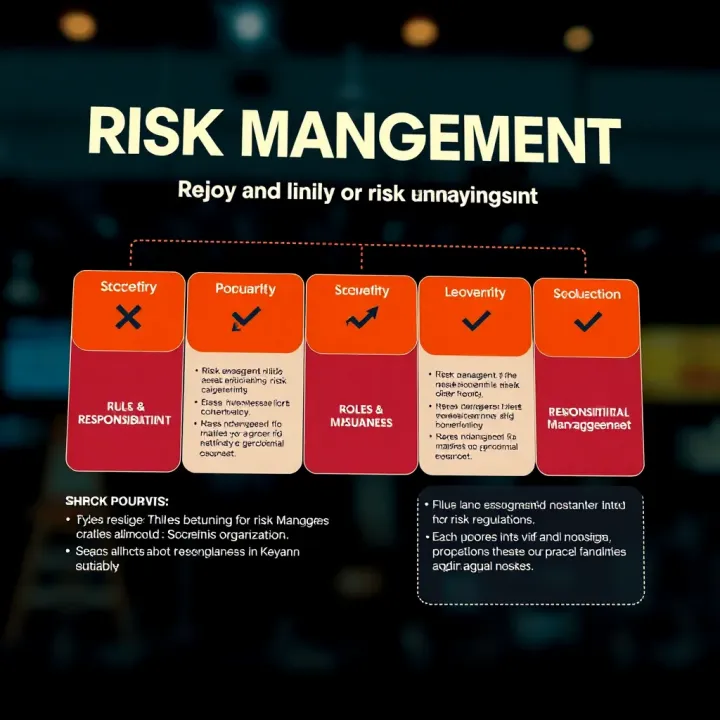
Clear lines of responsibility are crucial to making a risk policy effective. The board holds the ultimate responsibility for overseeing risk management, ensuring policies align with overall strategy. Management takes this framework and applies it, integrating risk control into daily operations. Employees across departments must also understand their specific roles in following procedures and reporting issues.
For example, a Nairobi-based SME's finance manager might be responsible for monitoring cash flow risks, while sales staff could alert management to emerging market threats. This distribution of accountability fosters a culture where everyone plays their part in managing risk rather than waiting for the top level to act.
Methods for evaluating risks include qualitative techniques like risk matrix scoring, and quantitative approaches such as statistical analysis. Kenyan organisations often combine both, for example, scoring risks based on likelihood and impact, then backing this up with data from past incidents, like customer defaults or system downtimes.
Prioritising risks helps focus resources where they matter most. Criteria often include financial impact, likelihood of occurrence, legal implications, and effect on reputation. A risk that could cause a KSh 10 million loss and damage a brand will generally be prioritised over smaller operational risks. This approach ensures limited time and budget target the most threatening issues.
Once priorities are clear, the policy should outline how to manage each risk:
Avoidance: Steering clear of risky activities entirely, like refusing to enter markets with uncertain laws.
Mitigation: Taking steps to reduce impact or likelihood, such as installing fire suppression systems in warehouses.
Transfer: Shifting risk to third parties, usually through insurance or contracts.
Acceptance: Acknowledging some risks may be unavoidable or too minor to address directly.
For instance, a financial institution in Kenya might transfer credit risk via insurance but mitigate cyber threats with enhanced IT security. Balancing these strategies allows organisations to respond smartly depending on the nature and scale of each risk.
A well-structured risk management policy with clear components helps Kenyan organisations not only survive local uncertainties but also seize opportunities with confidence.
Developing and implementing a risk management policy is a critical step for Kenyan organisations aiming to shield themselves from unexpected shocks and losses. This process sets the foundation for consistent risk handling across the company, helping to balance risk-taking with control and enabling informed decision-making. When done right, it supports smoother operations and keeps the organisation compliant with local regulations, such as those from the Capital Markets Authority (CMA) or Kenya Revenue Authority (KRA).
Consulting various stakeholders during the drafting phase ensures the risk management policy reflects reality. Key players include management, department heads, frontline staff, and sometimes even external parties like suppliers or customers. For example, in a manufacturing company, engaging both the production team and the quality assurance unit helps identify operational risks more accurately.
Stakeholder input also builds ownership and clarity, reducing resistance when the policy is rolled out. It’s wise to hold workshops or focus group discussions, making room for different perspectives that might otherwise be missed. This approach especially benefits Kenyan organisations where decision-making often involves multiple layers and departments.
A risk management policy should closely align with the company’s overall goals and strategy. For an agribusiness, this might mean focusing on climate-related risks like drought or flood, while a fintech startup might prioritise cyber-security and data privacy issues. Linking the policy to goals ensures risk handling supports, rather than conflicts with, growth ambitions.
Clear alignment helps the organisation avoid wasted efforts on irrelevant risks and ensures leadership stays engaged. It also eases reporting to boards or investors by showing how risk management protects key business outcomes and supports sustainable growth.
A policy is only effective if everyone knows it and what it means for them. Training tailored to different teams helps cement this understanding. For instance, sales teams might focus on reputational risks and regulatory compliance, while finance staff learn about credit risks and fraud prevention.
Regular communication fosters a culture where risk awareness becomes second nature rather than an occasional task. Kenyan organisations could use monthly meetings or internal newsletters leveraging M-Pesa payment examples to illustrate real-world applicability.
Risks evolve, especially with changing market conditions or new regulations like updates from CBK or CMA. Regular refresher sessions ensure staff stay current, avoiding policy becoming outdated or ignored.
These sessions also provide a chance to share lessons from recent incidents or near misses within the organisation or industry. For example, after a data breach in a Nairobi-based company, a refresher on cybersecurity helps prevent recurrence and signals seriousness.
Embedding risk management into daily activities ensures it’s not seen as an extra task but part of how business runs. This includes incorporating risk checks in operational plans, procurement decisions, and even when negotiating contracts.
For example, a transport company can add route risk assessments based on traffic and road conditions, while a retailer tracks supplier reliability to manage stock risks. Embedding the policy this way boosts resilience and responsiveness, keeping the organisation one step ahead of potential challenges.
A risk management policy becomes truly effective only when it operates seamlessly within everyday workflows and is embraced throughout the organisation, creating a proactive and prepared business culture.
Keeping a risk management policy updated is not a one-time affair but an ongoing process. For Kenyan organisations, regular monitoring and reviewing ensure the policy continues to reflect actual risks and operational realities. This process helps detect new threats early, align responses with evolving business goals, and maintain compliance with changing regulations.
A static policy can lead to blind spots that expose organisations to avoidable losses, especially in dynamic sectors like agriculture or fintech.
Key risk indicators (KRIs) are measurable signs that highlight potential risks before they escalate. For instance, a bank in Nairobi might track the volume of failed transactions as a KRI to flag possible system vulnerabilities or fraud attempts. These indicators provide early warning signals, allowing management to act promptly to reduce exposure.
In practical terms, KRIs must be relevant, timely, and quantifiable. An agribusiness company could monitor weather forecast data as a KRI to anticipate crop risks caused by drought or floods, enabling timely adjustments in supply planning.
Reporting mechanisms are the structured channels through which risk information flows upward and across the organisation. Good reporting helps keep everyone—from risk officers to board members—informed about current risk levels and actions taken. For example, monthly risk reports submitted via secure digital platforms allow stakeholders to review emerging issues and ensure accountability.
Practical reporting also involves whistleblowing channels where employees can flag risks anonymously. This is critical in sectors like manufacturing or pharmaceuticals, where unsafe conditions may not be obvious through standard reports.
Scheduled reviews provide a systematic way to reassess the risk management policy, often quarterly or annually. This regular check helps organisations align the policy with internal changes like new projects and external shifts such as updated laws from bodies like the Capital Markets Authority (CMA) or Kenya Revenue Authority (KRA).
During the review, organisations should analyse risk reports, update KRIs, and verify that risk responses remain effective. For example, a SACCO might review its credit risk procedures annually to adapt to changes in borrower behaviour or economic downturns.
Responding to incidents and changes in environment is equally important. Unplanned events like cyber-attacks, market crashes, or new government regulations demand immediate policy reassessment. After such incidents, organisations should conduct a root cause analysis and revise their risk controls to prevent recurrence.
Take a mobile money provider hit by fraud: They must quickly update their policy to include new detection protocols, staff training, and customer communication guidelines.
Periodic monitoring combined with agile responses to incidents keeps the risk management policy sharp and practical, which ultimately protects the organisation's reputation, assets, and long-term sustainability.
📊 Learn how Kenyan businesses can master risk management by identifying, assessing, and minimizing threats to protect their operations and thrive in uncertain times.

📊 Learn financial risk management essentials in Kenya—identify, assess, and control risks using practical tools and best practices for business security.

Explore how Enterprise Risk Management frameworks help Kenyan businesses identify, assess, and manage risks 📊 for smarter decisions and stronger protection.

Explore practical risk management strategies 🛡️ for Kenyan businesses. Learn to identify, assess, and control risks with key tools and frameworks.
Based on 9 reviews