

Understanding Binary in Computing
💻 Discover how binary, using just 0 and 1, powers your mobile, M-Pesa, and tech in Kenya. Learn its role in computing and everyday digital life here.
Edited By
James Stirling
The exchange rate doesn’t stay still—it reflects how both countries’ economies interact. For instance, in early 2026, the AED is expected to hover around 36-38 KES. This range depends on factors like oil prices (which affect UAE's income), Kenya’s inflation rates, and supply-demand for currencies in forex markets.
Here’s what sways the AED-KES rate:
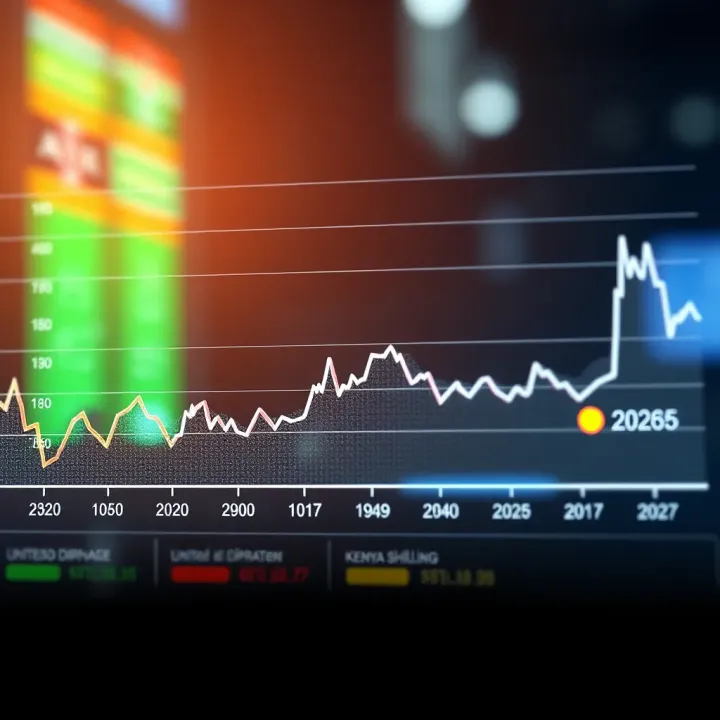
Oil and Commodity Prices: The UAE’s income comes mainly from oil exports. When prices rise, the dirham strengthens. That usually means better AED value against the KES.
Kenyan Economic Health: Inflation and foreign investment activity in Kenya directly influence the shilling’s strength. Higher inflation tends to weaken the KES, pushing the exchange rate higher.
Trade Balances: Kenya imports goods from the UAE, so trade volumes impact demand for both currencies.
Monetary Policies: Central bank actions in both countries (like interest rate changes) can shift currency value quickly.
For traders and investors, watching these indicators before currency conversion is crucial. For example, if you’re sending money from the UAE to Kenya to pay suppliers, timing the transfer around favorable exchange rates can save thousands annually.
Keep an eye on daily exchange rate updates from reliable financial sources or platforms like XE or OANDA, especially if your transactions involve large sums.
Also, businesses operating in both markets should factor in potential currency fluctuations when budgeting or setting prices. Quick shifts in rate can impact profit margins.
To sum up, the AED-KES exchange rate in 2026 doesn’t float randomly. It reflects real economic factors that anyone trading, investing, or working between the UAE and Kenya needs to understand.
Here's a quick checklist:
Monitor oil prices regularly.
Track Kenya’s inflation and economic reports.
Follow central bank announcements from both countries.
Use trusted platforms for real-time exchange rate data.
Getting these basics right will help you make smarter financial decisions when dealing with AED and KES."
Understanding the current trends in the AED to KES exchange rate is essential for anyone involved in cross-border trade, investment, or travel between the UAE and Kenya. Exchange rates don't move in a vacuum; they're influenced by a mix of economic data, geopolitical developments, and market sentiment. For traders and investors, staying updated on these trends helps make informed decisions, whether that means timing currency conversions or managing exposure.
The AED to KES rate has shown notable fluctuations this year, reflecting shifts in both local and global economic conditions. For example, the Kenyan shilling has experienced periods of depreciation against the dirham, especially when inflation rates in Kenya picked up or when political uncertainties surfaced before election periods. Meanwhile, the dirham remains relatively stable, pegged to the US dollar, which adds a layer of steadiness.
During the second quarter of 2026, market activity suggested increased volatility caused by unexpected changes in oil prices. Since the UAE’s economy heavily depends on oil exports, any price shifts trickle down into the dirham's strength. This impacted the AED/KES rate, causing short-term market reactions. Traders noted that remittance flows also played a role; Kenyan workers in the UAE typically send money home regularly, and changes in their earnings or employment affected forex demand.
Comparing the exchange rate in 2026 to previous years shows a trend of relative stability alternating with sharp but short-lived swings. For instance, in 2024, the rate hovered around 30 KES per AED with mild fluctuations. By contrast, 2025 saw more pronounced shifts due to regional economic policy revisions in both countries and global energy market tensions.
This year’s patterns suggest a slightly more volatile environment than in 2024 but less erratic than the spikes in 2025. That said, the overall direction remains influenced by key factors like inflation, trade balances, and foreign direct investment flows. The ability to spot these subtle changes compared to past years equips you with context, which is especially useful for businesses calculating import costs or individuals planning major currency exchanges.
Staying current with these trends allows traders and analysts to anticipate short-term movements and better manage currency exposure risks. Knowing the reasons behind the shifts also helps avoid rash decisions based solely on market noise.
By keeping an eye on what drives recent fluctuations and how 2026 compares to previous years, you can better navigate the AED to KES exchange landscape with confidence and precision.

The exchange rate between the UAE Dirham (AED) and the Kenyan Shilling (KES) in 2026 hinges largely on a handful of economic factors that shape trade, investment, and monetary policies. Understanding these drivers is essential for traders, investors, and financial analysts who want an edge in forecasting trends and making smart currency moves.
Trade flows between the UAE and Kenya play a direct role in influencing the AED to KES rate. The UAE is Kenya’s key trading partner in the Middle East, importing agricultural products like tea, coffee, and flowers, while exporting petrochemicals, electronics, and machinery. When trade volumes rise, demand for each other's currencies tends to grow, strengthening their exchange rates. For instance, if Kenyan exports to the UAE increase sharply due to a new trade agreement or tariff cuts, the KES could gain some ground because of the higher currency turnover.
However, trade imbalances can swing the rate the other way. If Kenya imports significantly more from the UAE than it exports, the KES might weaken relative to the AED as Kenyan importers buy more dirhams for payment. Keeping an eye on monthly trade data and government policies can offer valuable clues to the rate’s direction.
Inflation differences between the UAE and Kenya also affect the exchange rate. A higher inflation rate in Kenya typically leads to a declining KES value against the AED, assuming the UAE maintains more stable prices. Central banks’ responses matter here too. The Central Bank of Kenya might raise interest rates to combat inflation, which can attract foreign capital and support the shilling. Conversely, the UAE dirham remains pegged to the US dollar, stabilizing AED’s value.
Monetary policy divergence between these two economies creates currency movements. For example, if the Federal Reserve tightens US interest rates, the dirham (tied to the dollar) could strengthen, leading to a weaker KES against AED. Traders tracking the Federal Reserve’s announcements and Kenya’s monetary policy committee decisions will have a better picture of potential currency swings.
Oil prices play a surprisingly significant role in AED to KES rates. The UAE is a major oil exporter, so fluctuations in global oil markets directly affect its economy and currency strength. When oil prices surge, the UAE economy usually benefits, and the AED stays strong due to increased revenues and investor confidence.
On the flip side, Kenya is a net oil importer. Rising oil prices often strain Kenya’s trade balance and increase inflation, putting downward pressure on the KES. So, a spike in oil prices could widen the gap between AED and KES as the UAE gains from higher oil income while Kenya faces higher import costs.
For anyone handling AED and KES transactions, understanding how trade, inflation, and oil prices intertwine offers practical insight into currency trends. It’s not just numbers; it’s about real economic ties and external shocks shaping daily exchange rate moves.
In summary, watch trade volumes, inflation rates, central bank policies, and oil price trends. Together, these economic factors form the backbone of AED to KES exchange rate shifts in 2026.
The AED to KES exchange rate plays a significant role beyond just currency conversion; it directly impacts everyday financial decisions for individuals and businesses involved between the UAE and Kenya. Fluctuations in this rate can make or break budgets, affect profit margins, and influence transaction costs on both sides. Understanding these effects helps traders, investors, and businesses make smarter decisions with their money.
For Kenyan families receiving remittances from relatives working in the UAE, the exchange rate determines the actual money that lands in their hands. Even a small dip in the AED to KES rate can mean hundreds fewer shillings to cover essentials like school fees or rent. Conversely, a stronger AED stretches the value of each dirham sent home. Businesses that regularly send payments overseas—such as for consultant fees or equipment purchases—face similar concerns. For example, a Kenyan company paying a UAE-based supplier in AED must consider timing; paying when the AED is stronger against the shilling means higher costs. This makes tracking exchange rate trends essential to avoid unnecessary losses.
When sending or receiving money, even a 1% change in exchange rates can swing the equivalent amount by thousands of shillings, affecting household planning and small business cash flows.
Trade between the UAE and Kenya depends heavily on currency stability. Kenyan importers buying products from the UAE pay in AED, so a weak shilling raises costs, forcing businesses either to raise prices or accept slimmer margins. Similarly, Kenyan exporters getting paid in AED might find their revenue affected if the exchange rate shifts unfavorably by the time they convert currency. For example, a Kenyan tea exporter shipping in bulk to Dubai faces currency risk if KES weakens sharply after the contract but before payment. To manage these uncertainties, some businesses lock in rates through forward contracts or use financial hedging strategies.
Understanding how exchange rates influence costs and revenues helps businesses make solid pricing decisions and plan better for short- and long-term financial health. Grasping these nuances also benefits investors and analysts tracking the economic ties and trade dynamics between the UAE and Kenya.
In short, whether sending family support back home or running cross-border trade operations, the AED to KES rate shapes the bottom line. Staying informed and planning accordingly is the best way to keep financial headaches at bay.
Accurate and timely exchange rate information is the backbone for anyone involved with currency conversion between AED and KES. Whether you're a trader betting on market movements or a business owner managing import costs, relying on trustworthy data can make a noticeable difference in your financial outcomes. Imagine transferring funds overseas; a tiny difference in exchange rates or hidden fees can cost you hundreds of dollars.
The first stop for many is online platforms offering real-time exchange rates. Websites like XE, OANDA, and Investing.com provide updated AED to KES rates that reflect current market activity. It’s best to cross-check these with rates quoted by established banks such as Emirates NBD or Kenya Commercial Bank. Banks often incorporate subtle margins or fees, so their posted rates might slightly differ from online quotes.
Using bank or licensed money transfer services (Western Union, TransferWise) ensures not only reliable rate info but also added security and compliance with regulations. For example, a Nairobi-based importer might find it safer and more cost-effective to use Kenya Commercial Bank’s currency desk rather than an informal exchange service that offers slightly better rates but no consumer protection.
Exchange rate figures alone don’t tell the full story. Financial institutions apply conversion margins—essentially a markup on the base exchange rate—to cover their risks and costs. These margins can vary widely between banks, Forex bureaus, and online platforms.
For instance, while a platform might show an AED to KES rate of 30.50, the actual rate you get after fees may be around 30.20. These differences add up, especially on large transfers. Always ask upfront about all commissions, fixed fees, and whether rates change during the transaction process.
Tip: Compare total costs (exchange rate minus fees) rather than just the advertised rate to find the best deal.
Transparent platforms like Wise or Remitly display both the mid-market rate and their exact margin before you commit to a transfer. Taking advantage of this clarity can protect your bottom line and avoid surprises.
In summary, getting reliable exchange rate information involves vetting multiple sources and understanding the costs behind the numbers. This approach helps traders, investors, and businesses make smarter currency decisions in 2026.
Planning your currency exchanges for 2026 can make a big difference if you're dealing with AED to KES transactions regularly. Exchange rates can swing unexpectedly, so having a strategy helps you avoid surprises that eat into your profits or personal funds. Whether you are a business importing goods from the UAE or an individual sending money back home to Kenya, understanding when and how to exchange currency is key.
Knowing when to exchange AED for KES isn’t just guesswork — watching market trends closely pays off. For example, if you spot the Kenyan Shilling weakening against the Dirham, that could be the ideal moment to convert because you’ll get more KES for each AED. On the flip side, if the Shilling gains strength, waiting may save you money. Seasonality plays a role too; around major holidays or fiscal quarter-ends, increased demand can move rates.
One practical tip: track official rates daily through trusted sources like Xe or OANDA and keep an eye on the Central Bank of Kenya announcements. Also, consider geopolitical events or shifts in UAE-Kenya trade relations, as these can push rates in either direction quickly. Businesses dealing with large sums might benefit from setting thresholds — exchanging currency when rates hit a favorable point.
For those looking to lock in a rate and avoid the stress of market swings, forward contracts are useful tools. A forward contract lets you agree to exchange a set amount of AED to KES at a fixed rate on a future date. This means you know exactly what to expect, no matter which way the market moves. Say your company needs to pay a supplier in Dubai six months from now. Signing a forward contract today can protect you from currency volatility and budgeting headaches.
Hedging options offer similar protections and can be customized based on risk appetite and transaction size. Though sometimes seen as complicated, many financial institutions in both countries offer accessible hedging services tailored to businesses and repeat traders. However, it’s wise to consult your financial advisor to understand fees, conditions, and the best approach to fit your needs.
Timing and financial tools aren’t just for big players; even small to mid-sized traders can gain by planning their currency exchanges carefully. In 2026, staying proactive about the AED to KES exchange rate could mean the difference between steady costs and costly surprises.
Bottom line, consider a mix of market observation for good timing, paired with forward contracts or hedging strategies to manage risk. This combo offers both flexibility and security, helping you navigate the exchange rate landscape smoothly throughout the year.
💻 Discover how binary, using just 0 and 1, powers your mobile, M-Pesa, and tech in Kenya. Learn its role in computing and everyday digital life here.

Explore the identity of a non-binary woman and her journey in Kenyan society 🌍. Understand challenges, experiences, and how to support inclusively in local contexts 🤝.

📈 Learn how copy trading lets Kenyan investors follow expert traders and access global markets easily. Discover benefits, risks, and how to start with local platforms today.

Explore how the gender binary shapes identity and social norms in Kenya, highlighting challenges and emerging acceptance of non-binary and transgender people 🌍👥
Based on 7 reviews