

How Binary Bots Work in Trading
Discover how binary bots automate trades with smart algorithms, manage risks, and tackle legality concerns ⚙️💡. A clear, practical guide for Kenyan traders!
Edited By
Thomas Beckett
Binary counters form the backbone of many digital systems used in Kenyan industries and daily gadgets. These electronic devices count in binary digits (bits), moving systematically from zero upwards in binary code.
At their core, binary counters operate by toggling bits on and off through sequential pulses. For instance, a simple 3-bit binary counter progresses through eight states, from 000 to 111 in binary. Each bit flip corresponds to a count increment, much like a mechanical tally but far faster and more reliable.
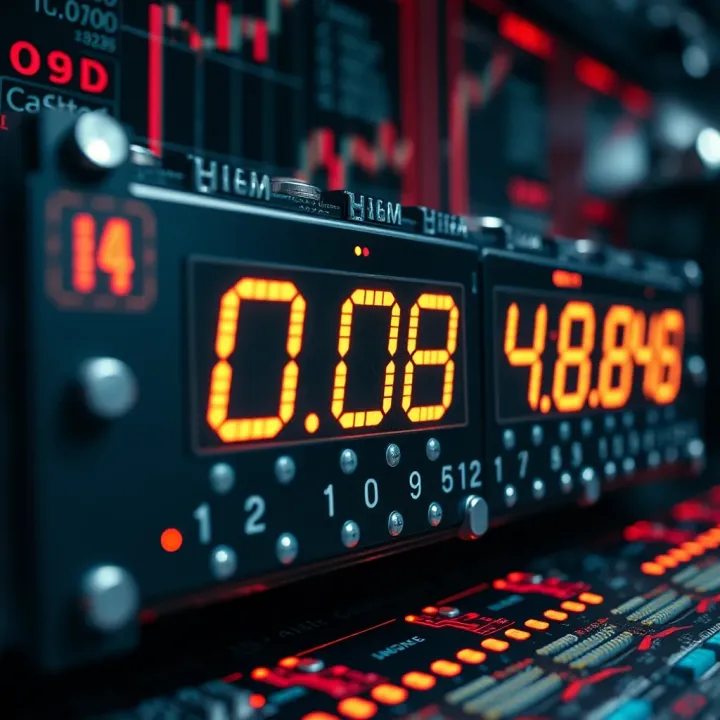
You’ll often find binary counters inside digital clocks, safes with electronic locks, or even in computer processors that manage operations step-by-step. They convert repetitive electrical pulses into a useful numerical sequence, which digital circuits can then use to keep track of time, events, or positions.
Binary counters fall mainly into two categories: asynchronous (ripple) counters and synchronous counters. Asynchronous counters shift signals from one bit to the next with a slight delay, making them simpler but slower. Synchronous counters, on the other hand, update all bits simultaneously, increasing speed and accuracy—critical for high-frequency financial data processing or rapid transactions.
Understanding how these counters count sequences hinges on recognising flip-flops, the basic memory units storing individual bits. Each pulse triggers flip-flop changes, cascading through the chain according to the design type. For example, a JK flip-flop toggles its state with each clock pulse, enabling predictable counting patterns.
Troubleshooting binary counters usually involves testing the clock input, checking the flip-flops for faults, or verifying power supply stability. A common issue is timing glitches in asynchronous counters, which can cause inaccurate counts leading to wrong outputs in sensitive devices.
Practical knowledge of binary counters can help traders in automated stock indicators or financial analysts relying on digital systems for data accumulation. They can also assist educators explaining digital logic fundamentals to engineering students or brokers understanding the technical side of market monitoring tools.
In summary, binary counters efficiently transform pulses into countable sequences using binary logic. Their types and internal mechanisms dictate where and how they suit different digital applications, from simple timers in homes to complex counting in industrial setups.
Understanding the basic principles of binary counters sets the foundation for grasping how digital devices manage counting and timing functions. These counters convert electronic pulses into binary numbers, enabling devices like digital clocks, frequency counters, and memory address sequencers to operate efficiently. Knowing these principles helps in designing reliable digital circuits and troubleshooting common faults.
A binary counter is a digital device that counts pulses and represents the count in binary form, using switches or flip-flops. Essentially, it keeps track of the number of input signals received and expresses this number as a sequence of binary digits (bits). In digital electronics, binary counters play pivotal roles in tasks where event counting, timing, or frequency division is necessary.
For example, in a digital clock, binary counters track seconds as pulses from a crystal oscillator. Each pulse increments the count, which is then translated into readable time. This is crucial because digital systems inherently work with binary data, and counters facilitate smooth handling of sequences.
Binary counting involves representing numbers using only two digits, 0 and 1. Each binary digit corresponds to a power of two, starting from 2^0 on the right. When a binary counter receives a clock pulse, it changes its state to represent the next number in sequence.
For instance, a 3-bit binary counter sequences from 000 (zero) to 111 (seven). After reaching the maximum count, it resets to 000 and begins again. This looping behaviour allows counters to repeatedly cycle through counts, which is practical in timed operations like flashing signals or performing repetitive calculations.
A bit is the smallest unit of data in digital electronics, representing a binary value of either 0 or 1. The number of bits in a binary counter determines the range of numbers it can represent. For example, a 4-bit counter can count from 0 (0000) to 15 (1111), offering 16 discrete states.
The significance of bits lies in their exponential growth with counting capacity; each additional bit doubles the range of the counter. This makes binary counters scalable for various uses, from simple event counting to large address spaces in computer memory.
Decimal counting uses ten digits (0–9), reflecting what people commonly use in daily life. In contrast, binary counting uses just two digits (0 and 1). This simplicity suits digital electronics, which use on/off (high/low voltage) signals to represent these binary states.
While decimal counters might seem more intuitive, binary counters are more efficient in electronics design. For example, in a microcontroller, using binary simplifies hardware complexity and increases speed, as the system deals directly with voltage levels rather than translating decimal numbers.
In digital systems, embracing binary counting isn't about complexity but about aligning with hardware nature, ensuring reliable and fast operations.
Overall, mastering these basic concepts helps investors, educators, and digital product developers appreciate how foundational binary counters are to the digital systems they rely on daily.

Binary counters are essential in various digital electronics, providing the means to track sequences of events or time intervals in a compact, efficient form. They come in several types, each with unique features affecting how they perform and where they’re best suited. Understanding these types helps in choosing the right counter for applications like digital clocks, frequency counters, or processors.
How the counting pulses propagate: In asynchronous or ripple counters, the counting pulse travels through each flip-flop one after another rather than simultaneously. This means the output of one flip-flop serves as the clock input for the next. For example, when the first flip-flop changes state, its output triggers the second flip-flop, and so on. This ripple effect causes a slight delay in state changes across the counter.
This propagation delay becomes significant in fast or high-frequency operations, limiting ripple counters to slower tasks. You’ll often find them in simple timing circuits or where speed is not a priority, such as basic event counters in laboratory setups.
Advantages and limitations: Ripple counters are easy to design and require fewer components, making them cost-effective for straightforward counting needs. However, their primary limitation is speed; the cascading delays between flip-flops can cause glitches or miscounts if the timing isn’t well managed.
Their simplicity makes them popular in educational settings or low-speed digital devices, but for more demanding tasks, their performance might lag behind than synchronous types.
Clock signal synchronisation: Synchronous counters use a common clock pulse to trigger all flip-flops simultaneously. This means that every flip-flop receives the clock signal directly, avoiding the ripple delay seen in asynchronous counters.
This synchronisation ensures that all bits change their states at precisely the same time, which is particularly useful in fast operations or when precise timing is crucial. For example, in a digital stopwatch or a computer’s program counter, synchronous counters keep the timing tight and reliable.
Improved speed and reliability: Because they avoid the delay caused by pulse propagation in ripple counters, synchronous counters can operate at higher frequencies without risking errors. They are more complex in design since each flip-flop must be connected to the clock signal properly, but this complexity pays off in stability and speed.
In many modern digital devices, synchronous counters are preferred for their accuracy, especially where timing precision affects overall system performance.
Counting direction control: These counters allow counting in either ascending (up) or descending (down) order, or both, controlled by a direction input signal. This flexibility is important when you need to track increments and decrements within a process.
For instance, in a digital volume control or elevator floor indicator, you may want to count up when going higher and down when descending. Up/down counters support such two-way counting without needing separate circuit setups for each direction.
Use cases for up and down counting: Up counters are common in applications like scoring systems or event tallying, where values only increase. Down counters find use in countdown timers or stock level monitoring where the quantity reduces over time.
Up/down counters combine both capabilities, making them handy in systems like bidirectional data buses or reversible motors, where you may need to track forward and backward steps accurately.
Choosing the right type of binary counter depends on your specific needs for speed, timing accuracy, and counting direction. While asynchronous counters suit simpler, slower tasks, synchronous and up/down counters handle more complex, precision-demanding operations effectively.
Understanding the internal mechanism of binary counters is key to grasping how digital electronics keep track of data or events efficiently. These circuits rely heavily on flip-flops, which function as the memory units that store each bit. Knowing how these components interact lets you appreciate the accuracy and speed behind digital counting devices, whether in stock trading platforms or industrial monitoring systems.
Flip-flops act like tiny switches that flip between two states: on and off, or '1' and '0'. The most common types used in binary counters are Toggle (T) flip-flops and JK flip-flops. A T flip-flop changes its state with every clock pulse it receives, making it perfect for simple counting tasks. JK flip-flops, meanwhile, are more versatile since they can be set, reset, or toggled based on their inputs. This versatility is handy in more complex counters where different input conditions might influence the sequence.
The practical relevance of these flip-flops lies in their ability to produce stable, predictable changes in output states, ensuring that the counter advances correctly without errors. For example, in a financial ticker counting stock trades, toggle flip-flops keep each trade recorded as a perfect bit switch, avoiding missed or repeated counts.
Flip-flops also govern state transitions within the counter. Each flip-flop represents a bit, and as the clock pulses, the output of one flip-flop can trigger the next, creating a ripple effect in asynchronous counters or simultaneous state changes in synchronous designs. This chaining is what helps counters advance smoothly through their counting sequence.
A binary counter progresses through a series of states that correspond to binary numbers. For instance, a 3-bit counter cycles from 000, 001, 010, up to 111 before rolling back to 000. This progression is systematic, with each state change triggered by clock signals. The orderly state change is essential in applications such as timers or frequency counters where accurate counting is non-negotiable.
Diagrammatic representations help visualise these state changes, showing the sequence of flip-flops toggling on or off with each clock pulse. These diagrams clarify how bits move and interact, which is particularly useful when designing or troubleshooting counters.
Visualising the sequence helps engineers pinpoint glitches quickly, such as race conditions or missed pulses, which can disrupt counting in practical systems.
In sum, the internal mechanism revolving around flip-flops and state changes forms the backbone of binary counters. Whether used in simple gadgets or advanced trading systems, understanding this helps ensure that digital counters operate reliably and predictably.
Binary counters play a key role in many electronic devices, making tasks like counting, timing, and sequencing more efficient. Understanding their practical uses helps highlight why these circuits matter beyond theory. Their precision and simplicity suit a variety of applications, from everyday gadgets to complex computing systems.
Measuring time intervals is one of the most common applications of binary counters. Digital clocks use these counters to keep track of seconds, minutes, and hours by counting pulses generated from a stable time base, such as a quartz oscillator. For instance, every pulse might represent one second; the binary counter accumulates these pulses and signals when a full minute or hour passes. This precise pulse counting ensures accurate timekeeping across devices like wall clocks or kitchen timers.
Synchronisation with display units is crucial to converting the binary count into a human-readable format. Binary outputs from the counter feed into decoder circuits or microcontrollers that drive seven-segment displays, LEDs, or LCD screens. This synchronisation means the clock’s digital display updates correctly in real time, avoiding glitches or off-beat readings. In practical terms, it ensures that when the counter hits the right count, the display changes from 09 to 10 seconds without flicker or delay.
Frequency counters rely heavily on binary counters to measure how often a signal repeats over a fixed time. For example, engineers testing radio transmitters use frequency counters to precisely count wave cycles within one second, offering a digital readout of signal frequency in hertz (Hz). The binary counter efficiently records these cycles as pulses, making it easier to handle frequencies even in the millions.
Event counting in experiments is another area where binary counters prove invaluable. Scientific setups, like particle detectors or manufacturing process monitors, use counters to tally discrete occurrences automatically. For example, a counter connected to a sensor could track the number of passing vehicles at a toll station throughout the day without human error. This automation saves time and improves accuracy in data collection.
Address sequencing in computers depends on binary counters to navigate memory locations systematically. When a processor needs to access data, the counter increments through memory addresses in binary form, allowing efficient retrieval or storage. This sequencing ensures that programs read instructions or data in the correct order, avoiding mix-ups that could lead to system crashes.
Instruction cycle counting is essential for controlling processor operations. Binary counters track the number of instruction cycles completed, helping coordinate fetch, decode, execute, and write-back stages within the CPU. By monitoring these cycles, the system maintains synchronisation and can optimise performance based on workload demands.
Binary counters quietly work behind the scenes in many devices, making complex timing and counting tasks straightforward and reliable.
Understanding these applications reveals why binary counters are more than just circuit components; they form the backbone of many technologies we use daily, especially in timing, measurement, and computing disciplines.
Binary counters, while fundamental in digital electronics, often face practical challenges that can disrupt their accurate performance. Understanding common issues and how to troubleshoot them is key for anyone working with digital systems—from financial analysts relying on precise timing circuits to educators teaching electronics fundamentals. Addressing these problems helps maintain system reliability and ensures the counters operate as expected.
Noise and signal glitches play a significant role in causing discrepancies in binary counters. In practical settings, electrical noise from nearby equipment or interference on signal lines can produce unintended pulses. For instance, in a frequency counter used by an electronics trader to measure signals, sudden noise spikes can cause the counter to increment incorrectly. These glitches often look like rapid, false transitions that upset the counting sequence.
To manage this, circuits should include proper shielding and filtering. Engineers might use capacitors or specific low-pass filters to smooth out erratic signals. Besides physical measures, software debouncing can also filter out short, accidental pulses that stem from noise.
Race conditions in ripple counters represent another common issue. Since ripple counters rely on output carrying over to trigger subsequent stages asynchronously, timing mismatches can occur. Think of a ripple counter trying to count bank transactions sequenced in very quick succession; the outputs may momentarily misalign before settling, causing brief incorrect states or glitches.
These momentary errors happen because each flip-flop changes state slightly delayed relative to its neighbour, creating a cascade effect. This situation is not ideal for precise timing or critical counting operations where every count must be accurate. Recognition of this behaviour is crucial when designing systems requiring high-speed counting.
Using synchronous counters offers a practical solution to the race condition problem. Unlike ripple counters, synchronous counters update all flip-flops simultaneously based on a shared clock signal. This coordination eliminates the domino effect of asynchronous transitions.
In applications such as digital clocks or event counters in stock trading platforms, synchronous counters ensure counting accuracy even at high speeds. By synchronising state changes, they prevent timing errors and make the system more dependable.
Debouncing input signals is equally vital in improving counter reliability, especially with mechanical switches or sensors prone to contact bounce. Imagine an investor monitoring a trading button that sends signals to a counter; the physical contact bounce might cause the counter to register multiple counts instead of one.
Debouncing techniques—either hardware-based using RC circuits or software algorithms—smooth out these noisy transitions. This prevents false multiple counts, ensuring the binary counter only reacts to genuine input changes, preserving accuracy in data collection or timing.
Troubleshooting common issues in binary counters involves recognising and mitigating noise, race conditions, and switch bounce. Proper design choices like synchronous counters and signal debouncing greatly boost the reliability of digital counting systems.
Understanding these factors empowers professionals and learners alike to build robust counters suited for diverse applications, from trading displays to educational projects.
Discover how binary bots automate trades with smart algorithms, manage risks, and tackle legality concerns ⚙️💡. A clear, practical guide for Kenyan traders!
Explore how binary translators convert data between systems, their types, and key applications in tech 🖥️🔄 Perfect read for computing enthusiasts!

🔢 Explore binary codes in digital communication and computing, including representation, encoding, error correction, and tech applications for reliable data.

Explore how binary bots work in trading 🤖, their pros and risks⚖️, key features, legal tips⚖️, and top platforms for smarter binary options.
Based on 6 reviews