
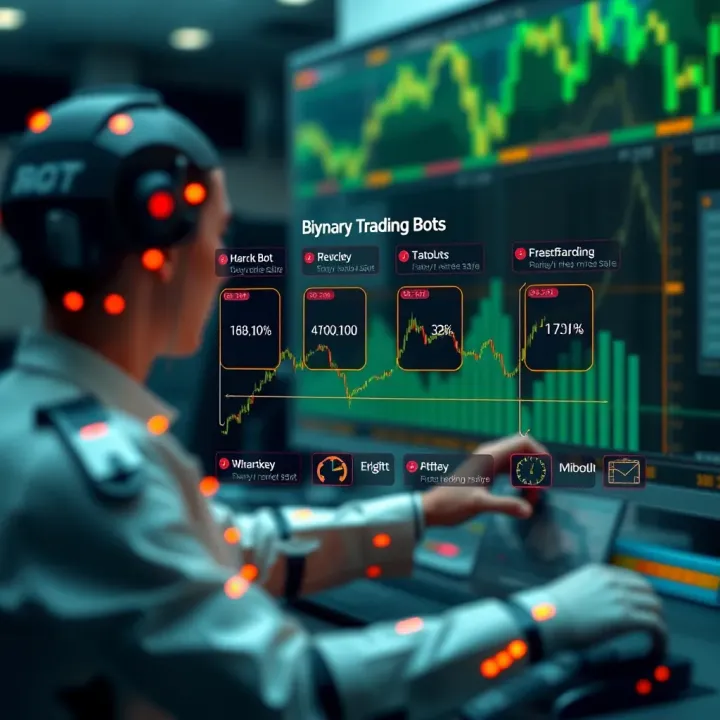
How Binary Trading Bots Work and What to Know
🤖 Explore how binary trading bots operate in Kenya's markets, their benefits, risks, and tips for responsible use to make smarter trading decisions.
Edited By
Jack Reynolds
Binary trading is a straightforward financial activity where you predict whether the price of an asset—like a currency pair, stock, or commodity—will go up or down within a set period. Unlike traditional trading which involves buying or selling the actual asset, here you just decide the direction of the price movement by expiry time. If your prediction is correct, you receive a fixed payout; if wrong, you lose your original stake.
This simplicity attracts many traders in Kenya and beyond who want to engage with financial markets without owning the assets. Still, binary trading carries high risks due to its all-or-nothing nature and the short time frames involved—sometimes as brief as 60 seconds.

When you open a binary trade, you choose an asset and select ‘call’ if you think the price will rise, or ‘put’ if you expect it to fall. You then place a bet called the ‘stake.’ The trade lasts for a predetermined expiry time, which can range from minutes to hours or days.
For example, say you predict that the price of the USD/KES forex pair will increase within the next 15 minutes. You place a call trade with a KS,000 stake. If at expiry, the price is higher than when you started, you might receive a fixed return of KS,700, which includes your stake plus profit. If the price falls, you lose your KS,000.
Fixed risk and reward: You know exactly how much you can win or lose before the trade starts.
Short time frames: Trades often last from 60 seconds up to a few hours.
Variety of assets: Popular ones include forex pairs, shares listed on NSE Kenya, commodities like gold or oil, and stock indices.
Simple choices: The decision is binary—two clear options (up or down).
Many binary trading platforms accept M-Pesa deposits, which simplifies funding your account.
Be careful with platforms not regulated by Kenyan authorities; always prioritise brokers registered with recognisable bodies.
Understand the tax implications of any earnings; consult the Kenya Revenue Authority guidelines.
Binary trading offers an easy entry point into financial markets but beware: it is high risk and suited for those who can accept losing their stake. Education and practicing on demo accounts first can help build confidence.
This article will continue by exploring the risks involved and advanced strategies to manage trades effectively in Kenya’s market context.
Binary trading involves predicting whether the price of a financial asset will move up or down within a specified timeframe. This form of trading is straightforward compared to traditional stock or forex trading because it deals with only two possible outcomes — win or lose. For traders and investors, especially those in Kenya exploring new financial markets, binary trading offers an accessible way to engage with global assets such as currencies, stocks, and commodities without owning the underlying asset.
Understanding what binary trading means is essential before jumping in. It allows traders to grasp the simpler risk structure and how payouts work, making informed decisions possible. This form of trading attracts many because of its clear-cut results and the ability to start with relatively small amounts using platforms accessed via mobile or web, such as as Safaricom's M-Pesa-integrated brokers.
At its core, binary trading is a financial bet where you predict whether the price of an asset will be above or below a certain level when the trade expires. Instead of buying or selling the actual asset, you purchase an option that pays a fixed amount if your prediction is correct or you lose your stake if wrong. For instance, if you think the price of Coffee on the global market will rise in the next hour, you can place a binary option predicting "up." If, at expiry, the price is indeed higher, you get a predetermined payout.
This model suits traders who prefer simplicity and clear risk exposure, as your maximum loss and gain are known upfront. It differs from most investment forms where profits and losses can vary widely.
Traditional trading involves buying an asset expecting its value to rise over time or selling it short expecting a decline, often with unlimited profit or loss potential depending on market movements. It requires more detailed analysis and longer-term strategies. For example, buying shares of Safaricom means you own part of the company, hoping its price increases so you can sell at a profit.
In contrast, binary trading eliminates many complexities by focusing only on predicting the direction within a fixed time. You don’t hold the asset, so you avoid things like dividends or overnight fees. However, the all-or-nothing payoff also means the risk is higher for each trade, and successful trading typically demands sharp timing and understanding market moves.
These are the most popular binary options. Here, you predict whether the asset’s price will be higher or lower than the current level at expiration. For example, if the NSE 20 share index is at 1,850 points now, you place a "high" option betting it will exceed 1,850 by expiry. If you’re right, you earn a fixed payout. This type is straightforward and suits beginners.

In touch options, you predict whether the price will "touch" a specific level at any time before expiry. For example, you may bet that the price of Brent crude oil will reach KSh 9,500 within the next day. If it hits that level, you win, even if the price falls again afterward. No touch options work the opposite way—you win if the price never reaches the target. These options allow traders to take advantage of volatility without predicting precise closing prices.
Range options require you to predict if the asset’s price will stay within or move outside a set range by expiry. Say the current price of a currency pair like USD/KES is 115.50; a broker might set a range between 115 and 116. You place a bet that the price will remain inside this band. Range options are useful in sideways markets, where prices fluctuate but don't trend strongly in one direction. This helps traders profit even when markets seem dull.
Binary options offer varied ways to trade based on market movement, which can fit different trading styles and market conditions. Choosing the right type depends on your risk appetite and market outlook.
Understanding these basics prepares anyone interested in binary trading to approach financial markets confidently and with realistic expectations.
Understanding how binary trading functions in real-time is essential for anyone hoping to participate successfully. This section breaks down the key practical steps: from choosing an asset, predicting its price movement, setting expiry times, to grasping the payout structure. Kenyan traders benefit by connecting these practical points to everyday market conditions.
Binary trading typically involves popular assets like currencies, stocks, and commodities. Common currency pairs such as USD/KES or EUR/USD are often traded given their liquidity and constant market activity. Stocks from well-known companies listed on the Nairobi Securities Exchange (NSE), like Safaricom or Equity Bank, also feature. Commodities including crude oil, gold, and agricultural products are popular too, as their prices can be quite volatile, offering trading opportunities.
Choosing the right asset depends on your knowledge and ability to follow its market behaviour closely. For instance, if you follow global news affecting oil prices, you might spot trends before others, giving you an edge. Meanwhile, stocks like Safaricom tend to react to regional developments, such as changes in Safaricom’s business strategy or regulatory updates.
Predicting price movement in binary trading means deciding if the asset’s price will go up or down within a set time. This decision relies on analysing market trends, news, and technical factors. For example, if you expect the KES to strengthen against the USD due to improved export earnings, you might predict the USD/KES rate to fall.
Although binary trading simplifies the decision to just two outcomes — up or down — making the right call requires insight and discipline. Kenyan traders often combine their daily experience of local economic factors with global news to predict price directions accurately.
Expiry time in binary trading defines how long your trade lasts before the outcome is determined. Generally, expiry times vary from as short as 30 seconds to several hours or even days. Short-term expiry is useful when you want quick results and are confident about short-term price volatility. For example, during a busy trading session where major news affects the NSE, short-term trades can profit from sudden price jumps.
Long-term expiry suits traders who prefer to base decisions on broader trends rather than momentary price fluctuations. A trader expecting a price rise over a few days due to a quarterly financial report might choose this option. This gives more room to absorb market noise and reduces emphasis on quick guesses.
Expiry time impacts your entire trading strategy. Short expiry requires constant attention and quick decision-making, suitable for experienced traders who can read charts swiftly. On the other hand, long expiry lets you research and plan extensively but may tie up capital for longer, which might not suit all accounts.
Binary trading offers fixed payouts, meaning you know upfront how much profit you stand to earn if your prediction is correct, and conversely, the loss if wrong. For instance, you might invest KS,000 on a trade with a 75% payout. If your prediction comes true, you earn KS,750 (your stake plus KSh750 profit). If incorrect, you lose your KS,000 stake entirely.
This all-or-nothing setup makes risk management straightforward but also heightens the stakes. Traders must be aware they can lose their full investment on a bad call.
Profits are calculated based on the payout percentage agreed at trade initiation. Platforms publish these rates clearly, often varying by asset, expiry time, and market conditions. Kenyan traders should compare these rates before choosing where to trade, as they influence potential returns significantly.
Knowing how payouts work helps set realistic expectations and prevents surprises after a trade ends. It also aids in planning your trading capital wisely.
By understanding these practical elements, traders can form clearer strategies and avoid jumping in blindly. In the Kenyan context, linking asset choices and expiry times to local market knowledge can improve decision-making and potentially boost earnings.
Binary trading might sound straightforward, but it carries several risks that traders must consider before stepping in. Understanding these challenges helps prevent surprises and prepares you to handle them wisely.
Binary trading works on a simple principle: you either win a fixed payout or lose your entire stake. There’s no middle ground like in traditional trading where you might recover some losses by selling assets later. For example, if you bet KSh 5,000 that a stock price will rise and the price doesn’t meet your prediction by expiry, you lose the entire KSh 5,000. This all-or-nothing setup means that a string of bad calls can quickly eat into your capital, so you need to be very cautious with how much money you put at risk on each trade.
The market prices of assets, like currencies or commodities, can swing drastically in short periods. This volatility can be both a chance and a threat in binary trading. While sharp moves may help meet your prediction, they can also flip against you fast. An unexpected event—for instance, a sudden announcement from the Central Bank of Kenya or a political shake-up—can push prices beyond your expected range just before expiry. This unpredictability raises the stakes and makes it vital to avoid chasing losses or being overly confident in quick trades.
Binary trading is not regulated in all regions equally, which raises concerns about fairness and customer protection. In Kenya, while financial markets like stocks and forex fall under Capital Markets Authority (CMA) oversight, many binary trading platforms operate without clear licenses or oversight. This absence increases the chance that some operators might not follow good practices, affecting your ability to seek redress if things go wrong. It’s wise to check if the platform you choose is authorised by recognised bodies before committing funds.
Unfortunately, the rise in popularity of binary trading has attracted unscrupulous players. Some platforms might promise guaranteed returns or offer “insider tips” to lure customers but end up blocking withdrawals or manipulating prices. For instance, there have been reports of fake platforms targeting Kenyan traders via social media ads, only to vanish with deposits. To guard against such scams, always research a platform’s reputation, read user reviews, and start with small stakes to test their services.
Trading binary options without understanding these risks is like crossing a busy road blindfolded — you might get lucky once or twice, but the dangers are very real. Stay informed and cautious.
By knowing the pitfalls and choosing reputable platforms, you can better navigate the challenges of binary trading and protect your finances.
Engaging in binary trading requires more than just guessing whether a price will go up or down. Practical tips help you navigate this market better, avoid common pitfalls, and make more informed decisions. By focusing on reliable platforms and having a clear trading strategy, you improve your chances of success and reduce unnecessary losses.
A trustworthy trading platform is the backbone of your binary trading experience. You should check for proper licensing and regulation by recognised authorities like the Capital Markets Authority (CMA) in Kenya or respected international bodies. A secure platform protects your funds and personal information, which is vital in a market prone to scams. Also, a user-friendly interface with clear charts and timely updates makes a big difference. Platforms offering demo accounts let you practise without risking real money, which is especially helpful for beginners.
Kenyan traders often use platforms like IQ Option, Binomo, and ExpertOption due to their accessibility and relative trustworthiness. These platforms support deposits through M-Pesa and local bank transfers, making fund management easy. Still, always verify each platform’s licensing status and reviews. For instance, IQ Option is popular for its clarity and low minimum deposits, while ExpertOption appeals to some with faster withdrawals. Choosing a platform that matches your needs and budget saves time and frustration.
Trading without research is like driving blindfolded. Understanding the asset you trade—whether foreign currency pairs, stocks, or commodities—gives you an edge. Study recent price trends, news reports, and economic indicators that affect prices. For example, if you’re trading an East African stock, monitor company earnings and regional political stability. Technical analysis tools like moving averages or support and resistance levels can help predict price movements more confidently.
Binary trading can be tempting to bet big for quick wins, but careful risk control prevents heavy losses. Limit your investment to a small portion of your total capital, say 1–2% per trade. Avoid chasing losses by increasing stakes hastily—stick to your plan. Also, consider diversifying across different asset types or expiry times to spread risk. Using stop-loss orders isn’t usually available in binary trading, so your main defence is strong discipline and not investing money you can’t afford to lose.
Well-chosen platforms and a solid strategy aren’t just optional—they can make or break your binary trading experience.
Following these practical tips helps build a foundation that balances opportunity with caution, tailored to Kenyan market realities and payment methods like M-Pesa, easing the way for smarter trading decisions.
🤖 Explore how binary trading bots operate in Kenya's markets, their benefits, risks, and tips for responsible use to make smarter trading decisions.

🤖 Explore how binary bots trade options automatically, their risks & benefits, legal tips, and safety advice for traders in Kenya. Stay informed!

📊 Explore how binary bots work, the truth about no loss trades, related risks, and important tips for safe automated trading in Kenya's market.

📈 Learn how copy trading lets Kenyan investors follow expert traders and access global markets easily. Discover benefits, risks, and how to start with local platforms today.
Based on 14 reviews