
Forex Trading Guide for Kenyan Investors
🌍 Learn how forex trading works, key strategies, risks, and regulations tailored for Kenyan investors. Start trading smart with practical steps today! 📈💼
Edited By
Clara Hughes
Forex trading, also known as foreign exchange trading, involves buying and selling currencies to make profits. For Kenyans, it's a popular way to tap into global markets directly, thanks to widespread internet access and mobile money services like M-Pesa. However, trading forex isn’t just about guessing which currency will rise or fall; it requires understanding key concepts, tools, and risks specific to the market.
Before diving in, you need to grasp basics such as currency pairs, leverage, pips, and spreads. For example, when trading USD/KES, you’re speculating whether the US dollar will strengthen or weaken against the Kenyan shilling. Leverage allows you to control a larger position than your deposit, but it can magnify both gains and losses — something many beginners overlook. Remember, the forex market is highly volatile; prices can shift dramatically within seconds.
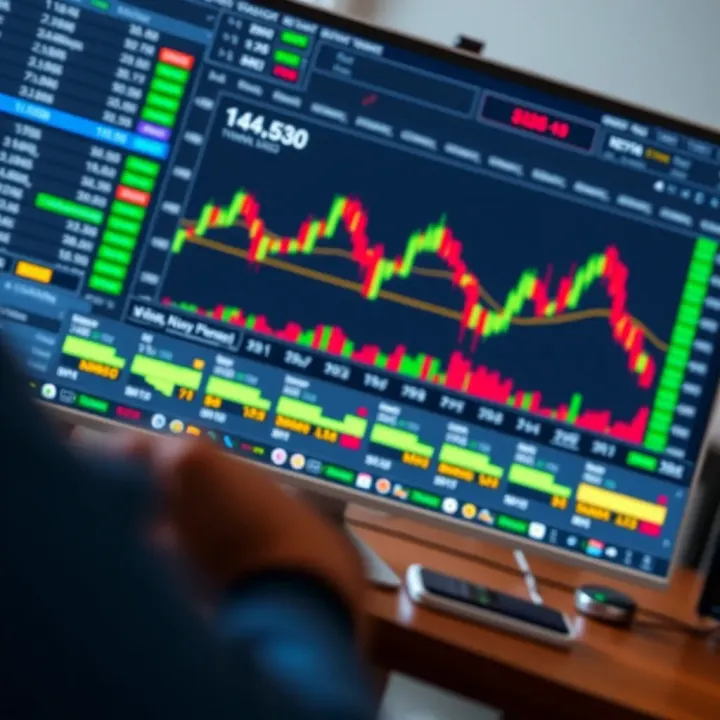
Equipment-wise, you’ll need a reliable computer or smartphone with good internet. Several platforms are popular among Kenyan traders, including MetaTrader 4 and MetaTrader 5, offered by brokers licensed to operate locally and internationally. Choose brokers who are regulated by credible authorities like the Capital Markets Authority (CMA) in Kenya or international entities such as the Financial Conduct Authority (FCA) for protection against fraud.
Start slowly and practice with demo accounts. This lets you trade fake money in live markets to build confidence without risking your capital.
Taking practical steps will help ease your entry:
Open a demo account with a trusted broker
Learn to read charts and understand technical indicators
Follow news affecting currency movements, like US Federal Reserve decisions or East African Community trade developments
Gradually move to live trading with small amounts of capital
Risk management is crucial. Use stop-loss orders to limit losses and avoid trading on emotions, especially during unstable periods. The forex market never closes fully; it works around the clock through global sessions, including London, New York, and Asian markets.
Lastly, join local or online trading communities. Kenyans benefit from forums and WhatsApp groups where traders share insights, strategies, and warnings about scams. Reading materials from local financial newspapers and updates from the CMA enrich your understanding.
This guide sets the stage with practical information. The following sections will cover tools, platforms, risk management in detail, plus resources for continuous learning to help you trade forex confidently and safely in Kenya.
Understanding the basics of forex trading is essential before diving into Kenya’s growing market. Knowing how the forex market operates and what influences currency prices helps you make smarter decisions rather than just guessing. This foundation makes it easier to assess risks, choose the right platforms, and spot genuine opportunities that suit your goals.
Forex trading means buying and selling currencies against one another with the aim of making a profit. The forex market is a global, decentralised market where currencies such as the US dollar, euro, or Kenyan shilling are exchanged. Traders speculate on how currency values will move, profiting from shifts in exchange rates.
Unlike stock markets with central exchanges, forex operates over-the-counter (OTC) through electronic networks among banks, brokers, institutions, and individual traders. This setup ensures continuous trading 24 hours a day across different time zones.
The key players include central banks, commercial banks, hedge funds, multinational companies, brokers, and retail traders. Central banks like the Central Bank of Kenya (CBK) influence markets through monetary policy, while commercial banks provide liquidity. For a Kenyan trader, recognising these participants and their roles helps in understanding market reactions.
Trading hours run five days a week, opening in Asia, then Europe, and closing in the US. Popular currency pairs include the US dollar (USD) and Kenyan shilling (KES), euro (EUR) and USD, or GBP/USD. Traders often focus on the most liquid pairs for tighter spreads and better execution.
Kenya’s economy presents unique chances for forex traders. With increasing access to digital financial services and a growing middle class, many look to forex as a way to diversify income streams. The shilling’s value, influenced by local and global factors such as trade balances or political developments, offers frequent trading opportunities.
Mobile money platforms like M-Pesa have made forex trading more accessible. You can fund your trading account or withdraw profits using your mobile phone without relying on expensive bank transfers. This lowers barriers, making forex trading feasible even outside Nairobi.
Besides short-term trading gains, forex skills can develop into a serious career. Experienced traders often work as financial analysts, educators, or brokers, helping grow Kenya’s financial ecosystem. Starting small, practising on demo accounts, and setting realistic goals can pave the way for steady progress.
Forex trading in Kenya is not just about making quick money; it’s about understanding how the global and local currency markets function, using accessible tools like M-Pesa, and building trading skills consciously for sustainable growth.
To get started in forex trading, you need a good grasp of the core concepts that all beginners should understand. These basics form the foundation for making informed decisions and managing your trades well. Skipping this step is like trying to drive without knowing what the controls do — you might get somewhere, but chances are you'll hit trouble.
Understanding the key terms like pip, lot size, leverage, margin, and spread helps you navigate the trading world effectively. A pip (percentage in point) is the smallest price movement in a currency pair, often the fourth decimal place. For instance, if EUR/USD moves from 1.1050 to 1.1051, that's one pip. Knowing this helps you understand your profits or losses. Lot size indicates trade volume — a standard lot is 100,000 units of currency, but many brokers allow mini or micro lots to risk less.
Leverage allows you to control a large position with a small deposit, but it also amplifies losses. Kenyan traders often find brokers offering leverage ratios of up to 1:100 or more. If you have KSh 10,000 in your account with 1:100 leverage, you can control KSh 1,000,000 worth of currency. Margin is the actual money you put up as collateral for your trade. The spread is the difference between the bid and ask price — this cost affects your profitability and varies by broker and currency pair.

Next, understanding bid and ask prices is crucial. The bid is the price buyers offer for a currency, while the ask is the price sellers want. For example, if the USD/KES bid is 110.00 and the ask is 110.05, you could sell at 110.00 and buy at 110.05. The small difference, the spread, is how brokers earn.
Knowing these prices helps you place trades at desired levels and understand market liquidity. If the spread widens during volatile hours, it’s costlier to trade, so timing matters.
When it comes to types of orders, these tools control how and when you enter or exit the market. A market order executes immediately at the current price, useful when you want to jump into action fast. A limit order sets entry or exit at predetermined prices, helping you avoid chasing markets. For example, buying USD/KES at 109.50 when the current price is 110.00 can be set with a limit order. Stop-loss orders automatically close trades to prevent bigger losses.
A trader who ignores economic news is walking blind. Fundamental analysis looks at how news and economic indicators like inflation rates, central bank interest decisions, or Kenya’s trade balance affect currencies. For instance, if the Central Bank of Kenya raises rates, the shilling might strengthen as investors seek better returns. Keeping an eye on such events helps you predict possible currency moves.
Technical analysis relies on charts and past price action. Traders use tools like moving averages, trendlines, or Relative Strength Index (RSI) to spot trends or reversals. For example, if USD/KES shows a strong upward trend with higher highs and lows, you might choose to buy, expecting the trend to continue. Charts help simplify the market noise and guide your timing for entry and exit.
Mastering both fundamental and technical analysis is key to making logical decisions rather than guessing. You don’t have to pick only one—many Kenyan traders blend them for a fuller picture.
By getting comfortable with these core concepts, you set yourself up to trade smartly and confidently in the Kenyan forex market.
Starting forex trading wisely means understanding the tools, platforms, and accounts you’ll use. These elements shape how smoothly your trading experience will be, affecting costs, convenience, and your ability to respond to market moves. For example, choosing a reliable broker with an easy-to-use platform and clear account options can save you headaches down the line.
When picking a broker, Kenyans often decide between local and international firms. Local brokers usually provide better understanding of Kenya’s market and easier access to customer support, with payment options like M-Pesa integrated. On the other hand, international brokers might offer a wider range of currency pairs and advanced features but could introduce challenges such as longer withdrawal times or higher fees.
Regulation is key. The Capital Markets Authority (CMA) Kenya oversees forex brokers to ensure traders’ funds and rights are protected. Choosing a CMA-licensed broker helps reduce the risk of fraud and ensures the broker adheres to transparent practices. Always check if the broker is registered with CMA before committing.
Understanding spreads, commissions, and fees is critical because these costs affect your profitability. Spreads—the difference between buy and sell prices—can be fixed or variable. Some brokers charge commissions per trade instead of wider spreads. For example, a broker with a low spread but a commission may be better or worse value depending on your trade size and frequency. Look out for hidden fees like withdrawal or inactivity charges.
MetaTrader 4 (MT4) and MetaTrader 5 (MT5) dominate Kenya’s forex scene due to their reliability and rich toolsets. MT4 is favoured for its simplicity and stable performance, while MT5 offers more advanced charting, additional timeframes, and support for more types of trades. Many brokers provide both, allowing you to start on MT4 and upgrade as you gain confidence.
Mobile trading apps that support M-Pesa deposits are incredibly useful. Safaricom’s M-Pesa is Kenya’s go-to mobile money system, making it easy for traders to fund accounts and withdraw profits without cumbersome bank processes. Platforms integrating M-Pesa allow fast, flexible money movement, essential for reacting quickly to market changes.
Using demonstration (demo) accounts builds your skills without risking real money. They mimic real markets, offering practice with live prices and order types. For example, a demo account from Equity Bank’s partnered brokers lets you experiment with trading strategies and get familiar with the platform before stepping into live trading.
Forex brokers offer various account types, such as standard, mini, or micro accounts, differing mostly in minimum deposit and trade sizes. For beginners, micro accounts with deposits as low as KSh 1,000 provide a practical way to start without risking too much. Choosing the right account depends on your budget and risk appetite.
Funding your trading account is straightforward in Kenya thanks to options like bank transfers and M-Pesa. M-Pesa stands out for speed and accessibility, especially outside Nairobi where banking infrastructure is limited. Some brokers also accept payments through Paybill or Till numbers, making deposits as simple as buying airtime.
Identity verification is a regulatory must to prevent fraud and money laundering. Typically, you’ll need to submit a copy of your national ID or passport, proof of address like a recent utility bill, and sometimes proof of income. Completing this process early avoids delays when you want to start trading or withdraw profits.
Choosing the right broker, platform, and account setup is your first step to trading forex confidently in Kenya. These decisions impact your costs, ease of use, and security—factors that matter whether you trade part-time or plan a full-time career.
Managing risks is a key part of successful forex trading, especially here in Kenya where market conditions can be unpredictable. Without proper risk controls, even small losses can quickly pile up, wiping out your capital. This section highlights the main types of risks traders face and practical steps to avoid common errors, helping you trade more confidently and avoid costly mistakes.
Volatility and leverage risks are two closely linked factors every trader needs to know. Volatility refers to how much and how quickly currency prices move. For example, during political announcements in Kenya or the US Federal Reserve rate decisions, volatility spikes, making prices jump erratically. If you use leverage—borrowing funds to increase your trading position—it means gains can multiply, but losses do too. Using leverage of 100:1 means a small 1% market movement against your position can wipe out your whole deposit. Therefore, it’s crucial to manage leverage carefully to avoid sudden losses that can exceed your capacity.
Global events often shape daily currency movements. The impact of global events on currency markets is quite direct. Take, for instance, when oil prices drop sharply, the Kenyan shilling might weaken because Kenya imports fuel. Similarly, if the US dollar strengthens during times of economic uncertainty, other currencies, including the Kenya shilling, usually lose value. Following global news helps you anticipate market swings and avoid surprises that might catch you off guard.
To keep losses manageable, many traders use stop-loss and take-profit orders. A stop-loss order automatically closes your trade if the price falls to a certain level, limiting potential loss. For example, if you buy EUR/USD at 1.1000, setting a stop-loss at 1.0950 prevents you from losing more than 50 pips. Take-profit orders work the other way, closing your position when your target profit is reached, so you lock in gains without waiting.
Position sizing and diversification mean deciding how much of your capital to risk on each trade and spreading investments across different currency pairs. Never risk more than a small percentage, often 1-2%, on a single trade. Diversifying avoids putting all your eggs in one basket. For instance, trading both USD/KES and EUR/USD can reduce exposure to one currency’s risk if unexpected news hits.
Maintaining trading discipline is about sticking to your plan, even when emotions run high. For example, after a losing streak, some traders try to recover losses by increasing trade size recklessly—it usually leads to heavier losses. Setting clear rules for entries, exits, and risk levels helps prevent such mistakes.
The growing interest in forex trading in Kenya attracts both legitimate brokers and fraudsters. Watch for red flags to watch for in forex offers: promises of guaranteed returns, pressure to invest quickly, or requests for personal bank details without proper licensing. If an offer sounds too good to be true, it probably is.
Due diligence on brokers and educators means checking their credentials before trusting them. Verify if a broker is registered with the Capital Markets Authority (CMA) in Kenya or recognised by international bodies. For educators, look for those with verifiable track records or endorsements from known financial institutions.
Regulatory bodies play a vital role in protecting traders. The role of regulatory bodies like the CMA Kenya involves licensing brokers, monitoring their practices, and enforcing penalties when necessary. Trading through approved brokers registered with CMA offers much-needed legal safeguards and reduces risk of fraud.
Always remember: managing risk isn't about avoiding loss altogether, but about controlling it smartly to protect your trading journey.
By understanding these risk aspects and keeping alert for scams, you can avoid many common pitfalls and build a stronger foundation for your forex trading in Kenya.
Continual learning is vital for anyone aiming to succeed in forex trading in Kenya. The market is dynamic, influenced by local and global economic changes, so sharpening skills over time boosts confidence and reduces costly mistakes. Finding reliable sources and communities to support your journey also makes it easier to stay updated and motivated.
Online courses and tutorials designed specifically for Kenyan traders offer insights tuned to the local financial landscape. They usually cover how M-Pesa integrates with trading accounts, the influence of KRA policies on currency flows, and familiar market times aligning with Nairobi hours. Platforms like Coursera, Udemy, or local websites often provide these resources, enabling traders to learn at their own pace.
Books and articles remain solid tools for deepening your understanding. Titles that explain forex fundamentals without heavy jargon help breakdown complex topics. For instance, reading about how EAC (East African Community) politics affect forex markets can give you an edge. Best of all, many articles are freely available through Kenyan financial news sites such as Business Daily or The Standard.
Demo trading is a practical way to build skills without risking real money. Most brokers operating in Kenya offer demo accounts where beginners can practise executing trades using live market data. This hands-on experience helps you get familiar with charts, orders, and market reactions before committing actual funds.
Forums, WhatsApp groups, and social media pages provide a space to discuss ideas, ask questions, and share experiences. Kenyan traders gather in these communities to exchange views on broker reliability, the best times to trade around local news releases, or the impact of CBK monetary decisions. Participating actively enhances your understanding and expands your network.
Learning from experienced traders offers practical wisdom that textbooks cannot rival. Seasoned traders often share tips on managing leverage safely or recognising market patterns specific to the forex pairs popular in Kenya. Sometimes, local traders organise mentorship or informal gatherings, which prove invaluable for guidance.
Workshops and webinars organised by brokers or training centres are excellent for interactive learning. They often focus on up-to-date strategies, regulatory changes from CMA Kenya, or practical uses of trading platforms like MetaTrader. Attending these events, even online, helps keep your skills sharp and knowledge current.
Creating a trading plan lays out your strategies, risk limits, and targets. This plan keeps you disciplined and prevents emotional decisions that often lead to losses. For example, you might decide to risk no more than 2% of your trading capital on a single trade or focus only on major currency pairs.
Keeping a trading journal is essential to reflect on your decisions and outcomes. By noting entry and exit points, market conditions, and your emotional state, you discover patterns in your trading behaviour. This self-awareness helps improve strategies and reduces repeated errors.
Reviewing your performance regularly shows whether your trading plan works or needs adjustment. Using graphs or simple metrics such as win-loss ratios, average profits, and drawdowns can guide decision-making. Regular review fosters continuous improvement and builds stronger trading habits.
Staying committed to learning, connecting with peers, and tracking your progress will boost your chances of becoming a confident forex trader, well adapted to Kenya's unique market environment.
🌍 Learn how forex trading works, key strategies, risks, and regulations tailored for Kenyan investors. Start trading smart with practical steps today! 📈💼
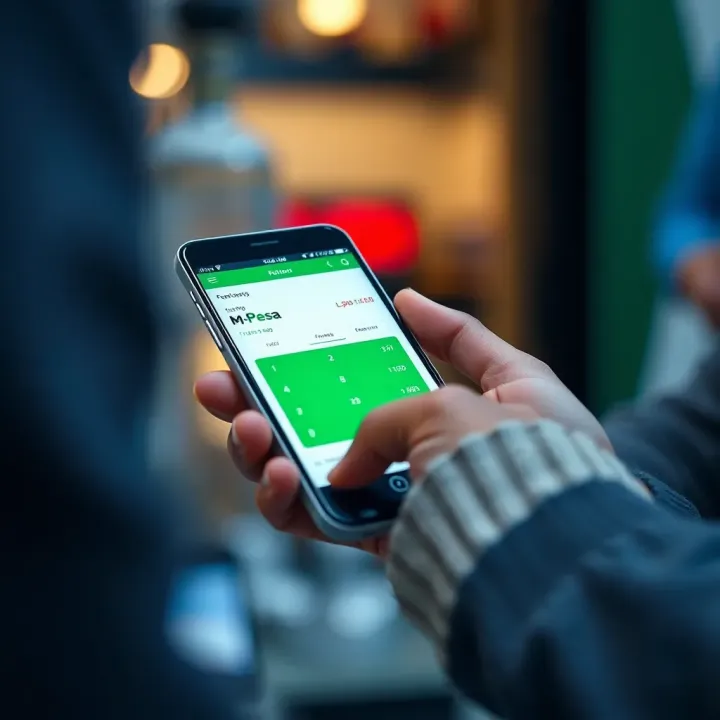
Explore trusted forex trading platforms in Kenya 🇰🇪 Learn how to pick the right one, start trading, manage risks, and use M-Pesa for safe payments confidently 📈
📈 Learn forex trading basics for Kenyans: how the market works, start-up steps, risk tips, and practical advice to trade confidently and avoid common mistakes.
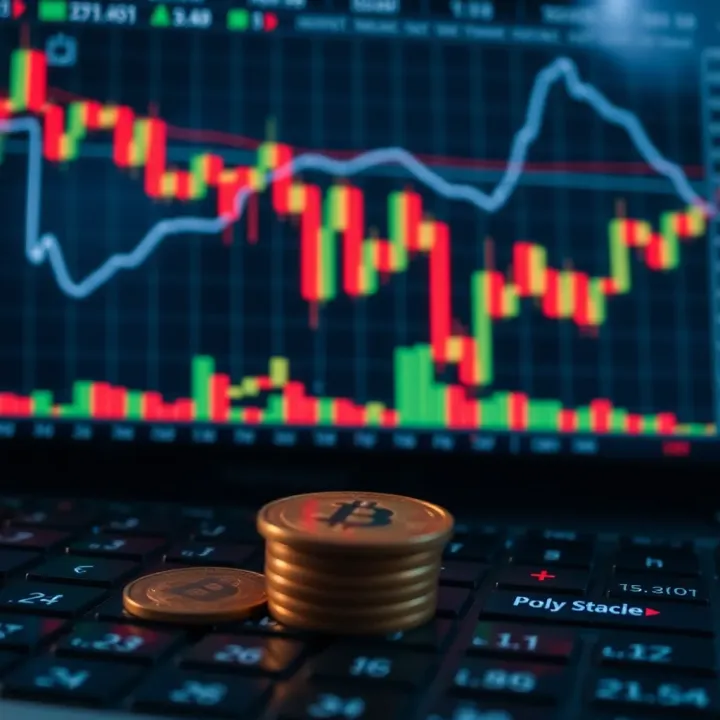
📊 Learn forex trading basics, risk management, and local tips in Kenya. Get practical steps with a downloadable PDF guide to start trading confidently today!
Based on 11 reviews