
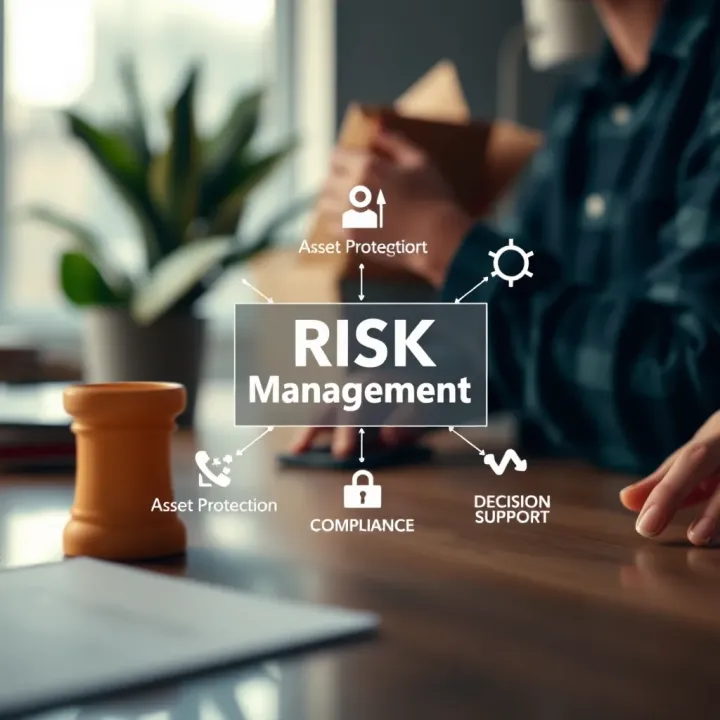
Objectives of Risk Management in Kenyan Organisations
🔍 Discover how risk management protects assets, ensures legal compliance, and guides smarter decisions in Kenyan businesses and government. Minimise losses for greater resilience.
Edited By
Isabella Fisher
Risk management is an essential function in any organisation, especially within Kenya’s dynamic business environment. It involves identifying potential challenges that might disrupt operations, assessing their impact, and putting in place measures to reduce or avoid harm. The aim is to help organisations steer clear of significant losses, protect their assets, and make better decisions.
Businesses in Kenya face a wide range of risks, from economic shifts and regulatory changes to security concerns and supply chain disruptions. For example, a manufacturing firm might face risks due to fluctuating import costs influenced by foreign exchange rates. An agricultural enterprise may be exposed to weather-related risks, such as prolonged drought affecting yields. Effective risk management ensures these uncertainties are dealt with proactively rather than reactively.

Organisations that integrate risk management into their planning tend to maintain stability and improve their financial health over time.
Risk Identification: Spotting the likely risks before they spiral out of control. This can be operational, financial, compliance-related, or strategic.
Risk Assessment: Evaluating the potential severity and likelihood of each risk to prioritise the response.
Risk Mitigation: Developing plans to either avoid, reduce, transfer, or accept risk depending on its nature.
Monitoring and Review: Continuously tracking risks and the effectiveness of strategies, adjusting when necessary.
Effective risk management boosts confidence among investors and lenders who want assurance that an organisation can protect its resources. It also supports compliance with local laws and sector-specific regulations enforced by agencies such as the Capital Markets Authority (CMA) or Kenya Revenue Authority (KRA).
Consider a Nairobi-based fintech startup which relies on mobile payments through M-Pesa. Managing technical risks like system downtime or cyber threats helps maintain customer trust and avoids costly disruptions.
In summary, risk management isn’t just about preventing losses. It’s about giving organisations the tools to make informed choices, plan ahead, and stay resilient in a market that often throws curveballs. For traders, investors, brokers, and educators alike, understanding this area helps in navigating and supporting Kenya's thriving business landscape more effectively.
Risk management is more than just a buzzword—it's a practical necessity for any organisation aiming to stay afloat and grow. At its core, risk management means identifying potential problems before they escalate, assessing how likely these risks are, and putting steps in place to handle them. In Kenya's dynamic business environment, where market shifts and regulatory changes happen quickly, understanding risk management helps traders, investors, and analysts avoid costly surprises.
Risk involves situations where the outcomes are unknown but can be estimated, while uncertainty refers to scenarios where outcomes are unpredictable. For example, a coffee exporter in Kericho faces risk from fluctuating global prices—this can be measured and prepared for. However, sudden changes like new government export policies represent uncertainty because they are less predictable. Appreciating this difference helps organisations decide which risks to monitor closely and which require more flexible approaches.
Organisations deal with various risks, including operational, financial, strategic, and compliance risks. Operational risks might be supply chain disruptions, like delays in Nairobi port clearance, which affect delivery times. Financial risks involve currency fluctuations, affecting businesses dealing in US dollars or euros. Strategic risks arise from changing market trends, such as a shift in consumer preference from local to imported goods. Lastly, compliance risks appear when firms fail to meet County or national regulations, potentially leading to fines or licence revocation. Each type demands specific attention to guard against losses.
Without risk management, companies can suffer unexpected losses that could have been mitigated. For example, a small manufacturer in Eldoret might rely heavily on raw material imports. If currency depreciation hits suddenly, the cost spikes and eats into profit margins. Through risk assessment and hedging strategies, such as forward contracts or diversified suppliers, the company can cushion itself against such shocks, preserving capital and ensuring day-to-day operations continue smoothly.
Reputation is anything but a simple asset; one misstep can tarnish a brand overnight. Consider a bank in Nairobi that experiences a data breach. Beyond fines, there’s customer trust to rebuild, which affects long-term profitability. Risk management emphasises preventive controls like cyber security measures and staff training. Moreover, it ensures physical assets such as buildings and equipment are insured and maintained, reducing vulnerability to theft, fire, or natural disasters.
Growth backed by sound risk management is more stable and sustainable. Businesses can plan investment and expansion knowing the risks are controlled. For instance, an agribusiness investing in irrigation technology must assess weather risks and water availability before committing large funds. By actively managing these risks, organisations avoid overextension and build resilience against future downturns, enabling long-term success.
Effective risk management is about foresight, preparing for both foreseeable and unforeseeable challenges, so organisations can thrive even when conditions change unexpectedly.
Effective risk management is central to smart decision-making in organisations. By systematically identifying potential pitfalls and weighing them against possible gains, businesses can make more informed choices that steer them away from avoidable losses while positioning themselves for success. This approach is especially vital in Kenya's dynamic market environment, where economic shifts and regulatory changes can swiftly alter business landscapes.
Good risk management is about finding the right balance between risk and reward. For instance, a Nairobi-based export firm weighing new markets must consider political unrest or currency fluctuations in those countries. Avoiding risks entirely would mean missing growth chances, while ignoring them could lead to costly setbacks. By assessing both downsides and upsides, the firm can decide whether entering a particular market aligns with its appetite for risk and resource capacity.
This balancing act helps organisations focus on ventures that offer the best potential returns without overexposing themselves to hazards. It turns uncertainty into manageable choices rather than guessing games.
Organisations often have limited money, time, and people to address various challenges. Risk management guides how to allocate these resources where they matter most. For example, a Nairobi bank may identify cyber threats as a bigger risk than office burglaries. Directing budget and training towards cybersecurity instead of traditional physical security makes better practical sense.
Prioritisation avoids spreading efforts thinly, which weakens overall protection and wastes resources. It also creates clear focus points, enabling teams to respond swiftly to the most pressing risks and opportunities.
Operations can stall or sputter when unexpected risks catch teams off guard. By spotting vulnerabilities early, risk management cuts down surprise interruptions in processes. Consider a manufacturing plant in Eldoret that relies on steady electricity supply. Understanding risks around power outages allows the factory to invest in backup generators or schedule production during stable hours, lowering downtime.
This proactive stance ensures that daily operations run smoother and can meet customer demands reliably, which builds trust and steady income.
Beyond stopping crises, risk management sharpens how work gets done. Identifying weak spots in workflows or bottlenecks helps improve systems for consistency and predictability. For example, a courier service in Mombasa might analyse delays caused by traffic or road closures and reorganise routing or timing accordingly.
Reliable processes reduce waste, save costs, and boost overall quality. They create an environment where employees and clients alike can count on dependable results, reinforcing the organisation’s reputation and competitiveness.
Organisations that embed risk management into their decision-making not only avoid pitfalls but also create pathways for growth with confidence and clear focus.
Financial stability and regulatory compliance are cornerstones for any organisation aiming to thrive in Kenya’s dynamic business environment. When organisations actively manage financial risks and stay on the right side of the law, they guard themselves against sudden losses and costly legal troubles, ensuring smoother operations and sustained growth.
Managing credit, market, and liquidity risks is about keeping the organisation’s cash flow and investments in check. Credit risk arises when clients or partners fail to meet their payment obligations—something Kenyan banks and lending institutions monitor closely when extending loans. For example, a trader could face significant losses if a major buyer defaults on payment, affecting cash availability for daily operations. Market risks, on the other hand, come from price fluctuations in foreign exchange, interest rates, or commodity costs. Consider an exporter dealing in maize futures; a swift drop in commodity prices can erode profit margins unless hedging strategies are in place. Lastly, liquidity risk means the organisation struggles to convert assets into cash quickly enough to meet its financial needs. This is common in SMEs that rely heavily on short-term funding or informal credit sources, where delays in payments can spiral into cash shortages.
Controlling operational costs linked to risks is another practical angle. These include expenses from unexpected equipment failure, theft, or system downtime. For instance, a jua kali workshop relying on ageing machinery could face sudden repair bills disrupting production. Proper risk management encourages preventive maintenance and the use of insurance products suitable for the Kenyan context, such as the NHIF’s group health insurance for employees or asset insurance offered by local firms. By forecasting potential interruptions and budgeting accordingly, organisations reduce emergency expenses and avoid ripple effects like delayed deliveries or damaged client relations.
Understanding Kenyan legal frameworks is vital for organisations to avoid compliance pitfalls. Regulators like the Capital Markets Authority (CMA), Central Bank of Kenya (CBK), and Kenya Revenue Authority (KRA) set rules that govern financial reporting, tax payments, and business conduct. For example, a listed company on the Nairobi Securities Exchange (NSE) must comply with CMA reporting requirements to maintain investor confidence. Familiarity with these laws enables organisations to design internal controls that align with national standards, simplifying audits and reducing chances of violations.
Avoiding penalties and legal disputes saves organisations not only money but also reputation. Take tax compliance: failure to correctly file returns through iTax or meet VAT payment deadlines can lead to hefty fines or even legal action by KRA. Meanwhile, adherence to Labour Laws underlines fair treatment of employees, preventing costly court cases or strikes. Organisations that embed compliance into their daily operations can swiftly adapt to updates in the law, keeping their licence to operate and maintaining trust with stakeholders.
Organisations that blend financial risk management with regulatory compliance effectively shield themselves from financial shocks and legal hassles, staying resilient in Kenya’s competitive markets.
By focusing on these two areas, businesses improve their chances of long-term success. Proper handling of financial risks ensures they don't run out of funds when it matters most, while compliance keeps them operating within legal boundaries. Both aspects are essential for navigating Kenya’s regulatory landscape and unpredictable economic conditions.
Risk culture shapes how an organisation perceives and handles risk daily. It goes beyond formal procedures, embedding attitudes and behaviours among employees and leadership. When an organisation cultivates a strong risk culture, it naturally becomes more resilient—able to anticipate, absorb, and respond to shocks or uncertainties without collapsing. In Kenyan businesses, from jua kali workshops to formal enterprises, a risk-aware culture can mean the difference between bouncing back from a crisis or facing prolonged losses.
Open risk communication means creating an environment where employees at all levels can speak up about potential threats or vulnerabilities without fear. For example, a financial institution in Nairobi might encourage front-line staff to report suspicious transactions quickly, helping the bank avoid fraud losses. When risk concerns flow freely across departments, organisations detect issues early and respond faster. It also reduces the chances of surprises that can disrupt operations or harm reputation.
In practice, this involves regular meetings, feedback channels, and leadership that listens attentively. Transparency in discussing risks signals that management values honesty and accountability, inspiring trust and collective vigilance.
Knowledge is power, especially when it comes to risk. Organisations that invest in training their teams equip them with the skills to identify, assess, and respond to risks confidently. For instance, a medium-sized agro-processing firm in Eldoret might run workshops to help staff understand food safety regulations, reducing costly compliance breaches.
Building capacity also means equipping staff with practical tools and procedures to handle incidents calmly and efficiently. Consistent training maintains readiness, ensures everyone speaks the same language about risk, and boosts overall resilience. It also helps in nurturing future leaders who can make informed decisions under pressure.
No organisation can predict every risk perfectly, but effective preparation helps soften the impact of unexpected shocks. This includes developing contingency plans and conducting simulations such as fire drills or data breach rehearsals. A Nairobi-based tech company, for example, might test its backup systems regularly to ensure quick recovery from cyberattacks.
Preparing also means diversifying suppliers or sources of revenue, so firms aren’t overly dependent on one channel that could fail. By expecting the unexpected, businesses reduce downtime and maintain customer trust when crises occur.
Preparation is not about avoiding risks entirely but about gearing up to withstand and recover swiftly.
Reflection is key to improving resilience. Organisations that systematically review how previous risks materialised can strengthen weak points and avoid repeating mistakes. For example, if a logistics company in Mombasa faced delays due to a fuel shortage, analysing this episode might lead to building buffer stock or setting alternative routes.
Learning from history means keeping clear records, encouraging honest post-mortems, and sharing lessons across teams. This culture of continuous improvement embeds experience into organisational memory, making future risk management smarter and more effective.
Overall, fostering a robust risk culture alongside practical resilience strategies helps organisations in Kenya navigate uncertainties confidently and sustainably.
🔍 Discover how risk management protects assets, ensures legal compliance, and guides smarter decisions in Kenyan businesses and government. Minimise losses for greater resilience.

📋 Learn how Kenyan organisations create clear risk management policies to identify, assess, and handle risks, stay compliant, and ensure smooth operations amid local challenges.

🔍 Learn how Kenyan enterprises can spot risks, assess threats, and use tech tools to protect operations and boost sustainable growth in local markets.

🛡️ Learn how Kenyan businesses can identify risks, assess threats, and implement practical controls to safeguard assets and stay resilient amid economic changes. 📊
Based on 13 reviews