
Understanding Forex Trading in Kenya
Learn how forex trading works in Kenya 🇰🇪, including the key players, legal rules, risks, benefits, and tech to get started safely and confidently 💹📱.
Edited By
James Harrington
Forex trading, also known as foreign exchange trading, is the buying and selling of currencies from different countries in a global market. Unlike stock trading, the forex market runs 24 hours a day across various financial centres worldwide, making it one of the most active markets. Kenyan traders participate by exchanging currencies like the US dollar (USD), euro (EUR), or British pound (GBP) against the Kenyan shilling (KES) or other major currencies.
The idea is simple: you buy a currency expecting it to increase in value compared to another, then sell it later at a profit. For example, if you believe the US dollar will strengthen against the Kenyan shilling, you might buy USD/KES currency pair. If the dollar gains value, you sell it back, earning the difference in exchange rates.
Currency prices in forex are driven by supply and demand, influenced by economic data, political stability, interest rates, and global events. A sudden announcement by the Central Bank of Kenya (CBK) about interest rate cuts can make the shilling weaker, affecting forex rates directly.
Forex trades happen in pairs; each currency is quoted against another. The first currency is called the base, and the second is the quote. When you trade, you're effectively speculating whether the base currency will strengthen or weaken relative to the quote currency.
There are different market participants:
Banks and financial institutions: They handle large volumes and influence liquidity.
Corporates: Use forex to manage trade and investment risks.
Retail traders: Individual investors in Kenya use platforms to trade forex for profit.
Traders access the market through brokers, who provide trading platforms and leverage—borrowed funds that magnify potential gains or losses.
To get started:
Choose a licensed forex broker: Ensure they are regulated by bodies like the Capital Markets Authority (CMA) in Kenya or reputable international authorities.
Open a trading account: Often linked to M-Pesa or bank accounts for easy deposit and withdrawal.
Learn about currency pairs and market timing: Understand how global economic news affects pair movements.
Develop a trading plan: Set clear goals, risk tolerance, and stick to strategies.
Effective forex trading calls for ongoing learning and keeping an eye on events ranging from US Federal Reserve announcements to local economic reports.
Through careful analysis and practical steps, Kenyan traders can confidently engage in forex trading to diversify investments or create additional income streams.
Forex trading is the practice of buying and selling currencies on the global foreign exchange market. It allows businesses, investors, banks, and individuals to exchange one currency for another, which is essential for international trade, travel, and investment. For instance, a Kenyan import business paying suppliers in euros must convert Kenyan shillings to euros, relying on forex markets for the exchange.
Understanding what forex trading means sheds light on its scale and how it impacts daily financial activities. Unlike the stock market, which operates mostly during set hours, the forex market is open 24 hours a day, five days a week, facilitating continuous currency flow across the world. This nonstop operation suits the needs of global commerce and capital movement.
At its core, forex trading involves exchanging one currency for another with the expectation that currency values will change over time. This can lead to profits if you buy a currency at a lower price and sell it later at a higher price. Unlike trading physical goods, forex trading deals with intangible assets, relying heavily on real-time market data and economic news.
For example, a Kenyan trader speculating that the US dollar will strengthen against the Kenyan shilling might buy USD/KES contracts to benefit from that change. The trader hopes to sell the dollar later at a higher rate, making a gain from the difference.
The forex market is the largest financial market worldwide, with an average daily trading volume exceeding $6 trillion (about KSh 750 trillion). This dwarf all other markets, including equities or bonds. It spans major financial centres such as London, New York, Tokyo, and Nairobi, each contributing to different opening hours and liquidity levels.
This immense size means liquidity is generally high, allowing traders to enter or exit positions quickly without significant price changes. The market also offers a wide range of currency pairs—from major pairs like EUR/USD to exotic ones involving currencies of smaller economies, including the Kenyan shilling.
Several groups participate actively in forex trading. Central banks, like the Central Bank of Kenya (CBK), intervene to stabilise their currency’s value or control inflation. Commercial banks facilitate the majority of daily forex transactions for clients ranging from businesses to governments.
Then come institutional investors such as hedge funds and multinational corporations, who often execute large trades to hedge risks from international operations. Retail traders, including individual Kenyans using online platforms, make up a growing segment, using modest capital to speculate or hedge.
The diversity of market players ensures liquidity and price discovery but also introduces different motivations behind trades—from stabilising currency values to seeking profit.
Understanding these elements provides a solid foundation before you engage in forex trading, helping you to appreciate both opportunities and risks involved.
Understanding how forex trading works is essential for anyone looking to enter the market with confidence. The forex market operates by trading currency pairs, where one currency is exchanged for another. This system allows traders to speculate on the rise or fall of currency values, aiming to profit from the price differences.
In forex, currencies are always quoted in pairs, such as USD/KES (US Dollar to Kenyan Shilling) or EUR/USD (Euro to US Dollar). The first currency is the base, and the second is the quote. The price shows how much of the quote currency you need to buy one unit of the base currency. For example, if USD/KES is 110, it means you need 110 Kenyan shillings to buy one US dollar.
The choice of currency pairs depends on availability and trader preference. Major pairs like USD/EUR or USD/JPY are popular due to high liquidity and tight spreads, while exotic pairs like USD/ZAR may have higher volatility. Kenyan traders often focus on pairs involving the Kenyan shilling, especially for remittances or business transactions.
Trading forex involves either buying or selling a currency pair. If you believe the base currency will strengthen against the quote currency, you buy the pair (going long). If you expect it to weaken, you sell the pair (going short). For example, if you expect the US dollar to gain value against the Kenyan shilling, you buy USD/KES. If the rate rises from 110 to 112, you make a profit when you sell.
This buying and selling happens in real-time with prices changing constantly due to market supply and demand. Kenya’s time zone advantage — being just a few hours ahead of Europe — allows traders to participate in significant forex sessions such as the London and New York markets.
Leverage enables traders to control a larger position with a smaller amount of capital, called margin. For instance, with 100:1 leverage, an investor can trade KS0,000 as if it were KS,000,000. While this can amplify profits, it equally increases risk.
Kenyan traders should be cautious with leverage due to the possibility of quick losses. Most brokers offer varying leverage levels, so starting with lower leverage like 10:1 might be safer for beginners. Always consider margin requirements to avoid a margin call, which forces the trader to add funds or close positions.
Effective forex trading requires not just understanding market movements but also managing the practical tools like currency pairs, buying and selling mechanics, and leverage. Without these, entering the forex market is like stepping into a matatu without knowing the route.
By grasping these fundamentals, traders can make more informed decisions and develop strategies suited to their goals and risk tolerance. In Kenya’s growing forex community, this knowledge is key to trading successfully and responsibly.
Understanding what moves currency prices is key to making smart decisions in forex trading. Traders need to watch factors that sway exchange rates because they directly affect when and how to buy or sell currencies. These influences vary from economic stats to political shifts as well as the mood of the market itself.
Economic indicators are numbers that give a snapshot of a country's financial health. These reports can push currency values up or down depending on whether the results beat or miss expectations. For instance, Kenya’s annual inflation rate, published by the Kenya National Bureau of Statistics, influences the shilling’s value. Higher inflation might weaken the shilling because it reduces its buying power, causing traders to sell off.
Other crucial indicators include:
Gross Domestic Product (GDP): Shows the size and growth of a country’s economy. Strong GDP growth usually supports a rising currency.
Employment Data: Numbers like unemployment levels hint at economic strength or trouble.
Interest Rates: Set by central banks like the Central Bank of Kenya (CBK), these influence how attractive a currency is. Higher rates often invite investment, lifting the currency.
Politics can shake currency markets in a big way. Elections, policy changes, and instability create uncertainty that traders dislike. For example, Kenyan general elections often cause jitters, leading to short-term volatility in the shilling’s exchange rate. If results are contested, the currency might dip due to fears of unrest or economic slowdown.
Trade negotiations or new laws affecting businesses also play a role. When a government announces reforms that encourage foreign investment, it can boost confidence and strengthen the currency. Conversely, risks like corruption scandals or conflicts can repel investors and weaken the currency.
Besides hard facts, how traders feel about the market matters. Market sentiment is the overall attitude—whether optimistic or fearful—that influences buying and selling decisions. For example, if traders expect the US dollar to rise due to upcoming economic data, they may start buying dollars ahead of time, driving its value up.
Speculation often amplifies currency moves. Some traders react faster than news can settle, pushing prices beyond what fundamentals suggest. This is why sudden spikes or drops sometimes happen without obvious causes. Knowing market mood helps traders anticipate these swings and manage risks more thoughtfully.
Exchange rates reflect both concrete events and the feelings of those trading them. Successful forex trading means keeping an eye on economic signals, political shifts, and the general market mood.
By following these elements closely, traders can spot opportunities or avoid pitfalls in the fast-moving forex market. Kenyan traders, in particular, should also consider regional events that affect the East African Community (EAC) economies and their currencies, as these can ripple through local markets significantly.
Starting forex trading in Kenya requires careful planning and understanding of the local environment. Unlike the stock market, forex trading involves currency pairs, meaning you trade one currency against another. This demands not only knowledge of global economic events but also insight into how local factors influence the Kenyan Shilling (KES).
Selecting the right broker is the foundation of your trading. Kenyan traders should look for brokers regulated by reputable authorities such as the Capital Markets Authority (CMA) of Kenya. Regulation protects your funds and ensures transparency in transactions. Brokers offering platforms compatible with local payment methods like M-Pesa or KCB M-Pesa simplify deposits and withdrawals, which is a practical advantage.
For example, FXPesa, a Kenyan forex broker, offers CMA regulation and direct M-Pesa integration. This makes funding your account straightforward and reduces currency conversion hassles. Avoid brokers with unclear licensing or those operating offshore without oversight, as they carry higher risks of fraud.
Opening a forex account usually involves submitting identity documents such as your national ID or passport. Some brokers require proof of address to comply with anti-money laundering rules. Once approved, you can start trading with a demo account to practise before using real money.
Managing your account well means keeping track of your trades, maintaining sufficient margin, and understanding the broker’s fee structure. Some brokers charge spreads (the difference between buying and selling prices), while others add commission fees. Be cautious with high leverage offers; while they can amplify gains, they also increase the risk of significant losses.
Kenya’s forex market is still developing, and regulations continue to evolve. Traders should keep updated on CMA announcements about forex trading rules. For instance, the CMA sets minimum capital requirements for brokers and standards for customer protection.
Besides regulation, forex trading carries risks like market volatility and potential scams. Since forex operates 24/5 globally, price swings can be sudden, impacted by international events or local economic policies. Always verify brokers’ credentials and avoid promises of guaranteed profits.
Important: Always treat forex trading as a high-risk investment. Start small and never invest money you cannot afford to lose.
Getting started with forex trading in Kenya means balancing ambition with caution. With the right broker, sound account management, and awareness of local rules, you can participate effectively in the global forex market while protecting your capital.
Knowing common strategies and practical tips is key to navigating the forex market, especially when trading from Kenya. These approaches help you make better decisions, manage risks, and improve your chances of making profits consistently. Most importantly, they turn theory into manageable steps you can apply even if you are dealing in small amounts.
Fundamental analysis looks at economic data and news to predict currency movements. For example, Kenyan traders might watch inflation rates, interest rates set by the Central Bank of Kenya (CBK), and political developments, since these factors influence the Kenyan shilling's strength. On the other hand, technical analysis relies on charts, patterns, and historical price data to forecast trends. Tools like moving averages or RSI (Relative Strength Index) help identify entry and exit points. Kenyan traders often combine both methods: they check fundamentals to gauge long-term market direction and use technical analysis for the precise timing of trades.
One cannot stress enough how vital managing risk is in forex. A common rule is to risk only a small percentage of your trading capital on any single trade—usually 1 to 2%. For instance, if your account balance is KSh 10,000, avoid risking more than KSh 100 to KSh 200 per trade. Stop-loss orders are a practical way to control losses by automatically closing a position at a predetermined level. Also, avoid over-leveraging, which can quickly wipe out your investment. Consistency in following your risk limits helps protect your funds during volatile market conditions, such as when unexpected events affect currency prices.
Kenyan traders have access to several useful tools and resources to aid forex trading. Popular trading platforms like MetaTrader 4 (MT4) or MetaTrader 5 (MT5) provide charts, indicators, and automated trading features. For local insights, keeping an eye on CBK announcements or economic reports from Kenya National Bureau of Statistics (KNBS) may give an edge. Additionally, forums and trading communities based in Kenya can offer peer support and real-time market discussions. Using mobile phones to track markets via Safaricom’s robust network and managing funds with M-Pesa integrations has made forex more accessible for many in Kenya.
Practical knowledge, combining strategies and using local tools confidently will help Kenyan traders manage the ups and downs of forex.
In the end, successful forex trading comes down to preparedness, awareness of risks, and continuous learning tailored to your context and resources.
Learn how forex trading works in Kenya 🇰🇪, including the key players, legal rules, risks, benefits, and tech to get started safely and confidently 💹📱.
Learn how forex trading signals guide Kenyan traders on market moves 📈, sources to trust, risks to watch, and tips to boost your trading success locally.
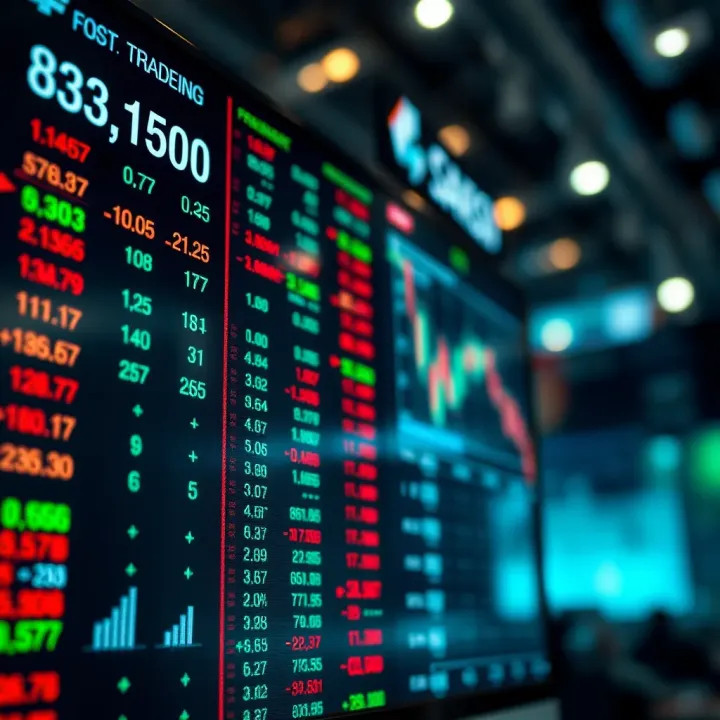
📈 Learn how forex trading lets Kenyans buy and sell currencies globally to earn from exchange rate shifts. Get key tips, risks, and local insights to trade wisely.

📈 Learn how copy trading lets Kenyan investors follow expert traders and access global markets easily. Discover benefits, risks, and how to start with local platforms today.
Based on 9 reviews